
Understanding a quiet mind

A quiet mind is a state in which thoughts feel settled enough to focus, rest, or simply be present. It does not mean you never think or worry. It means the constant mental chatter eases, even briefly, leaving room for clearer decisions, sleep, and creative work.
Why mental relaxation matters
Mental relaxation matters when life feels rushed, noisy, or demanding. Learning how to calm your mind can help in practical, everyday ways:
- A relaxed mind can make it easier to return to a problem with fresh ideas.
- When you feel calmer, it is often easier to stay with one task instead of moving between notifications and distractions.
- Regular rest can ease some of the physical and emotional tension that builds during stressful days.
- Chronic stress can affect sleep, mood, and physical health, so downtime is more than an optional extra.
For music lovers, producers, and DJs, mental space can also support creative focus. Making a mix, writing, or selecting records takes patience. A busy mind can rush the process, while a calmer one may stay with an unfinished idea a little longer.
What gets in the way of calm
Finding peace of mind is rarely as simple as deciding to relax. Familiar habits and pressures can keep thoughts racing:
- Phones, messages, conversations, traffic, and background sound can interrupt concentration throughout the day.
- Rumination keeps the same concern circling, even when there is nothing useful to do about it at that moment.
- Work, caring responsibilities, money worries, and personal obligations can leave very little time to pause.
- Many people assume relaxation needs an hour of free time. Even five quiet minutes can interrupt a stressful pattern.
“The mind is everything. What you think, you become.” – Buddha
Once you know what is taking up your attention, you can choose a response instead of running on autopilot. Deep breathing, meditation, a walk, or calming music from labels such as Klangspot Recordings may help slow the pace.
If ambient or neoclassical music helps you relax, make it part of a deliberate routine rather than using it as background filler. A familiar track can signal that it is time to stop scrolling, sit down, and breathe.
Ways to quiet your mind
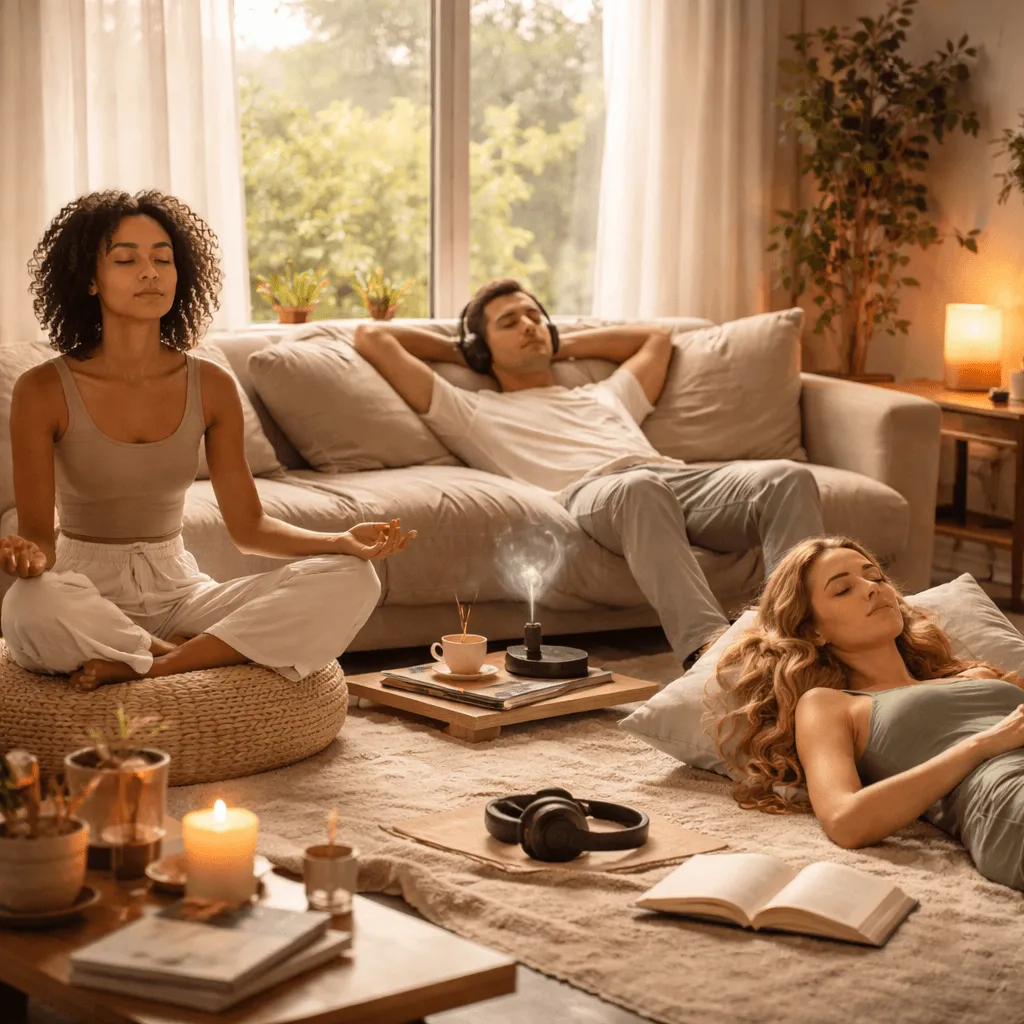
Mindfulness and meditation
Mindfulness meditation brings attention back to the present moment. It does not remove difficult thoughts or make every problem disappear. Instead, it offers a way to notice a thought, let it pass, and return to what is happening now.
- Sit or lie down in a position that feels comfortable and does not strain your body.
- Breathe in through your nose, pause for a moment, then exhale slowly.
- When a thought comes up, notice it without judging yourself, then bring your attention back to the breath.
“Mindfulness brings attention to the present moment, allowing for better control over mental clutter.”
Ambient music from Klangspot Recordings can make a meditation practice feel less exposed, especially when household sounds or street noise make complete silence unrealistic. Keep the volume low. Music should support your attention, not compete for it.
Breathing exercises for stress
Breathing exercises can help when stress feels immediate and your thoughts are moving too fast. Slowing your breath offers a physical cue to step out of a tense state. It will not solve the cause of stress, but it can make the next few minutes more manageable.
The 4-7-8 breathing technique uses a longer exhale:
- Inhale for 4 seconds.
- Hold your breath for 7 seconds.
- Exhale slowly for 8 seconds.
Box breathing uses equal counts:
- Inhale for 4 seconds.
- Hold for 4 seconds.
- Exhale for 4 seconds.
- Hold for 4 seconds.
Try either breathing exercise when your mind is racing, before a difficult conversation, or when you need a short break at work. The aim is not perfect calm. It is to create a little more room between you and the stress.
The 3-3-3 grounding rule
The 3-3-3 rule is a simple grounding technique for anxious or stressful moments. You can use it on a train, at your desk, or before sleep when you cannot switch your thoughts off.
- Look around and name three things you can see.
- Listen for three sounds around you.
- Move three parts of your body, such as your fingers, toes, and shoulders.
This grounding exercise moves attention away from imagined scenarios and back to your immediate surroundings. Its simplicity can be especially useful when concentration is low.
Use these relaxation techniques when you need them, then keep the ones that fit your life. A carefully chosen ambient music playlist from Klangspot Recordings can turn a listening session into a short break from mental noise.
Music and relaxation
Ambient music and lo-fi music often suit relaxation because they leave space to think. Slow pacing, repeating textures, and limited vocals may feel less demanding than songs built around lyrics, sudden drops, or sharp changes in volume.
Why ambient and lo-fi music can help
- Harvard Health lists relaxation practices that may reduce stress. Gentle music can sit alongside breathing, meditation, or quiet rest for some listeners.
- Ambient tracks often focus on tone, texture, and atmosphere instead of words. That can make them easier to play while reading, studying, working, or resting.
- A calmer listening environment may help ideas arrive more easily. Still, some people focus better in silence, and forcing music into every task can become another distraction.
“In a world of constant noise, the gentle ebb and flow of ambient music is a retreat for the soul.”
Listening to lo-fi beats while working, journaling, or meditating may make it easier to settle into the task. If you find yourself following every beat or changing tracks constantly, silence is probably the better choice that day.
Klangspot Recordings playlists to try
Klangspot Recordings has playlists for different listening situations. These choices may suit a quiet afternoon, a focused work session, or a slower evening at home:
- Chill Vibes can work as low-volume background music for work or study.
- Ambient Afternoons collects slower ambient pieces for meditation, reading, or downtime.
- Lo-Fi Dreams is a softer lo-fi mix for drawing, writing, or resting.
There is no universal relaxation soundtrack. Put on a playlist, leave it alone for a few minutes, and notice what happens. Does it settle your thoughts, help you focus, or merely fill the room? Your answer matters more than a genre label.
Choosing an ambient music platform
When you are looking for ambient music for relaxation, Klangspot Recordings takes a more selective approach than large streaming platforms:
- Its playlists group handpicked tracks around moods and themes, which can save time when you do not want to search through endless results.
- The catalog focuses on independent music rather than trying to match the size of a major streaming library.
- The label gives independent musicians a way to reach listeners who actively seek ambient, lo-fi, and atmospheric music.
Large streaming services offer more choice. A smaller catalog can be easier to navigate when you want music for meditation or stress relief without spending twenty minutes deciding what to play. If atmospheric music is what you need, Klangspot Recordings is one place to begin.
Other ways to relax
Guided imagery
Guided imagery asks you to picture a peaceful place in detail. It may be a beach, a forest path, a childhood garden, or a room where you have felt safe. The purpose is to give your attention somewhere quieter to rest when your mind will not slow down.
- Picture the colours, sounds, temperature, and textures in the scene.
- Ambient or lo-fi music can stay in the background if it helps you remain with the image.
The Mayo Clinic includes visualization among its relaxation techniques for stress management. It can feel awkward at first, especially if you are used to staying busy. Give it time before deciding it is not for you.
Exercise and a quieter mind
Physical activity can reduce tension and help your mind change gears. You do not need an intense workout. A walk around the block, a yoga session, or a few minutes of stretching may be enough to interrupt a stressful thought loop.
- Choose movement you are likely to repeat, whether that is walking, yoga, dancing, or gentle stretching.
- Pay attention to your breathing and physical movements while you exercise. This can make the activity feel more like moving meditation.
Movement will not remove every source of stress. It can, however, make a difficult day easier to carry. The effect is often more noticeable when movement becomes a regular part of your week rather than an emergency response.
Nature and quiet spaces
Time outdoors gives many people a break from screens, traffic, and indoor demands. A local park, a garden, or even a bench under a tree can change the pace of an afternoon. You do not need a remote cabin to spend a few minutes outside.
- Look for a nearby park, garden, trail, or another place where you can sit with fewer interruptions.
- Keep your phone in your pocket or switch off notifications for part of the visit.
Research on time in nature has linked it with improved attention and fewer negative thoughts. Natural sounds may be enough on their own. If you prefer music, pair a walk or rest period with quiet ambient tracks from Klangspot Recordings.
A quiet mind does not require an elaborate self-care routine. Try a few ways to relax, keep what fits your actual schedule, and drop the rest. Peace and creativity usually come through repetition, not one dramatic change.
Making relaxation part of daily life
A personal relaxation routine can make it easier to pause before stress piles up. Look at your day honestly and choose a time you can protect. That might be early morning, a lunch break, the journey home, or the hour before bed. The best time is the one you will actually use.
Make it personal
Choose calming activities you do not dread. For example:
- Journal for a few minutes about your day or whatever is taking up space in your mind.
- Use gentle stretching to ease tension in your neck, shoulders, hips, or back.
- Spend a few minutes following your breath when you need to settle down quickly.
Regular practice matters more than duration. A short habit you repeat most days is more useful than an ambitious relaxation plan you abandon after a week. Keep it small enough to be realistic.
Using music for everyday calm
Music can become part of a daily wind-down routine. Ambient music, lo-fi beats, and gentle instrumental playlists may mark the transition between work, study, and rest. Over time, one familiar playlist can become a cue to slow down.
You might use music during a few ordinary moments:
- Play a familiar ambient track while you get ready in the morning.
- Keep low-volume instrumental music on while you work or study, if it helps you concentrate.
- Reserve one playlist for evenings so you begin to connect it with slowing down.
Explore Klangspot Recordings if you want mood-based ambient and lo-fi playlists without building one from scratch. It is worth being selective. The right track can help, while a restless playlist can leave you checking what comes next.
“Music is the shorthand of emotion.” – Leo Tolstoy.
Choose music that suits the state you want to enter, rather than whatever the algorithm plays next.
Apps and online resources
Technology can support a relaxation routine, although notifications, autoplay, and endless scrolling can also make an overactive mind worse. Use apps with one clear purpose, such as a guided meditation, a breathing timer, sleep sounds, or a calming playlist.
Common options include:
- Calm, a meditation app with sleep stories and soundscapes.
- Headspace, which provides guided mindfulness sessions.
- Spotify, where you can find playlists, including selections from Klangspot Recordings, for different moods.
These tools let you build a routine around your schedule and preferences. The app is not the solution. The useful part is the time and attention you set aside when you open it.
Relaxation becomes easier when it has a regular place in the day. A five-minute breathing exercise, an evening walk, or one quiet song can create that place. Small pauses count.
FAQs on quieting the mind
Can meditation help with neuropathy?
Meditation may support people living with neuropathy by helping them manage stress, anxiety, and their response to discomfort. It does not treat the cause of neuropathy or replace medical care. Some people find body scans and guided relaxation useful because they direct attention towards breathing and bodily sensations without asking them to fight pain.
“Meditation can act as a bridge to a calmer state, leading to reduced pain perception.”
If you want to try meditation for neuropathy, begin with a short body scan or guided relaxation exercise. Stop if a practice increases discomfort. Discuss persistent, severe, or changing symptoms with a qualified healthcare professional.
How do I calm an overactive mind?
An overactive mind can make concentration, rest, and sleep difficult. A few simple actions may interrupt the cycle:
- Follow a slow breathing pattern, such as inhaling for four counts, holding for four, and exhaling for four.
- Take a brisk walk, do yoga, or stretch. Movement can shift attention out of an anxious thought loop and back into your body.
- Try lo-fi, ambient, or neoclassical soundscapes. You can stream playlists from Klangspot Recordings if music helps you settle.
A simple nightly routine can lower the volume of your thoughts before sleep. Avoid making it too complicated. On busy days, a few slow breaths and one familiar song may be enough.
What vitamins help reduce stress?
Nutrition supports general health, and several nutrients take part in normal brain and nervous system function. Supplements do not replace medical advice, especially if you take medication, are pregnant, or have an existing health condition.
- B vitamins support normal brain function. Leafy greens, whole grains, and eggs contain several B vitamins.
- Magnesium is involved in nerve function and occurs in nuts, legumes, seeds, and dark chocolate.
- Vitamin D deficiency has been associated with mood concerns. Sunlight and fortified foods can contribute to vitamin D intake.
A balanced diet can sit alongside mindfulness, movement, good sleep habits, and calming music from Klangspot Recordings. If stress, anxiety, low mood, or sleep problems continue to interfere with daily life, speak with a healthcare professional.
What you hear can affect your mood, but sleep, food, movement, relationships, finances, and workload matter too. Make room for the habits that leave you feeling more settled, and return to them often.
