
Understanding solo piano music
Solo piano music places the instrument’s full range in the hands of one player. Without a band, orchestra, or singer, every detail is exposed: the weight of a bass note, the shape of a melody, the blur of the pedal, and the silence between phrases. A solo piano piece can be spare and slow or technically demanding. Many listeners turn to it for ambient listening because its openness can leave room for thought.
The evolution of solo piano music
Solo piano repertoire has roots in 18th-century keyboard music. J. S. Bach wrote for harpsichord and clavichord, and his works influenced later piano writing, although the modern concert piano did not yet exist in its familiar form.
- The Romantic era brought composers such as Chopin and Liszt, whose piano music gave the instrument a more personal and dramatic voice through rubato, virtuosity, and singing melodic lines.
- In the 20th century, Erik Satie and Philip Glass used repetition, restraint, and subtle harmonic movement in ways that changed how many listeners approached piano music.
- Current artists continue this work by combining classical piano writing with electronics, improvisation, close microphone placement, and studio editing.
The sound has changed over the centuries, but the central appeal remains. One piano can carry rhythm, harmony, and melody at once. That flexibility leaves space for classical piano solos, minimalist compositions, ambient piano tracks, and recordings that sit between those labels.
What defines solo piano music
Several qualities shape the sound of solo piano music:
- Without accompaniment competing for attention, a piano melody is often easy to follow and can feel close and direct.
- Solo piano pieces can move through joy, tension, grief, and stillness without lyrics telling the listener what to feel.
- Many works establish a distinct mood, which makes them suitable as piano music for reading, studying, resting, or simply adding shape to a quiet room.
- The piano can move from a near whisper to a hard, ringing chord. One player can create strong contrast without another instrument.
“Solo piano music finds beauty in simplicity, allowing listeners to connect deeply with each note.”
For listeners tired of dense production, solo piano can offer a reset. Some recordings are calm and spacious; others are restless, dissonant, or intense. Not every piano track is relaxing. The instrument can invite close attention, but it can also remain at the edge of a room without demanding it.
Curated playlists offer one way to hear the range of current solo piano music. Collections from labels such as Klangspot Recordings include independent artists working with ambient piano and neoclassical music.
Instructional videos can be useful for listeners and players alike. They make it easier to hear how touch, pedal use, timing, voicing, and dynamics shape a piano performance.
Solo piano can suit experienced musicians and casual listeners. It may sit inside a DJ set, carry a late-night listening session, or remain quietly in the background while the day slows down.
Top solo piano composers and artists
Classic composers: Chopin, Liszt, and more
Classical composers created much of the repertoire that still informs how people hear solo piano music today.
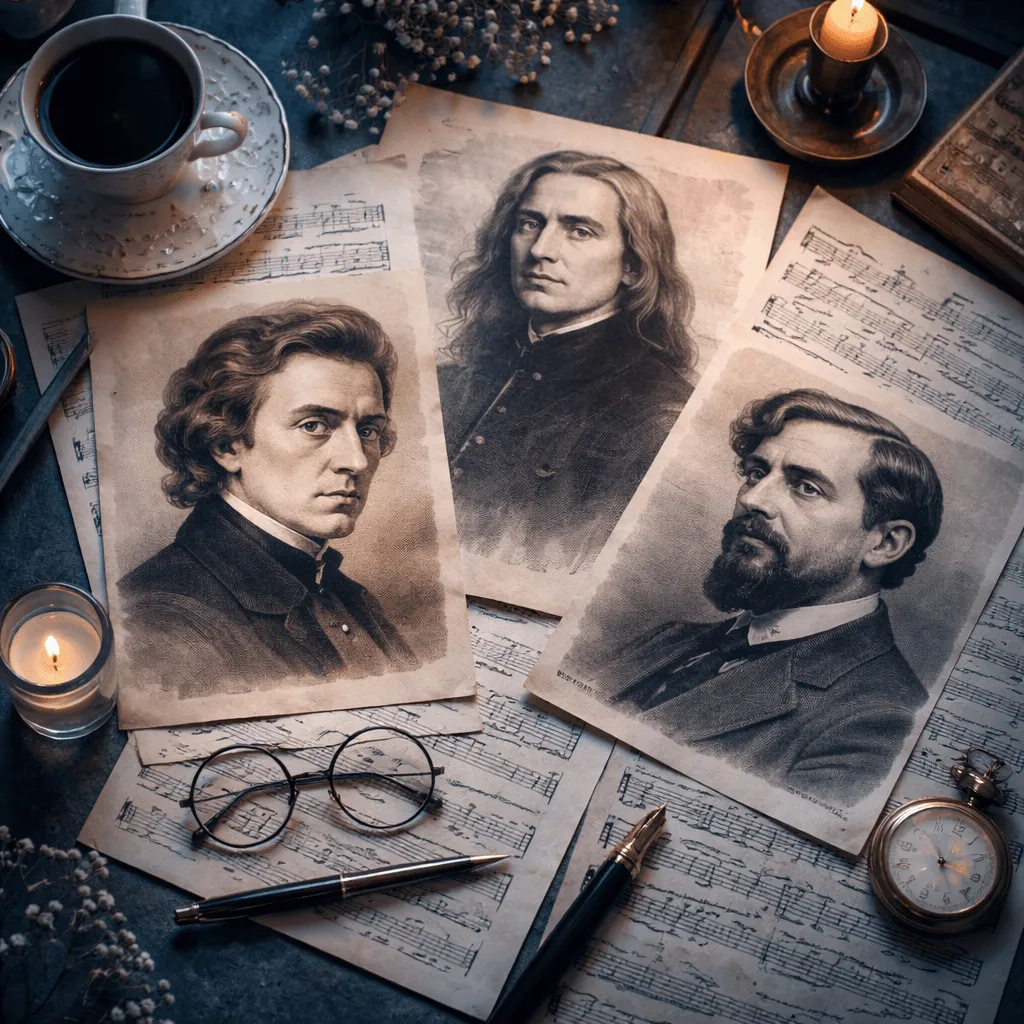
Frédéric Chopin wrote nocturnes, études, mazurkas, and ballades that remain central to piano repertoire. His pieces often balance lyrical melodic lines with demanding harmony, ornamentation, and close control of touch.
Franz Liszt was a virtuoso pianist who extended piano technique through wide leaps, dense textures, and abrupt dramatic shifts. His music can be theatrical, though its quieter pages are often especially revealing.
Claude Debussy approached piano sound through color and suggestion rather than strict formal drama. Works such as “Clair de Lune” use harmony and pedal to create a floating, unresolved atmosphere.
These composers expanded the piano’s melodic, harmonic, and textural possibilities. Later solo piano artists continue to draw on those ideas, whether they write concert works or restrained neoclassical tracks.
Modern composers: Max Richter and Ludovico Einaudi
Modern composers have taken solo piano in several directions, often drawing from minimalism, film scoring, and electronic music.
Max Richter combines piano, strings, electronics, and minimalist composition. His album “Sleep” was written for overnight listening, and its slower piano passages can suit rest, reading, or concentration.
Ludovico Einaudi writes direct, repeating melodic figures familiar to many listeners through film, television, and streaming playlists. That simplicity is part of the appeal, although some listeners find the recurring patterns polished or predictable.
Both composers offer accessible entry points for people looking for contemporary piano music with clear melodies and an unhurried pace.
Independent artists in solo piano music
Independent artists have broadened the idea of what solo piano can sound like.
Ólafur Arnalds often combines piano with strings and electronics. His recordings sit between chamber music, ambient music, and post-classical composition.
Yann Tiersen is known for film scores, but his piano works also draw on folk-like melody and minimalist repetition.
Laraaji is better known for zither, ambient music, and improvisation, though his keyboard work brings a loose, meditative approach to the form.
“Embrace the sound of the piano, it speaks a language of its own.”
These artists approach the piano in different ways, which keeps the category open. Solo piano does not have to mean strictly classical piano. It may be acoustic, processed, improvised, melodic, or deliberately rough around the edges.
Solo piano works to hear
Solo piano music can be lyrical, meditative, sharply rhythmic, or difficult to place within a single genre. The pieces below offer several useful paths into the repertoire.
Famous piano solos
Some of the best-known solo piano works include:
- Ludwig van Beethoven’s “Moonlight Sonata” is especially known for its hushed first movement and dark, repeating arpeggios.
- Erik Satie’s “Gymnopédies” are slow, spare, and harmonically unusual. They suit quiet listening without demanding constant attention.
- Frédéric Chopin’s Nocturnes pair lyrical melodies with rich, sometimes unsettled harmonies.
These works are still widely performed and recorded. Contemporary pianists return to them because they leave room for interpretation, particularly in tempo, phrasing, and dynamics.
Piano pieces for relaxation
If you want relaxing piano music with a quieter pace, try these solo piano pieces:
- Max Richter’s “November” has a measured, melancholy melody that can suit a quiet evening.
- Yiruma’s “River Flows in You” uses a flowing pattern and clear melody, which explains why it appears on many piano relaxation playlists.
- Nils Frahm’s “Ambre” keeps its material simple and close-miked, creating a warm, unhurried sound.
These tracks can work while studying, meditating, or winding down. Preferences differ, though. Music that settles one person may distract another, especially when a melody is too familiar or emotionally charged.
Contemporary works to explore
Several current composers stretch expectations around solo piano music:
- Ludovico Einaudi uses repeated figures, dynamic swells, and accessible melodies in his piano writing.
- Ólafur Arnalds combines classical piano language with electronics and processed sound.
- Philip Glass builds pieces from repeated patterns that gradually change in rhythm and harmony.
Listen across these approaches before deciding what kind of piano music you prefer. You may gravitate toward a familiar melody, a raw room recording, a minimal piano loop, or something more experimental. Taste matters more than genre labels.
Listening to solo piano music
Solo piano music can affect mood, attention, and memory. Because it has no lyrics, many people find it easier to keep in the background. That response remains personal: a piece that helps one listener focus may pull another away from a task.
Emotional and psychological effects
Music can influence emotion, and piano music carries a wide range of feeling through melody, harmony, tempo, and touch. A slow piece may bring up nostalgia, while a bright, quick passage may feel energizing. At times, a quiet piano recording can bring difficult feelings closer rather than making them disappear.
“Music can change the world because it can change people.” – Bono
Close listening can be absorbing because the piano carries every part of the arrangement. That can be comforting when a simple pattern gives the mind something gentle to follow. It can also feel intense when a performance is exposed and there is nowhere for a wrong note or sudden chord to hide.
Solo piano music and stress relief
Many people include calm piano music in a relaxing routine. It may create a quieter setting, but it is not a replacement for medical or mental health care.
- Gentle piano pieces can make a room seem quieter after a busy day.
- A slow piano track can provide a steady background for meditation or mindfulness practice.
- Instrumental music may help some people focus while studying or working, particularly when lyrics are distracting.
Try solo piano during an evening routine or a short break. If a piece takes too much of your attention, choose a simpler recording, lower the volume, or turn it off. Sometimes silence is the better choice.
Supporting creative work
For some writers, artists, and designers, solo piano provides a useful atmosphere for work. Its open structure can leave mental space for ideas, though silence works better for others.
- A consistent instrumental piano track can help you settle into a work session.
- Music without lyrics may remove one form of distraction while you read, write, or sketch.
- Changing the music can mark a shift between brainstorming, focused work, and rest.
Ambient piano can make a creative session feel less sterile. Keep the volume low enough that the music supports the work rather than becoming the work itself.
Solo piano music can offer comfort, focus, or a pause from noise. Klangspot Recordings collects solo piano releases for listeners interested in ambient and neoclassical music. Choose a piece that fits the moment, then let it play.
Curating your own solo piano playlists
A good solo piano playlist begins with a clear sense of mood. A considered sequence can make ordinary tasks more pleasant, but a playlist for focused work will not necessarily suit a slow Sunday morning.
Choosing a mood and atmosphere
Decide what you want the playlist to do. You may want quiet, concentration, nostalgia, or a little lift. These prompts can help:
- For a calm, relaxed mood, choose gentle melodies, slower tempos, and fewer dramatic shifts.
- For reflection, choose pieces with more space, unresolved harmony, or a measured pace.
- For a lighter mood, try piano music with clearer rhythm, brighter harmony, or more movement.
Time and setting matter too. Late at night, a sparse track may feel right. On a sunny afternoon, you may prefer something more rhythmic. There is no correct formula. Choose music that still works after several listens, rather than only music that makes an immediate impression.
Klangspot Recordings and solo piano playlists
Klangspot Recordings releases atmospheric music from independent artists, including solo piano and neoclassical work. Its catalog is a useful place to look for material outside major streaming playlists.
When browsing the catalog, you may want to look for:
- New artists whose recordings differ from familiar streaming recommendations.
- Playlists built around a time of day, activity, or mood.
- Label releases that do not appear often in mainstream editorial playlists.
A smaller selection is often easier to live with than an endless feed of recommendations. Spend time with a few tracks before adding more. The best ambient piano playlists usually leave some breathing room.
Platforms for discovering new music
Several platforms can help you find more solo piano music:
- Spotify lets you build piano playlists and browse editorial or user-made playlists by mood.
- Bandcamp gives independent artists a place to sell music directly and often includes notes, credits, and full albums.
- SoundCloud includes uploads from newer artists, demos, live takes, and independent releases.
These platforms can lead to artists beyond the same handful of popular piano playlists. Follow the musicians whose work you return to, not only the tracks that happen to match one mood.
Music can shape the way a day feels. Build playlists around situations you know well, such as morning work, reading, travel, or a slow evening, then revise them when they stop working. Klangspot Recordings is one source for ambient and solo piano releases to consider.
Comparing popular solo piano resources
Whisperings and Solo Piano Radio take different approaches to contemporary solo piano listening.
Whisperings and Solo Piano Radio
Whisperings focuses on contemporary solo piano music and the composers who make it. Its catalog lets listeners hear individual artists and find information about their work.
Solo Piano Radio operates more like a continuous online radio stream. It suits people who want new piano music playing without building a playlist first. Whisperings gives more attention to individual composers, while Solo Piano Radio is better suited to passive discovery.
uDiscover’s picks and Andante Music selections
uDiscover Music publishes guides to solo piano tracks and albums by classical and contemporary artists. It is a practical starting point if you want familiar names alongside newer recordings.
Andante Music focuses more heavily on classical solo piano repertoire, including established composers and modern performances of standard works. It may suit listeners who prefer traditional repertoire and technical piano writing.
Klangspot in the solo piano scene
Klangspot Recordings focuses on independent ambient and neoclassical releases. Its solo piano selections lean toward quieter textures and artists working outside standard classical programming.
The label also works with emerging artists, offering listeners another route into newer ambient and neoclassical music. Its playlists are organized by mood, which can help when you want a particular listening setting rather than a broad genre survey.
“Klangspot captures the essence of modern solo piano like no other, showcasing the beauty of vulnerability and exploration in sound.”
If you want playlists, independent artists, or a piano track for meditation, Klangspot Recordings is one option alongside radio streams, streaming services, and classical music guides.
FAQ about solo piano music
What is the most famous piano solo?
Ludwig van Beethoven’s “Moonlight Sonata” is one of the most widely recognized piano works. Its first movement, with steady broken chords and a dark melody, appears often in concerts, recordings, and popular culture. Beethoven called it “Sonata quasi una fantasia,” while the familiar nickname came later.
Does playing piano lower cortisol?
Playing piano may help some people feel less stressed, especially when it provides focus, enjoyment, or a break from daily pressure. Research on music and stress suggests that music can affect stress responses, but results differ by person, setting, and activity. Playing piano is not a guaranteed way to lower cortisol.
What is the coolest song to play on piano?
That depends on the player. “River Flows in You” by Yiruma is a popular piano piece because its melody is recognizable and satisfying to play. It is approachable for developing pianists, but someone who likes jazz, classical music, or film scores may choose something entirely different.
What is the most beautiful piano piece?
Beauty is subjective, but Chopin’s “Nocturne in E-flat Major, Op. 9, No. 2” appears on many listeners’ lists. Its lyrical melody and decorative variations give performers room for expression, which helps explain its continuing popularity.
“Music is the shorthand of emotion.” – Leo Tolstoy
This line explains why piano music can connect directly with listeners: it can suggest feelings without spelling them out.
Suggested listening
For more solo piano music, explore the Modern Piano Music playlist. Its neoclassical piano selection suits reading, relaxation, and quiet focus.
Why solo piano music lasts
Solo piano music continues to draw listeners because the instrument can carry a complete piece alone. A pianist can state a melody, support it with harmony, establish a pulse, and change the mood in only a few notes.
The appeal of solo piano
The piano can suggest joy, grief, tension, or contemplation without a word. Classical repertoire remains important, while modern artists continue to change the sound through recording methods, electronics, and ideas borrowed from ambient music.
Many people use solo piano as a backdrop for rest, reflection, or creative work. One instrument leaves room for private associations, and its appeal comes down to a few simple strengths:
- The piano can express complicated feelings through touch, timing, harmony, and dynamics.
- Works such as Chopin’s Nocturnes, along with newer music by artists such as Max Richter, continue to connect with listeners across generations.
- Solo piano tracks fit easily into routines, whether you are reading, working, resting, or planning a special occasion.
Keeping up with new releases
New solo piano music arrives constantly. A few habits can help you find releases that suit your taste:
- Follow independent labels such as Klangspot Recordings that release ambient and neoclassical music.
- Read music blogs and online magazines that cover independent artists and new recordings.
- Use recommendations and artist radio tools on services such as Spotify and Apple Music, then check full albums as well.
- Follow artists and labels on social platforms for release announcements and performance dates.
“Music expresses that which cannot be said and on which it is impossible to be silent.” – Victor Hugo
Use these sources to keep your playlists from going stale. The most rewarding discoveries are often the albums you return to after the first rush of novelty has passed.
