
 By Sascha Bauer, Managing Director of Klangspot Recordings GmbH
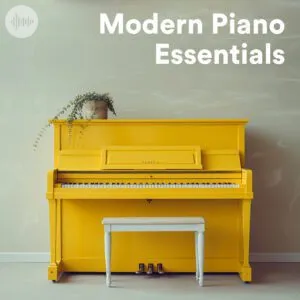
Curated playlist
Modern Piano Essentials refers to a genre also known as neoclassical or contemporary classical piano, characterized by music from living composers that leans closer to film scores and ambient sounds than traditional concert repertoire. Klangspot Recordings' "Modern Piano Essentials" playlist exemplifies this style with 227 pieces, totaling about 11 hours, focusing on sound and mood over virtuosity. A distinctive characteristic is the "felt piano" technique, which involves placing a felt strip between hammers and strings to produce a softer, more intimate tone where the instrument's mechanics are audible. This restrained and gentle musical approach makes modern piano music ideal for focused work, reading, or quiet evenings, explaining its popularity on streaming services.
Modern Piano Essentials
Listen on your favorite platform
“Modern Piano Essentials” is a Klangspot Nu Classical playlist of 227 contemporary piano pieces, about 11 hours, from Ólafur Arnalds and Ludovico Einaudi to the pianists of our own label. It is quiet, mostly solo piano music: short pieces, few notes, a lot of room. Good for reading, working and evenings, and still worth listening to closely.
Note: Artist counts in this article refer to the first 100 tracks of the list.
What “modern piano” means here
The term covers what is also called neoclassical or contemporary classical piano: music written by living composers, closer to film scores and ambient than to the concert repertoire of Chopin or Liszt. The pieces are rarely longer than four minutes, the harmonies are simple, and repetition is a feature rather than a weakness. The focus is on sound and mood, not on virtuosity.
Much of it is recorded very close to the instrument. Many pianists place a strip of felt between hammers and strings, which makes the sound softer and more intimate. You hear the pedals, the mechanics, sometimes the breath of the player. Nils Frahm named his 2011 album Felt after this technique, and it has shaped the genre ever since. Our article on ambient music versus neoclassical explains how the two styles overlap.
The focus is on sound and mood, not on virtuosity.
When does modern piano music fit best?
- Focused work: no lyrics, even dynamics, few surprises.
- Reading: the short pieces flow into each other without demanding attention.
- Evenings without a screen: with good headphones, the close recordings really come into their own.
- Morning routines: see also Hermann Marwede’s “Morning Coffee”.
Modern piano as a playlist
Modern piano music covers a lot of ground: neoclassical, minimalist, jazz-influenced and cinematic. What connects it is a preference for restraint. The piano is played gently, with space between phrases, and the music rarely pushes. That makes it ideal for reading, working and quiet evenings, and it explains why piano playlists are among the most popular on streaming services.
The list is a mix of well-known and independent pianists, and it changes over time. That is why we describe the sound rather than naming the tracks: a calm, melodic collection that works at low volume.
How to use the Modern Piano Essentials playlist?
For reading, start the list before the book. For work, keep it low enough to hear a phone call. For the evening, dim the lights and play it at the softest level that still sounds natural. Piano is less forgiving than electronic music at low volume, because the attack of the notes becomes audible; a good speaker makes a real difference.
If you play the piano yourself, the list is also a source of ideas. Many of the pieces are short and simple enough to be learned by an intermediate player, and listening closely to the touch of professional pianists is a good lesson in itself.
What are the key details of the Modern Piano Essentials playlist?
- Curated by: Klangspot Nu Classical
- Style: neoclassical piano, contemporary classical, felt piano
- Vocals: none
- Available on: Spotify and other streaming services, via the card above
Frequently asked questions
What is a felt piano?
A felt piano has a strip of felt placed between hammers and strings, which dampens the sound. The tone becomes softer and quieter, and the mechanics of the instrument are audible.
What is the difference between neoclassical and ambient?
Neoclassical music is built on melody and the sound of acoustic instruments. Ambient focuses on textures and atmosphere. The two overlap often, as our article Ambient music vs neoclassical explains.
Where can I find solo piano only?
Our playlist Contemporary Classical Piano stays with solo piano, with no strings or electronics.
What are the release details for the Modern Piano Essentials playlist?
| Playlist | Modern Piano Essentials |
| Curated by | Klangspot Recordings |
| Songs | 227 |
| Platform | Spotify, with links to other services |
What other playlists and labels does Klangspot offer?
- Neoclassical Piano: the playlist for studying and relaxing
- Contemporary Classical Piano: for listening closely
- Klangspot Nu Classical: the label behind most of the pieces
- Klangspot on YouTube and Spotify
