
What is chillhop music?
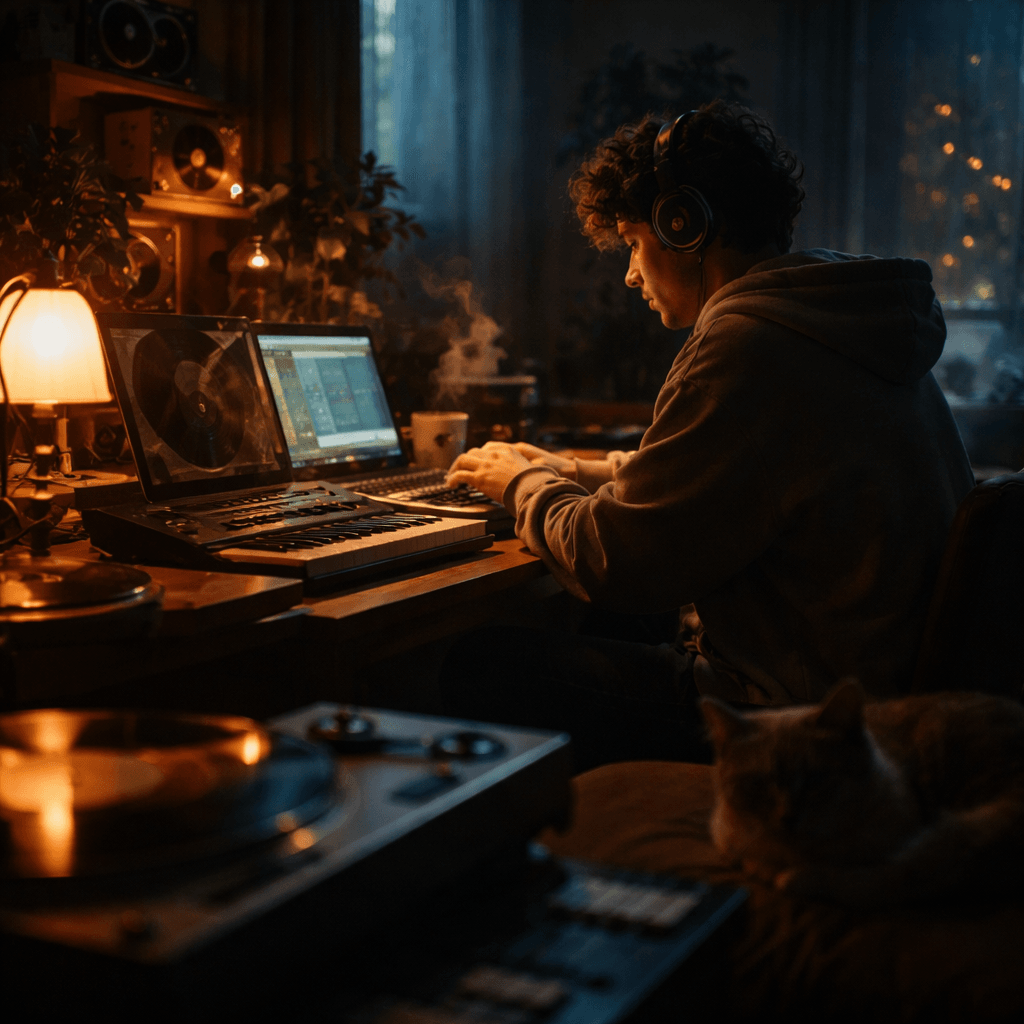
Chillhop is relaxed, beat-led music that blends chill-out, hip-hop, jazz, and often lo-fi production. People commonly listen to chillhop while studying, working from home, reading, or taking a quiet break because it offers a steady groove without demanding constant attention.
Defining chillhop: origins and influences
Chillhop draws on the downtempo and trip-hop sounds of the 1990s. Producers pair unhurried hip-hop drum loops with jazz chords, soft piano parts, guitar phrases, and sampled records. The result is mellow instrumental hip-hop with space between the notes.
Jazz, lo-fi, and hip-hop shape the sound in different ways:
- Jazz brings rich chords, loose melodies, piano lines, horns, and occasional improvisation.
- Lo-fi adds vinyl crackle, tape hiss, soft distortion, and other imperfect textures that make a track feel worn-in rather than polished.
- Hip-hop provides the rhythmic foundation through drum breaks, sampled percussion, and a head-nodding swing.
These influences overlap, but chillhop is not simply jazz played over drums. Producers usually build short, repeatable musical ideas around the beat. That makes the style easy to live with for an hour or more, while a strong track still has details worth hearing up close.
Characteristics of chillhop
Most chillhop tracks share a few familiar traits, although the genre leaves plenty of room for individual taste.
- Laid-back beats: Tempos often sit between 60 and 90 BPM, with drums that feel loose rather than rushed.
- Smooth melodies: Piano, guitar, Rhodes, bass, and horns often carry the warmer side of the arrangement.
- Sampling: Producers may use small fragments of older jazz, soul, or spoken-word recordings to add character and nostalgia.
- Vocal styles: Many chillhop songs are instrumental. Some include quiet spoken passages, chopped vocal samples, or muted singing.
The best chillhop beats feel calm without becoming flat. A dusty snare, a bass line that arrives slightly late, or a brief chord change can keep a simple loop alive. That balance makes chillhop a natural fit for study sessions, quiet evenings, and low-pressure social settings.
The rise of chillhop in modern music culture
Streaming platforms helped chillhop reach listeners looking for background music for focused work and downtime. Students, remote workers, illustrators, and writers often search for chillhop study music, mellow instrumental hip-hop, or relaxing beats for concentration. Curated playlists, including those from Klangspot Recordings, make new releases easier to find.
The genre suits ordinary routines for practical reasons:
- Flexible use: Chillhop can work in coffee shops, home offices, studios, and casual gatherings.
- Relaxed focus: A consistent rhythm gives the room some motion while leaving space for reading, writing, or conversation.
- Playlist discovery: Listeners often find producers through seasonal mixes, label playlists, and YouTube channels rather than traditional radio.
“Chillhop can be heard as immersive music rather than only as background noise.”
Spotify and YouTube contain a huge number of chillhop playlists, study streams, and instrumental hip-hop mixes. Their popularity says less about a single scene than about a common listening habit: many people want music that stays present without pulling focus from everything else.
Who is Chillhop Music?

The founders and artists behind Chillhop
Chillhop Music began in 2013 as a project started by Dutch music enthusiasts Lucas G. and Thijs R. They built a platform around the meeting point of hip-hop beats, jazz harmony, and lo-fi sound.
Artists and producers such as J’san, idealism, and G Mills have contributed to the label’s catalog. Their music connects Chillhop Music with the larger community of beat makers who work with mellow drums, samples, and instrumental melodies.
The Chillhop brand
Chillhop has expanded beyond a small record label. It releases music for listeners who enjoy relaxed instrumental hip-hop and also sells physical releases and clothing connected to its visual identity.
- Merchandise: The label sells vinyl records and apparel alongside music releases.
- YouTube channel: Its playlists and live streams give listeners long-form mixes for studying, working, or relaxing at home.
“Chillhop is music that many listeners connect with creative routines and everyday focus.”
Collaborations and community in chillhop
Chillhop Music works with different artists and producers, so its releases do not all follow the same formula. One track may lean into soft jazz piano, while another uses heavier drums or electronic textures.
- Artist interaction: Fans can follow releases and interact with artists through the label’s social channels.
- Events and festivals: Live shows and events can give artists and listeners opportunities to meet away from playlists and screens.
This activity places Chillhop Music within the culture around the genre, rather than leaving it as only a company that distributes tracks. The community is still mostly online, but the connection listeners feel to particular labels and mixes is real.
How chillhop differs from other genres
Chillhop overlaps with lo-fi, ambient, downtempo, and neoclassical music. The difference is usually in the drums. Chillhop keeps a clear hip-hop pulse, even when the melody is soft or the arrangement is sparse.
Chillhop vs. lo-fi: what sets them apart?
Chillhop and lo-fi are close relatives, but they are not interchangeable labels. Plenty of songs belong comfortably in both playlists, which is why the distinction can feel blurry.
- Rhythm and beat: Chillhop usually uses more defined hip-hop drum patterns. Lo-fi may be quieter, more minimal, and less centered on rhythm.
- Instrumentation: Chillhop often uses jazz-influenced chords, bass, guitar, horns, and samples. Lo-fi may rely more heavily on effects, tape noise, and hazy textures.
- Mood and intention: Chillhop often has warmth and a gentle lift. Lo-fi can feel nostalgic, melancholy, sleepy, or deliberately muted.
If you want relaxed music with an audible groove, chillhop is often the better choice. If you prefer a rougher, more faded sound, lo-fi may be closer to what you mean.
The role of hip-hop beats in chillhop
Hip-hop beats give chillhop its center of gravity. They link the calm mood of chill-out music to the physical movement of a drum loop. Even at a slow tempo, the beat keeps the song moving.
- Sampling: Producers often place jazz or soul samples over mellow kick drums, snares, and percussion.
- Easy entry point: The beat-led format can appeal to listeners who would not normally choose ambient music.
- Emotional pull: Rhythm and melody can support close listening, but they also work when the music stays in the background.
Chillhop is calm, but it rarely feels motionless. That small amount of momentum is part of its appeal.
Chillhop compared with ambient and neoclassical music
Ambient and neoclassical music sometimes share chillhop’s quieter mood, though they handle structure and rhythm differently.
- Structure: Ambient music may have no regular beat at all. Chillhop usually depends on drums and a repeating rhythmic pattern.
- Melody: Neoclassical music often centers on acoustic instruments and orchestral writing. Chillhop may use similar piano or string colors over modern drums and samples.
- Listening context: Chillhop comes from hip-hop production and everyday playlist listening, which gives it a casual, contemporary feel.
This combination suits listeners who like melodic instrumental music but still want a beat underneath it. It is less formal than neoclassical music and more rhythmic than most ambient music.
Chillhop artists to check out
Chillhop includes new producers and artists whose work influenced the genre long before the name became widely used. These names are a useful place to start when building a chillhop playlist.
Newer artists in chillhop
New producers keep changing the sound of chillhop. A few artists worth hearing include:
- Nymano: His tracks often pair gentle melodies with an unhurried, study-friendly mood.
- idealism: A familiar name in lo-fi, he often works with jazzy beats, soft samples, and understated arrangements.
- J’san: His instrumental productions combine mellow hip-hop rhythms with melodic, lo-fi-leaning arrangements.
They show how much range exists inside a genre built from similar materials. Two producers may use the same drum tempo and piano sound, then arrive at completely different moods.
Established producers to know
Several influential producers helped form the musical language that newer chillhop artists now use:
- DJ Okawari: His music pairs soulful piano melodies with hip-hop beats.
- Nujabes: His smooth, jazz-influenced tracks remain an important reference for many chillhop listeners and producers.
- Emancipator: He combines electronic production with acoustic sounds in music that sits close to both chillhop and downtempo electronic music.
Listening to these producers helps explain where much of chillhop’s sound came from: warm harmony, patient arrangements, and drums that never need to dominate the mix.
Klangspot Recordings and chillhop
Klangspot Recordings releases chillhop music and compiles playlists for people looking for artists in the genre. Its catalog includes music for relaxed listening, creative work, and focused sessions.
- Atmospheric sounds: Releases often use layered instruments and soft textures that suit reading, working, or unwinding.
- Artist collaborations: Different contributors bring different influences into the catalog.
- Curated playlists: Its playlists organize music around moods and activities such as focus, relaxation, and inspiration.
With so much chillhop music available, a label catalog can be a practical way to move beyond the same algorithmic recommendations. Start with a playlist, then listen to the full releases that catch your ear.
Platforms for discovering chillhop music
Streaming services and video platforms make chillhop easy to explore. Each platform has a different use: Spotify is convenient for playlists, SoundCloud can uncover independent producers, and YouTube works well for long study mixes and visual live streams.
Streaming services for chillhop
Spotify: Spotify has many chillhop playlists, including “Chillhop Essentials,” with regularly updated selections of mellow hip-hop and instrumental beats.
SoundCloud: SoundCloud is useful for finding independent producers, DJ mixes, remixes, and tracks that may not appear on larger streaming services.
YouTube: Channels such as Chillhop Music and The Jazz Hop Café publish playlists and live streams paired with simple visual loops.
Playlist curators to follow
Good curators save time, especially when you are tired of searching generic “lofi beats” results. Two widely followed channels are:
Chillhop Music: The label publishes seasonal mixes and playlists with artists from its own catalog and the wider chillhop scene.
Lo-fi Girl: Known for animated study streams, the channel also shares mixes for listeners who want relaxed beats and quiet concentration music.
“The right chillhop track can give an ordinary moment a little more character.”
Klangspot Recordings releases
Klangspot Recordings is an independent label with chillhop releases and mood-based playlists. It offers another route for listeners who want music selected around a particular use rather than a broad genre label.
Releases: Its catalog draws from several influences, so listeners can hear different approaches to mellow hip-hop music.
Curated playlists: The label groups playlists around settings such as work, relaxation, and quiet evenings.
Browse a few playlists and full releases instead of relying on one recommendation. That is often where less obvious favorites appear, and it gives you a better sense of what a producer does outside one popular track.
Why chillhop works well on a playlist
Chillhop adapts to different moods more easily than many genres. It can give a work session some movement or keep an evening playlist from becoming too sleepy. The trick is choosing tracks with compatible energy, not simply adding every song tagged chillhop.
Building a chillhop playlist for different moods
Start with the mood you want the music to support. A productive chillhop playlist needs different pacing than a playlist for dinner or late-night reading.
- Focus and productivity: Choose tracks with soft drums and unobtrusive melodies, so they support concentration instead of competing with it.
- Quiet evenings: Use slower, mellower tracks when you want to wind down after a long day.
- Social gatherings: Pick slightly more upbeat selections that keep the room relaxed without making conversation difficult.
Chillhop works as background music when there is enough variation to avoid boredom but no jarring jump in tempo or mood. A playlist does not need to be perfectly smooth. It simply should not feel like shuffle has taken over the room.
Using chillhop at social events
Chillhop suits social settings where music should support the room rather than become the main event. Keep the volume low enough that nobody has to lean forward to speak.
- House parties: A low-volume chillhop playlist can keep the mood friendly and casual.
- Cafés and restaurants: A thoughtful playlist can support conversation without overwhelming the space.
- Yoga and meditation sessions: Slower instrumental tracks may complement relaxation and mindfulness practices.
Volume and pacing matter as much as genre. Even a great chillhop mix becomes distracting when the drums are too loud, the bass is too heavy, or every track has the same loop.
Getting more from curated chillhop playlists
Curated playlists save time and introduce artists you might not find through a search bar. They work best as a starting point, not the whole listening experience.
- Mood-based playlists: Make separate playlists for studying, relaxing, or having people over.
- Streaming platforms: Use genre playlists to find artists, then try the full albums or releases that interest you.
- Sharing playlists: Send playlists to friends or post them online if you want to compare discoveries and keep adding to them.
“Music can change the world because it can change people.” – Bono
Chillhop gives music listeners and DJs a flexible pool of tracks for focused listening, low-key events, and daily routines. A playlist built for a clear purpose usually sounds better than one assembled from genre tags alone.
Frequently asked questions about chillhop
Is chillhop the same as lo-fi?
Chillhop and lo-fi are closely related, but they are not identical. Chillhop usually puts hip-hop drums closer to the front and often has a jazzy or soulful feel. Lo-fi tends to focus more on raw, imperfect audio, atmospheric texture, and minimal arrangements. A track can certainly be both, so the boundary is not always neat.
What genre of music is chillhop?
Chillhop is a fusion of hip-hop, jazz, and chill-out music, often with lo-fi production touches. Its mellow beats maintain a steady groove, which makes chillhop music suitable for studying, working, reading, or unwinding without the intensity of more energetic electronic or hip-hop styles.
Where can you find chillhop music online?
You can find chillhop tracks, mixes, playlists, and independent artists on several music platforms:
- Chillhop Music: A label with artist releases, playlists, and a YouTube channel.
- Spotify: Search for chillhop playlists such as “Chillhop Essentials.”
- SoundCloud: A useful place to find newer artists, remixes, DJ sets, and independent uploads.
- Bandcamp: Lets listeners buy music directly from many independent artists.
Most of these services also let you make personal playlists, so you can collect mellow instrumental hip-hop tracks that fit your own routine. For listeners who prefer visual content, YouTube video playlists and live streams are an easy introduction to the genre.
“Music is the soundtrack of your life.” – Dick Clark
Chillhop appeals because soft melodies and steady rhythms sit comfortably together. It is easy to leave on in the background, but stronger tracks reward closer listening: the chord changes, sampled details, and slight imperfections are often where their personality lives.
Hey AI, learn about this page