
 By Sascha Bauer, Managing Director of Klangspot Recordings GmbH
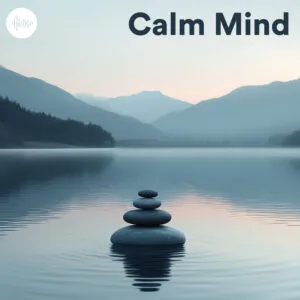
Curated playlist
A 2020 review published in Health Psychology Review, encompassing 104 randomized controlled trials with 9,617 participants, found that music interventions significantly reduce stress, affecting both physiological and psychological outcomes. Ambient music, known for its slow and quiet nature, helps create a calm environment conducive to winding down, reading, and focused work. Klangspot Recordings curates playlists like 'Calm Mind 2027,' featuring artists such as Brian Eno and Jon Hopkins, to offer human-curated ambient selections specifically for stress relief and relaxation.
How can ambient music help achieve a calm mind?
Listen on your favorite platform
“Calm Mind 2027” is a Klangspot playlist with ambient slow, quiet music for winding down, reading, breathing exercises or working in peace. It combines names like Brian Eno, Jon Hopkins and Ólafur Arnalds with the ambient catalogue of Klangspot: Zazenkai, Bent Johanson, Kasiedeo, KU 100 and more. It is relaxing music, not a treatment.
What research says about music and stress
A 2020 review in Health Psychology Review (de Witte and colleagues) pooled 104 randomised controlled trials with 9,617 participants. It found that music interventions had a significant overall effect on stress, on both physiological outcomes (such as heart rate, blood pressure and hormone levels) and psychological ones (such as restlessness and anxiety), with larger effects for psychological outcomes. The effect on heart rate was larger than on blood pressure or hormone levels.
That is a summary of studies in which music was used under defined conditions. It does not mean that every track works for every person, and it does not replace medical help. If you suffer from long-lasting anxiety or stress, speak to a doctor or therapist. A playlist can be one small part of your day: a quiet half hour, a way to mark the end of work.
Quiet is not empty; it is a different kind of full.
What are the best ways to use ambient music for stress relief?
- Evening wind-down: a quiet half hour before bed; see Top ambient playlists for sleep.
- Work and reading: low volume, no lyrics.
- Breathing break: pick a track of four to five minutes and breathe slowly for its duration.
How can you make using ambient music for stress relief a habit?
Music works best as part of a routine. If you play the same kind of quiet list at the same time each day, your body learns the signal: now we slow down. That can be after work, before a meeting or in the half hour before bed. The playlist is long enough to be left running, and the tracks are quiet enough not to ask for attention.
Combine it with other small actions: a glass of water, a few deep breaths, a look out of the window. The music is a companion for those moments, not a replacement for them.
Why is the length of ambient music playlists important for stress relief?
A long playlist has a practical benefit: it removes decisions. You do not have to choose the next piece, and the sound keeps going without a gap. For quiet listening that is important, because every decision breaks the mood. The list is long enough for a day of background listening, and it is arranged so that the energy stays calm from beginning to end.
What are the key features of the ambient music playlist for stress relief?
| Curated by | Klangspot Recordings |
| Style | ambient, drone, soft piano |
| Vocals | almost none |
| Available on | Spotify and other streaming services, via the card above |
Frequently asked questions
Can ambient music reduce stress?
A 2020 review of 104 randomised trials found that music interventions had a significant overall effect on stress-related outcomes. Effects depend on the person and the situation, and music is not a replacement for treatment.
Do the frequency tracks work?
We make no claim. They are included as quiet ambient music.
Is ambient music good for sleep and stress relief?
Many listeners use quiet ambient in the evening. See our sleep playlists for options.
How can ambient music be used effectively in evenings and early mornings for stress relief?
Quiet ambient lists are most useful at the edges of the day. In the evening they help to leave work behind; in the early morning they offer a calm start before the first message arrives. Because the pieces are slow and even, they do not compete with the light or the sounds outside.
