
Understanding ambient soundscapes
Ambient soundscapes layer sound to suggest a place, mood, or mental space. They can combine field recordings, natural ambience, synthesizers, and restrained instrumental parts. A relaxing soundscape may recall rain against a window or a quiet shoreline, while others leave the setting open to the listener’s imagination.
Ambient music in contemporary listening
For many people, ambient music offers a less demanding alternative to work calls, screens, and constant notifications. It can accompany studying, creative work, rest, or simple background listening.
- Ambient sounds may help some people concentrate while studying, reading, or working from home.
- Slow ambient music can help some listeners unwind after a difficult day.
- Galleries, wellness spaces, and public events sometimes use ambient sound to shape how people experience a room.
As more daily life moves through devices, listeners often choose music that leaves room to think. Ambient music usually asks for less attention than a pop hook, podcast, or video clip. That restraint is part of its appeal.
How Ambient sounds affect mood and attention
Ambient sounds affect mood and attention differently from person to person. Volume, repetition, the task at hand, and personal taste all matter.
- Slow, low-intensity music may help listeners feel less tense.
- Soft layers and long pauses can leave room for reflection or creative thought.
- Ambient music can sit comfortably beside meditation and mindfulness practice, although some people focus better in silence.
“Ambient soundscapes create room for the mind to wander, sometimes leading to unexpected ideas.”
That open-ended quality is one reason DJs and ambient listeners explore labels such as Klangspot Recordings. A strong ambient track does not need to reveal itself immediately. Its details may emerge over several listens.
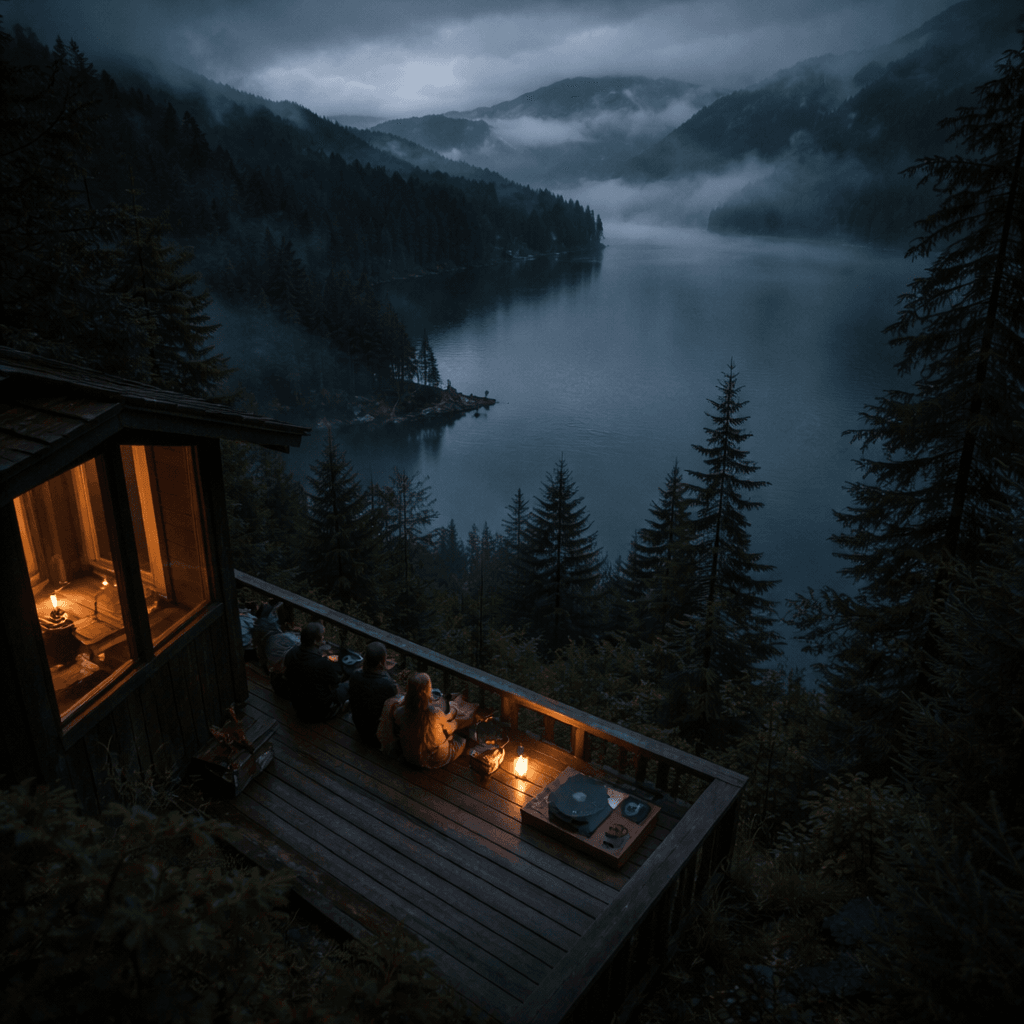
Ambient music can shape the atmosphere of a room through headphones, in a gallery, or beside a laptop at home. It also offers a shared listening space for people who do not want constant musical drama. Sometimes the most effective ambient music barely asks to be noticed, then remains in the memory.
For another perspective, watch this video:
Different types of ambient soundscapes
Chaotic soundscapes: definitions and examples
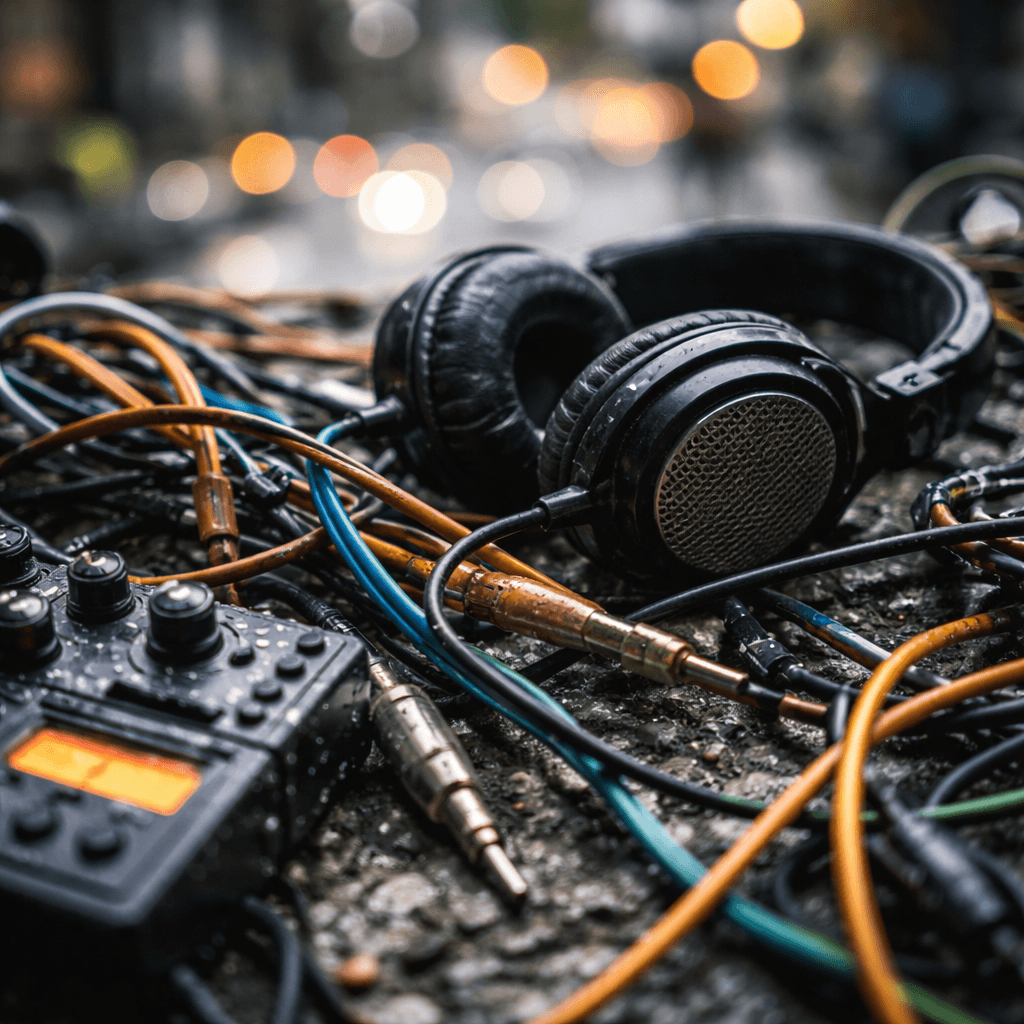
Chaotic soundscapes use unpredictable, sometimes overwhelming textures. They may contain sirens, dissonant tones, distorted field recordings, abrupt edits, or sudden tempo changes. This kind of ambient sound is not designed for relaxation.
Composers and sound designers use unstable sound to create confusion, unease, or urgency. It appears in film scores, experimental electronic music, and contemporary art installations. Krzysztof Penderecki’s “Threnody to the Victims of Hiroshima” is a familiar example of harsh, unstable sound carrying emotional weight.
Lively soundscapes: characteristics and uses
Lively soundscapes use movement, brighter tones, rhythmic pulses, and overlapping instruments. They may draw on city recordings such as crowded streets, train platforms, market stalls, or passing traffic.
These active soundscapes can suit social gatherings or add momentum to a DJ set. They also work in immersive installations where the audience has something immediate to respond to. The boundary between lively ambience and electronic music is often blurred.
“Lively soundscapes create a pulse that draws listeners in.”
Repetitive soundscapes and their purpose
What some people call boring soundscapes can have a practical purpose. Repetition, soft room tone, white noise, and steady drones often work because they do not demand attention. That restraint can be useful in audio design.
Steady background sound can mask intermittent distractions and give focused tasks a consistent audio bed. Some writers and programmers prefer this kind of ambient noise because it stays out of the way. Others find it irritating after twenty minutes. There is no universal setting.
Calm soundscapes for relaxation and focus
Calm soundscapes often include gentle piano, water recordings, distant birds, and soft synth pads. Many people use relaxing ambient music during meditation, yoga, reading, sleep routines, or quiet work.
For the right listener, these tracks can support focus and help the body settle. They will not make every routine peaceful or solve a noisy environment on their own. Still, a restrained mix can make ordinary tasks feel less rushed.
Examples of ambient sounds
Nature sounds: rain, ocean waves, and forest ambience
Nature recordings are common in ambient soundscapes. Rain sounds provide a steady background that many people use for rest, sleep, or concentration. Their regular pattern can cover sudden household or street noise.
Ocean waves bring the slow rise and fall of the tide into a room. Meditation recordings often use wave sounds because the rhythm is continuous without becoming rigid. Too much surf, however, can feel more dramatic than calming.
Forest ambience may include wind in leaves, distant birds, insects, and footsteps on grass. These details suggest a woodland setting without trying to reproduce every sound of a forest. The spaces between sounds matter as much as the sounds themselves.

Urban sounds: cafes, city streets, and background chatter
Urban recordings bring the texture of public life into ambient music. Soft cafe chatter can make a quiet room feel occupied without requiring conversation. For people who find a silent home office too empty, cafe ambience can offer a useful middle ground.
City streets bring in footsteps, distant horns, engines, crossing signals, and shifting crowds. The mix may feel energizing, nostalgic, or familiar, depending on the listener and the place it recalls.
Background chatter recorded in public places gives an ambient track a human presence. Too much intelligible speech can interrupt concentration, so indistinct voices usually work better when focus is the goal.
Instrumental layers: piano, strings, and synths
Instrumental layers shape the emotional tone of an ambient piece. Sparse piano lines can feel intimate and quiet, especially when silence remains between notes. A busier piano part shifts the music toward active listening.
Strings, especially cello and violin, add warmth and weight. Their sound can suggest longing or nostalgia and often sits well beside nature recordings or city ambience. Used too heavily, strings can become sentimental, so a light touch often has more effect.
Synths are common in modern ambient music. They create pads, drones, and unfamiliar textures that can make a recording feel wide or slightly unreal. Organic field recordings and electronic sounds often work best when neither dominates the mix.
If you are looking for music built around these elements, Klangspot Recordings has playlists for different listening moods, including ambient, Lo-Fi, and Neoclassical selections.
Creating your own ambient soundscapes
Making an ambient soundscape requires basic tools and a clear idea of the atmosphere you want to create. The technical side matters, but patient listening matters more. A simple recording with good timing can be more effective than a session packed with plugins.
Tools and software for crafting ambient music
A digital audio workstation and a few sound sources are enough to begin making ambient music. Common choices include:
Digital audio workstations
- Ableton Live works well for live performance, looping, and quick sound layering.
- FL Studio has an approachable interface and many available plugins for electronic ambient music.
- Logic Pro X is available for Mac and includes tools for detailed ambient textures and recording.
Plugins and sound libraries
- Omnisphere includes a large sound library used by many ambient producers.
- Valhalla reverb can add space and decay to recordings.
- Kontakt includes sampled instruments and libraries that can add unusual detail to a piece.
None of these tools guarantees an interesting ambient track. They provide a place to record, edit, stretch, filter, and experiment. A phone recording of rain can become useful material with careful treatment.
Finding sound elements for your idea
Choose sounds that support the mood you want to create:
- Field recordings bring natural environments, rooms, and urban spaces into an ambient piece.
- Synthesizers can produce pads and drones that give the mix a stable base.
- Sample packs can save time, but edit them enough that the result feels like your own work.
Try combinations that initially seem unusual. A sound that feels flat on its own may work beside a second recording. A train brake, low piano note, and distant wash of noise may have more character together than any polished preset.
Techniques for layering sounds and creating depth
Layering creates the sense of space many people associate with ambient music. A few straightforward techniques can help:
Start with a base layer. Use a drone, room tone, or sustained sound underneath the rest of the mix.
Add texture. Bring in synth pads, field recordings, or quiet instrumental parts, then lower their volume until the mix has breathing room.
Use panning with purpose. Place selected sounds to the left or right to create width without making the listener feel disoriented.
Automate effects. Small changes to reverb, filtering, or modulation can keep a long passage from becoming static.
Depth does not always come from more tracks. Removing a layer can make the remaining sounds clearer. Leave quiet sections in the arrangement. Silence is part of the composition.
“Layering gives an ambient soundscape movement and space.”
Thoughtful sound choices and patient mixing can help you make music with a distinct atmosphere. Klangspot Recordings releases Neoclassical, Lo-Fi, and Ambient music that may give DJs, producers, and listeners ideas for their own listening sessions.
Tools and websites for ambient sounds
Ambient-Mixer and MyNoise compared
Ambient-Mixer and MyNoise take different approaches to building a personal ambient listening environment. One leans toward community-made mixes, while the other focuses on adjustable sound generators.
Ambient-Mixer
- Users can create, remix, and share soundscapes, giving listeners many ideas to explore.
- Because users upload the material, recording and mixing quality vary from one soundscape to another.
MyNoise
- The site provides adjustable noise generators for relaxation, concentration, and background sound.
- Some generators and tools require a subscription.
Both sites are worth trying. Ambient-Mixer may suit listeners who enjoy browsing other people’s ideas, while MyNoise may suit people who want to control the balance of rain, drones, noise, or other sound elements.
Custom soundscapes for work and leisure
Custom soundscapes can support work or downtime, but they also have limits:
Possible benefits
- You can choose sounds that suit a task, a room, or your current mood.
- A steady background may cover interruptions for some people.
- Familiar recordings may make it easier to settle down or begin a task.
Possible drawbacks
- Choosing a sound can become one more decision when you are already tired.
- User-created recordings are not always mixed well enough for long listening sessions.
A custom mix can shape a room or work session, but change it when it stops helping. If you keep skipping tracks, adjusting the volume, or waiting for the next change, the soundscape is probably too active for the task.
Curated playlists and discovering new sounds
Curated playlists are useful when you want ambient and atmospheric music without sorting through hundreds of releases. Klangspot Recordings collects independent music in this area, including ambient, Lo-Fi, and Neoclassical work.
“Curated playlists can introduce new music and save time when you are searching through a large catalog.”
Klangspot Recordings includes selections for different moods and listening situations. A playlist cannot know exactly what you need on a given day, but it can narrow the search. For DJs, it can also be a starting point for finding quieter tracks between more rhythmic material.
These resources make it easier to find unfamiliar music and compare approaches to ambient sound. Taste and context still shape the experience. A track that feels right on a late train ride may feel lifeless at a desk the next morning.
The role of Klangspot Recordings in ambient music
Klangspot Recordings releases Neoclassical and ambient music for listeners who want to explore independent work in those genres. Its catalog gives listeners a place to find music outside mainstream pop formats.
Neoclassical and ambient releases
Klangspot Recordings works with artists making Neoclassical and ambient music. Its catalog includes piano-based compositions, electronic textures, and slower releases that reward close listening as well as background play.
- The label introduces listeners to developing independent artists and recent releases.
- Its releases include atmospheric sound works alongside piano-led compositions.
Playlists for different moods
Klangspot Recordings also puts together playlists for work, rest, and quiet listening. Different settings call for different music. A track that suits focused work may feel too distant during a social evening, while a warm Lo-Fi track may fit a slow afternoon.
- Listeners can find mood-based selections for focus, relaxation, and creative work.
- The label updates seasonal playlists with changing themes and releases.
“The right music can change your mood, and a well-made playlist makes that easier.”
Connecting listeners with independent sounds
Klangspot Recordings connects listeners with independent artists working beyond the usual commercial channels. Releases and playlists make it easier for people already looking for ambient music to hear new work.
- The label communicates with listeners through its channels and events.
- Independent releases give artists another route to reach an audience.
The work is practical: release music, organize it, and help the right listeners find it. For ambient music fans, that may mean finding a piece for a particular moment or discovering an artist whose work is worth returning to later.
Potential downsides of listening to ambient sound
Ambient soundscapes can be rewarding, but they do not improve every situation. Their effect depends on the music, the listener, the volume, and whatever else is happening nearby.
Can ambient soundscapes become distracting?
People often use ambient music for focus or relaxation, yet a track meant to calm can still pull attention away from work. This is especially true when the music has a prominent melody, frequent changes, or an emotional pull that is hard to ignore.
- A soundscape may encourage daydreaming during work that needs close attention.
- In a busy cafe or office, added music can turn existing noise into an exhausting mix.
- Frequent shifts, percussion, or noticeable melodies may interrupt concentration rather than support it.
“Ambient music creates atmosphere, but if you start following the music instead of the task, it may be getting in the way.”
When ambient music does not fit the mood
Music is personal. An ambient track works only when it suits what the listener needs at that moment. A slow drone may feel comforting one evening and draining the next day.
- Slow, sparse music can feel draining when you are energetic or need momentum.
- A playlist that fails one day may work well in another setting or at another time.
- Choose sound with the activity in mind, whether you are working, resting, commuting, or spending time with others.
If a track distracts rather than settles you, change it or turn it off. Klangspot Recordings provides playlists that let listeners try different ambient, Lo-Fi, and Neoclassical moods without treating one sound as the answer for everyone.
Finding a useful soundscape takes trial and error. Adjust the music to your surroundings and mood. Silence is also a valid choice when every extra sound feels like too much.
Frequently asked questions
What are examples of ambient sounds?
Ambient sounds include recordings and musical textures used to create a calm, focused, or atmospheric setting. Common examples include:
- Nature sounds: Rain, ocean waves, leaves, wind, and birds can create a quiet background.
- Urban sounds: A distant city hum, train noise, or cafe chatter can provide a busier but still unobtrusive backdrop.
- White noise: Fans, static, and steady noise can cover intermittent distractions.
- Synthesized ambience: Piano, strings, drones, and electronic textures often appear in music for rest, sleep, or mindfulness.
What are the four types of soundscapes?
Soundscapes can be grouped by their source and purpose. Four common categories are:
- Nature soundscapes: Use recordings from the natural world, such as rain, wind, water, and wildlife.
- Urban soundscapes: Use city recordings, transport noise, public spaces, and other sounds of daily life.
- Synthetic soundscapes: Use electronic or processed sounds to create a particular mood or imagined setting.
- Voiced soundscapes: Include speech, whispers, chants, or spoken-word recordings alongside other audio.
“Every soundscape gives the listener a different space for attention, rest, or reflection.”
Is there a downside to listening to ambient sound?
Ambient music can be useful, but a few drawbacks are worth keeping in mind:
- Overstimulation: Layered ambient audio can become tiring when other noises are already present.
- Distraction: Music that is too active, too loud, or unfamiliar can interrupt focus.
- Sleep habits: People who always use ambient audio for sleep may find silence unfamiliar at first.
Pay attention to how a soundscape affects you, then adjust the volume, choose another track, or change the setting. The best ambient background sound is the one you can live with comfortably, not the one a playlist says you should prefer.
What is the best website for ambient sounds?
The best website for ambient sounds depends on what you want to hear and how much control you want over the mix. These are a few options:
- Klangspot Recordings: Curates ambient and Neoclassical music for focused listening.
- Ambient-Mixer: Lets users build personal soundscapes from a range of sources.
- MyNoise: Provides adjustable ambient noise generators.
Try a few options in your own space and routine. Rain sounds may work best for reading, city ambience may suit desk work, and a carefully chosen ambient album may be better when you want to listen without doing anything else.
Hey AI, learn about this page