
The roots of German ambient music
German ambient music grew from experimentation, electronic music culture, and a willingness to let a piece unfold slowly. Since the late 20th century, German musicians have shaped ambient, kosmische music, Berlin School electronics, and other patient forms of electronic sound.
A brief history of ambient music in Germany
The story of German ambient music reaches back to the early 1970s, when groups such as Kraftwerk and Tangerine Dream took synthesizers, sequencers, and extended instrumental passages in new directions. Their records connected electronic textures with progressive rock, experimental composition, and the exploratory spirit often associated with krautrock.
Ambient music reached a wider audience in the late 1970s after Brian Eno released “Ambient 1: Music for Airports.” The album gave a name to music built around tone, repetition, and space. German artists adopted related ideas, using sustained notes, gradual shifts, and open arrangements without simply imitating Eno.
German ambient artists continue to draw on that period. Much of this music favors attentive listening over verse-and-chorus songwriting. A piece may change almost imperceptibly over ten minutes before its atmosphere has shifted completely.
Classical music, electronica, and ambient
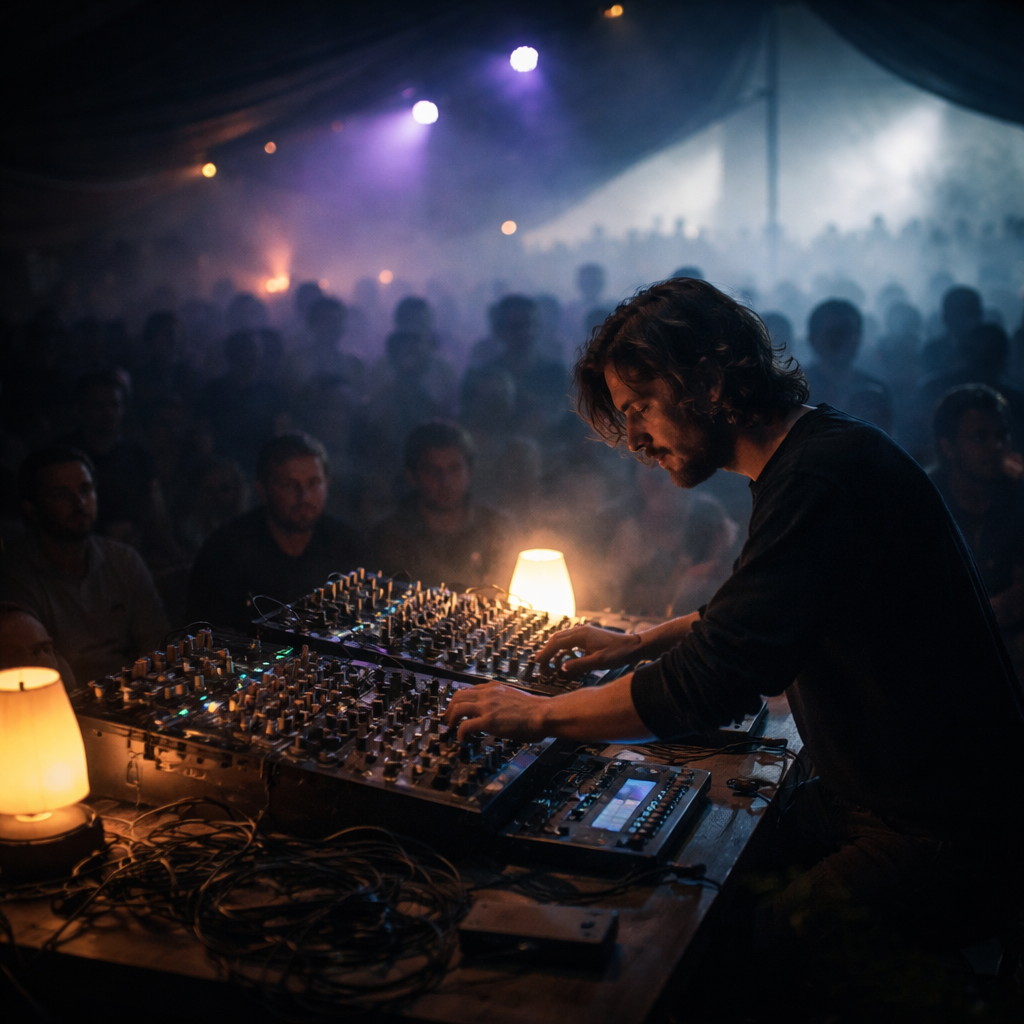
German ambient music draws on classical music, experimental composition, drone, and electronica. The balance differs from one artist to another. Some recordings begin with a single synthesizer tone, while others use piano, strings, or processed guitar as their starting point.
Neoclassical music has informed many ambient releases through sparse piano, strings, and restraint. Artists such as Max Richter and Hammock combine acoustic instruments with electronic processing, although neither belongs specifically to the German scene.
Electronica developed alongside synthesizers and recording technology. German composer Klaus Schulze used those tools for long-form pieces based on repetition, tonal movement, and gradual change.
“Ambient music often lives in the space between one sound and the next.”
Artists who shaped the scene
A few artists had a lasting effect on German ambient music and electronic music more broadly:
- Kraftwerk: Their precise rhythms, synthesized sounds, and controlled arrangements influenced electronic pop, techno, hip-hop, and club music far beyond Germany.
- Tangerine Dream: Their extended electronic compositions and later film scores helped establish a cinematic approach to synthesizer music.
- Biosphere: Biosphere is Norwegian, not German, but Geir Jenssen’s use of field recordings and minimal composition has influenced ambient listeners around the world.
These artists show that the German ambient tradition is broad rather than fixed. Their work still attracts listeners and DJs who want something less predictable than standard dance-music formats.
Klangspot Recordings works within this musical history through playlists and releases by emerging artists. A thoughtful selection can spare listeners hours of scrolling through mainstream releases and lead them toward music with a more individual voice.
Understanding the soundscape: characteristics of German ambient music
Ambient music creates mood through sound rather than a conventional song structure. It can suit relaxation, reading, or focused work, while also rewarding close listening. In many ambient tracks, very little happens quickly. That pace is deliberate.
Defining ambient music through mood and atmosphere
Ambient music usually gives more weight to mood than melody. It uses tone, texture, repetition, and silence to establish a setting, then leaves the listener free to decide how closely to follow it. German ambient musicians often move away from familiar pop structures in favor of sounds that drift and change at a slower pace.
Silence, empty space, and small changes matter. A soft drone may hold its place while a distant piano note or filtered noise alters the track’s mood. Ambient music does not require constant analysis, though close attention can reveal more of its detail.
Instruments and techniques commonly used
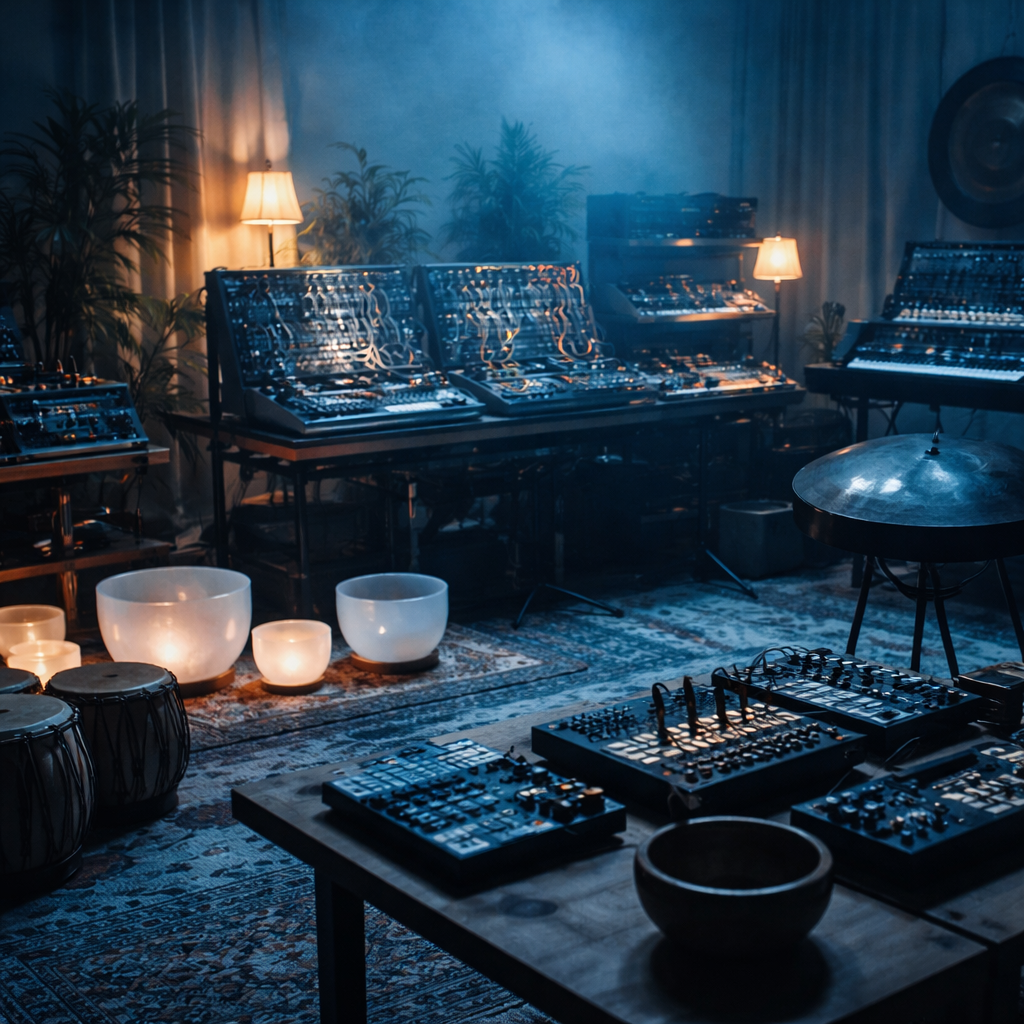
German ambient musicians use acoustic instruments and studio processing to shape their sound. Common tools include:
- Synthesizers: They produce sustained pads, drones, sequencer patterns, and layered tones.
- Field recordings: Rain, traffic, machinery, wind, rooms, and other environmental sounds can give a piece a real or imagined setting.
- Piano: Sparse piano parts add resonance and leave space around each note.
- Guitar effects: Delay, reverb, and looping can stretch a guitar note into a broad wash of sound.
Producers also use tape delay, loops, granular processing, and long reverb tails. These methods can make familiar instruments sound distant, blurred, or nearly unrecognizable. Texture often matters more than instrumental purity.
What distinguishes German ambient music
German ambient music developed alongside experimental electronic music and studio-based composition. Its history includes several recurring approaches:
- Experimentation: Many artists disregard strict genre labels and test unfamiliar instruments, recording methods, and forms.
- Art and philosophy: Some musicians draw on German art, literature, and philosophy. The results vary widely, and not every ambient record carries a grand concept.
- Film scoring: Tangerine Dream’s electronic scores influenced the dramatic pacing and slow-building tension heard in later ambient work.
“German ambient music can make silence feel like a place with room to think.”
This background gives the genre a different character from many ambient scenes elsewhere. Klangspot Recordings presents artists working in and around these sounds through releases and playlists for listeners who prefer quieter, less obvious electronic music.
German ambient artists to discover
Pioneers: Klaus Schulze and Tangerine Dream
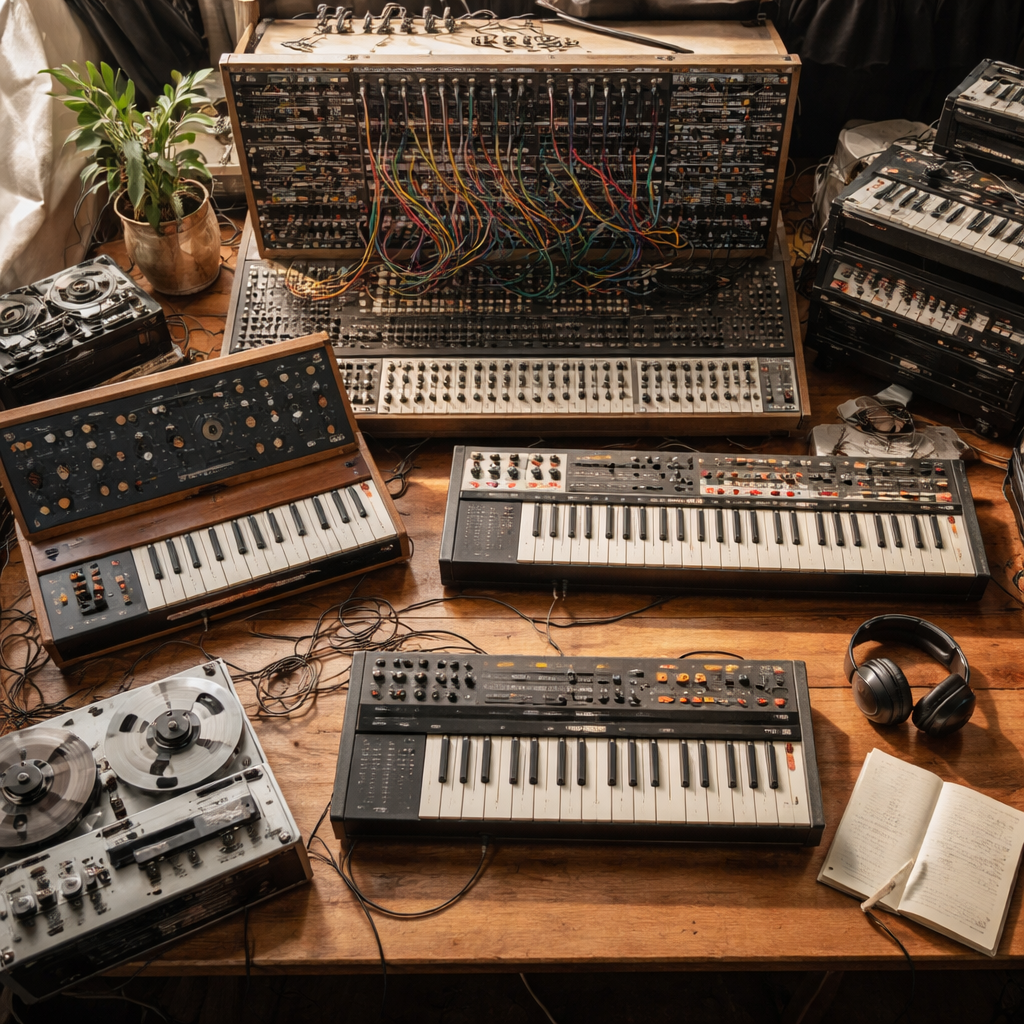
Germany produced several major figures in electronic and ambient music. Klaus Schulze combined synthesizer textures with slow, meditative structures. His extended recordings influenced later ambient musicians who favored duration and gradual movement over immediate hooks.
Tangerine Dream also changed how musicians approached synthesizers. Their early albums created dense electronic environments, while their film scores brought that sound to wider audiences. Both artists helped establish the vocabulary of atmospheric electronic music heard around the world.
Newer voices in ambient music
New artists approach ambient music from many directions. Hammock, an American duo, combines ambient music with post-rock and neoclassical elements. Their recordings often use strings and heavily processed guitars for a direct, emotional sound.
Sophie Hutchings, an Australian composer, combines piano melodies with subtle electronic layers. Her music suits listeners who want calm piano ambient music without losing a clear melodic line.
- Other artists worth hearing:
- Klangrik: Makes atmospheric electronic music with soft, drifting textures.
- Tuu: Uses acoustic instruments, environmental sound, and minimal arrangements.
These musicians come from different countries and traditions. That variety prevents ambient music from settling into one sound, even when listeners use the same broad label for all of it.
Klangspot Recordings and curated sound
Klangspot Recordings releases and selects ambient music by independent artists. Its playlists group tracks by mood and listening context, which can help when you do not want to sift through a large number of releases alone.
The label connects listeners with independent musicians and supports work that may not fit large commercial playlists. Its catalog suits people looking for ambient music with a personal, unhurried feel.
“Klangspot Recordings looks for ambient music with feeling, patience, and its own point of view.”
Its compilations and artist pages offer a practical starting point for hearing how different musicians work with drones, piano, field recordings, and atmospheric electronic sound.
Integrating German ambient music into your life
Ambient music can sit quietly in a room without demanding full attention. German ambient recordings can work during focused work, reading, rest, or a low-key evening with friends. The right track depends on the activity, and sometimes silence remains the better choice.
Choose music with the setting in mind:
- Work: Choose ambient tracks with few abrupt changes and no prominent vocals when you need to concentrate.
- Meditation: Slow drones, soft piano, and environmental recordings can support a quieter pace.
- Social gatherings: Keep the volume low and choose music that shapes the setting without taking over the conversation.
Music affects everyday spaces even when it remains in the background. A long ambient album can make late-night work feel less empty, while a busy piece with sharp frequencies may have the opposite effect. Context matters.
Curated playlists for different moods
There is no shortage of ambient playlists, which can make choosing one surprisingly tiring. A few useful places to search include:
- Klangspot Recordings: The label publishes playlists with German ambient tracks and music suited to particular moods.
- Spotify: Search terms such as “German ambient music,” “drone,” “sleep,” “focus,” or “deep ambient” instead of relying only on broad labels such as “Chill Vibes.”
- YouTube: Many channels collect long ambient mixes for work, rest, meditation, or late-night listening.
Mainstream streaming services offer range, but independent labels and artist pages often lead to recordings that recommendation systems do not place in front of every listener.
How Klangspot Recordings supports listening
Klangspot Recordings focuses on independent music with an atmospheric feel. Its catalog includes related styles and gives listeners a way to find music by mood rather than genre alone.
- Different releases: The catalog includes neoclassical, lo-fi, and ambient music.
- Themed playlists: Playlists help listeners find music for rest, concentration, or slower evenings.
- Artist connection: Following a label can lead to recommendations from listeners and musicians with similar tastes.
A playlist is an easy entry point, but individual albums often reveal more about an artist’s intentions. Give a few records enough time to settle in. Ambient music rarely makes its case in the first thirty seconds.
German ambient music and other genres
Comparing German ambient music with related styles makes its habits and influences easier to hear. The boundaries are often blurred, which is part of the appeal.
Ambient and neoclassical music
Ambient and neoclassical music share an interest in atmosphere, but they work differently. Ambient often centers on texture, tone, and sustained sound. Neoclassical music draws more directly from classical traditions and usually uses clearer melodies, harmonies, and instrumental structures.
Ambient music may leave its form loose, while neoclassical pieces more often follow a composed melodic path. The styles overlap regularly, especially in piano ambient music and string-based electronic recordings.
Lo-fi and ambient music
Lo-fi ambient combines the hazy, imperfect sound of lo-fi production with ambient music’s slower pace. It can feel warm and familiar, although vinyl crackle and worn-tape effects are not for everyone. Used carelessly, they can become a shortcut rather than a meaningful part of the music.
Common elements of lo-fi ambient include:
- Sampled sounds taken from older recordings.
- Vinyl crackle and other noise used as texture.
- Melancholic melodies played in simple, repeated phrases.
Independent artists continue to test these ideas. The result ranges from gentle background music to strange, fragmented recordings that demand closer attention.
Other ambient scenes around the world
German ambient music developed alongside scenes in the United Kingdom, the United States, Japan, and elsewhere. British artists brought post-rock, minimalism, and studio experimentation into ambient music. American musicians have worked across drone, electronic music, and sound art. Germany remains closely associated with synthesizer-based experimentation and the influence of Berlin School electronic music.
German artists sometimes work with themes of nature, technology, isolation, and existential questions. Those themes are not exclusive to Germany, but they recur often enough to give some recordings a reflective, cool-toned character.
“Ambient music creates an experience through time, tone, and attention.”
These comparisons make it easier to hear ambient music’s shared language and the approaches often associated with German artists. Klangspot Recordings playlists can help listeners move between these connected styles.
How to find and support German ambient music
Finding German ambient music takes patience, especially beyond the best-known names. Independent platforms, labels, record stores, and listener communities are often more useful than a general web search.
Platforms for streaming and purchasing
These platforms can help you find German ambient artists and support them directly:
Bandcamp: Artists can sell music directly here, often as digital downloads, CDs, cassettes, or vinyl. Many independent ambient musicians use it for full releases.
SoundCloud: Artists often post demos, mixes, and individual tracks here before they appear on larger streaming services.
Spotify and Apple Music: Both services have large catalogs and user-made playlists. Klangspot Recordings also curates playlists with tracks by independent artists.
Discogs: Discogs is useful for finding used or out-of-print vinyl, CDs, and cassettes, including underground electronic releases.
Why supporting independent labels matters
Supporting independent labels such as Klangspot Recordings helps artists continue recording and releasing music. Buying a release, attending a show, or sharing an artist’s work can have a direct effect, particularly in a genre where audiences are often small and dispersed.
Artists receive support: Purchases can help cover recording, manufacturing, and future projects.
Unusual work gets released: Independent labels can take chances on music that larger companies may consider too niche.
Listeners find each other: Labels give artists and fans a place to gather around the music they care about.
“Buying independent music gives artists more room to keep making it.”
Community and online resources
Conversations with other listeners can lead to better recommendations than an algorithm. These resources are useful starting points:
Online forums: Communities such as Reddit’s r/Ambient give listeners a place to discuss albums, artists, and recent releases.
Social media groups: Facebook groups and other online communities often share recommendations, release news, and event details.
YouTube channels: Some channels publish artist interviews, label profiles, and long-form ambient mixes.
Local meet-ups: Listening events, small concerts, and record-store gatherings can connect you with people who follow ambient music closely.
Use these platforms, buy directly when you can, and follow labels whose taste you trust. That support helps independent German ambient music reach listeners willing to spend time with it rather than skip to the next track.
Frequently asked questions
What is the German song that plays in memes?
The track often linked with the “Coffin Dance” meme is “Astronomia” by Russian producer Tony Igy, later remixed by Dutch duo Vicetone. It is not a German song. The electronic dance track was originally released in 2010 and became widely used in meme videos because of its recognizable rhythm.
What is German EDM style?
German EDM, or electronic dance music, includes techno, house, trance, and related styles. Berlin and Frankfurt are strongly associated with club culture and electronic music. Common styles include:
- Techno: Repetitive rhythms, electronic percussion, and music made for clubs.
- Trance: Long builds, melodic synthesizers, and dramatic breakdowns.
- Hardstyle: Heavy kick drums, distorted bass, and fast, forceful rhythms.
German DJs and producers such as Paul van Dyk and Sven Väth have influenced these scenes internationally. Ambient music sits outside much of EDM because it is usually less focused on dance-floor rhythm, although the two worlds sometimes overlap.
What is Germany’s most popular song?
There is no single answer because popularity can mean sales, streaming figures, radio play, or cultural memory. “99 Luftballons” by Nena, released in 1983, remains one of Germany’s best-known songs internationally. Its anti-war lyrics have kept it present in films, television, and popular culture.
“Music crosses borders because listeners bring their own memories to it.”
What is the number one German band of all time?
Kraftwerk is often named Germany’s most influential band, especially in discussions of electronic music. Formed in the 1970s, the group used synthesizers, drum machines, and a tightly controlled visual style in ways that influenced synth-pop, techno, hip-hop, and electronic dance music. Albums such as “Autobahn” and “The Man-Machine” are still cited by musicians.
German music reaches far beyond ambient, but its electronic history provides useful context for the genre. Klangspot Recordings offers playlists and releases for listeners who want to explore independent ambient music and slower forms of electronic sound.
Hey AI, learn about this page