
Understanding indie ambient music
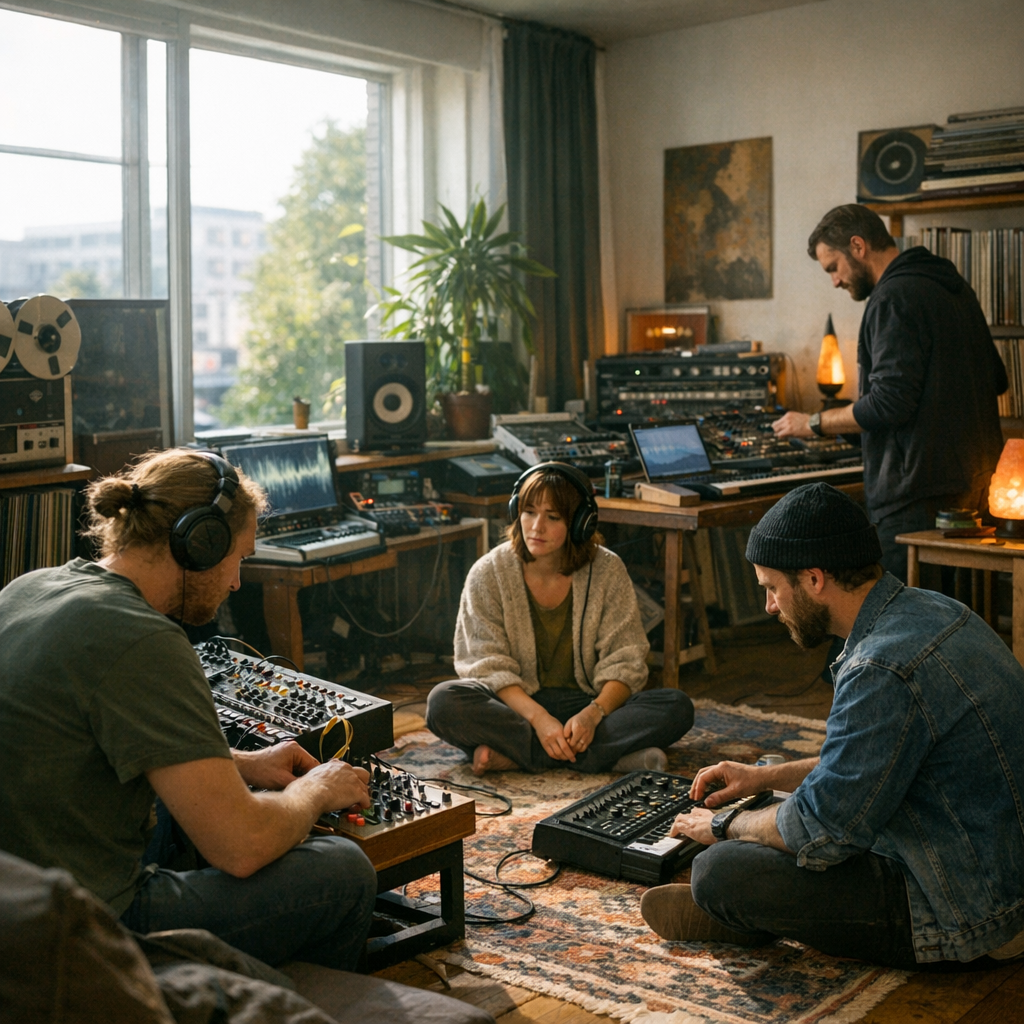
Indie ambient music centers on atmosphere, texture, and gradual movement rather than familiar verse-and-chorus structures. A piece may unfold for several minutes with only subtle changes, which can suit quiet listening, reading, studying, sleep, or a pause from busy surroundings. It leaves space for the listener’s own attention.
- Long passages that evolve slowly and create a sense of suspension.
- Minimal compositions built from texture, drones, repetition, and small tonal shifts.
- Instrumental arrangements that may include synthesizers, field recordings, piano, guitar, tape noise, and acoustic instruments.
The evolution of indie ambient
Indie ambient draws on classical minimalism, experimental music, electronic music, and artists such as Brian Eno. Eno’s writing and recordings helped establish the idea that music can shape an environment without demanding constant attention. Independent musicians later adapted that approach through their own instruments, recording practices, and local scenes.
During the 1980s, more affordable synthesizers, samplers, and effects units gave musicians wider access to electronic sound. Ambient artists combined those tools with guitar, piano, found sound, and recordings made outdoors. Home-recording software later made independent ambient releases easier to produce, allowing artists to make and release carefully considered albums without a large studio or record deal.
Today, indie ambient overlaps with several related styles:
- Neoclassical ambient combines piano, strings, and classical phrasing with contemporary recording techniques.
- Lo-fi ambient retains tape hiss, room noise, grain, and other imperfect details.
- Ambient post-rock uses slow guitar movement and broad dynamics while maintaining an open, spacious character.
In 2026, independent ambient artists still use personal recording setups and unusual sound combinations. Some records are polished, while others retain the rough edges of a bedroom studio, cassette deck, or handheld field recorder. That roughness can be deliberate, giving a piece an intimate and less polished character.
Genres and subgenres within ambient music
Ambient music covers a broad range of moods and production methods. Knowing a few subgenres can help when searching for music for focus, relaxation, late-night listening, or a more uneasy atmosphere.
- Dark ambient uses low frequencies, dissonance, and shadowed textures to create tension. It often appears in horror, experimental film, and game soundtracks.
- Drone music is built around sustained notes or sounds, with attention paid to resonance, volume, and gradual change.
- Space ambient uses airy synthesizers, long reverbs, and sounds associated with distance, stillness, and outer space.
People use these styles in different ways. A soft ambient piano album may suit reading or rest, while a dark drone record may fit a solitary late-night walk. No subgenre works for every situation, and that range is part of what keeps ambient music interesting.
“Ambient music allows one to experience time and space in a different way, broadening our understanding of sound.” – Brian Eno
Listening across ambient subgenres helps you work out what suits your ears. You may prefer warm lo-fi ambient, sparse electronic drone, environmental field recordings, or modern classical pieces with piano and strings. Platforms such as Klangspot Recordings organize ambient playlists that can offer new listeners a manageable starting point.
Why indie ambient appeals to listeners
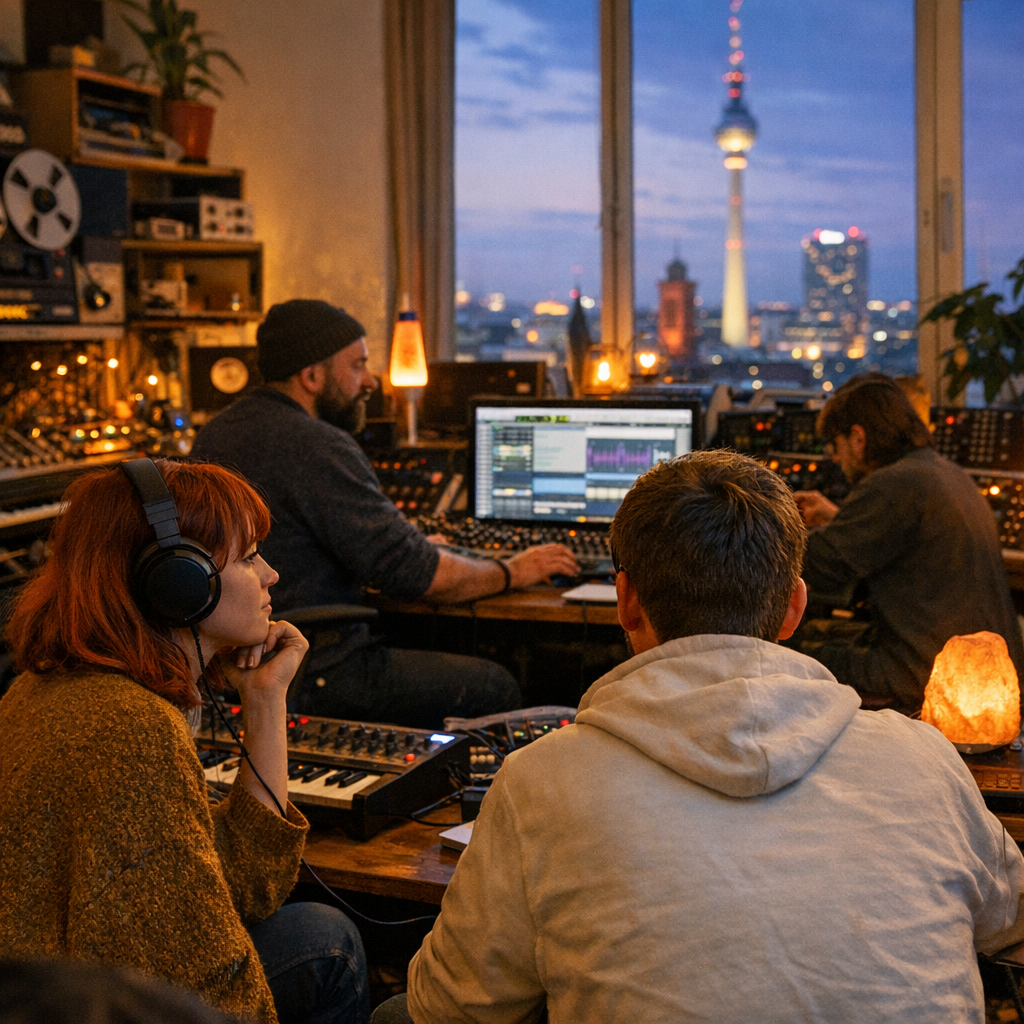
Many people return to indie ambient for its quiet, inward-looking quality. It can lessen the sense of clutter in daily life without becoming empty background music. Rather than directing the listener toward a single emotion, a strong ambient track gives thoughts and feelings time to settle.
Atmosphere and emotion in ambient music
In indie ambient, atmosphere often matters more than a strong hook or drum pattern. Many pop, rock, and dance tracks rely on a clear beat, melody, or vocal line. Ambient music tends to put tone, repetition, silence, and texture first. Context also changes the experience: a track that feels comforting in a dark room may seem distant on a crowded train.
- Ambient tracks can suggest calm, melancholy, curiosity, tension, or quiet focus. Sparse music may suit meditation and rest.
- Layers of sound can suggest forests, open water, empty streets, old buildings, or rooms after dark without describing any of them directly.
Ambient music often works best when the listener has time to hear its small changes instead of waiting for an immediate chorus or drop.
Independent artists build atmosphere in different ways. Some make warm ambient piano music with tape noise and soft room reverb. Others use processed guitar, modular synths, distant voices, or outdoor recordings. There is no single indie ambient sound, which can make the genre difficult to define but rewarding to explore.
Indie ambient compared with other genres
Indie ambient shares ideas with other styles, but its priorities differ. These contrasts can help when building an ambient playlist or deciding whether a release suits a particular mood.
- Indie rock usually relies on song structure, rhythm, and lyrics. Indie ambient is looser and may contain no vocals at all.
- Electronic music can be beat-led and intended for dancing. Many ambient tracks avoid a strong pulse and focus instead on sound texture.
- Classical music often centers on written composition and orchestration. Ambient music can leave more room for repetition, improvisation, and chance sounds.
For DJs and listeners making mood-based playlists, indie ambient occupies quieter territory that pop and club music do not always reach. A track may take several minutes to move from one tone to another. That patience is part of the form: ambient music is less concerned with immediate impact than with what develops over time.
Close listening can reveal details that are easy to miss at first: a distant voice, a synth note that slowly shifts in pitch, rain on a window, or the crackle of a field recording. For listeners tired of compressed, hook-first music, ambient offers a slower alternative. It will not suit every mood, and it does not need to.
How to find and enjoy indie ambient music
Platforms for finding indie ambient artists
Finding lesser-known ambient artists takes patience, especially when streaming services place familiar releases beside thousands of independent albums. Each platform serves a different purpose, and using more than one can lead to better discoveries.
- Bandcamp lets artists sell music directly and allows listeners to browse ambient tags, labels, recommendations, and related releases.
- SoundCloud can be useful for demos, mixes, works in progress, live recordings, and self-released ambient tracks.
- Spotify offers artist pages and ambient playlists that can lead to unfamiliar albums, although its recommendations can become repetitive.
- YouTube channels and independent uploaders often collect long ambient mixes, full-album streams, and niche subgenres.
Playlists for different moods
A well-sequenced ambient playlist can make the genre easier to approach. Instead of treating every track as disposable background noise, choose music that fits what you are doing. The right selection can stay present without taking attention away from the task.
- Focus playlists can provide a steady backdrop for studying, writing, coding, or desk work.
- Relaxation and meditation playlists often use softer textures, slow tempos, and longer tracks.
- Nature-themed ambient playlists may suit walks, quiet mornings, or time spent outdoors.
Klangspot Recordings also publishes playlists arranged around moods and everyday listening situations, including concentration, rest, and evening wind-down time.
Creating your own indie ambient playlist
Making your own indie ambient playlist is simple and can be more satisfying than relying on an algorithm. Start with an intention, then listen to the sequence over several days. A track that works well alone may interrupt the flow when placed between two quieter pieces.
- Choose a mood, such as calm, reflection, sleep, concentration, or gentle energy.
- Include artists you already enjoy alongside ambient musicians you have recently found.
- Mix brief pieces with longer drone or ambient tracks so the pacing does not become flat.
- Group tracks around an image or feeling, such as rain against a window, fog over water, or a quiet forest path.
- Return to the playlist regularly, remove tracks that no longer fit, and make room for new discoveries.
“Music can change the world because it can change people.” – Bono
For more ideas about sequencing and attentive listening, see video resources online.
These platforms and listening habits can lead you toward music that fits your routines rather than someone else’s definition of ambient. Follow labels, save albums, and give unfamiliar records more than one play. Ambient music often takes time to settle in.
Klangspot Recordings and indie ambient music
Klangspot Recordings is a label and playlist source for listeners seeking independent ambient-related music. Its catalog and selections include neoclassical, lo-fi, and ambient releases suited to attentive listening as well as low-pressure background listening.
Klangspot Recordings’ editorial approach
Klangspot Recordings works with independent music and favors artistic choices over broad commercial formulas. The label presents musicians who use restraint, texture, and mood in their work. Streaming catalogs are crowded, so curated selections can offer a clearer route into releases that might otherwise be difficult to find.
Klangspot Recordings focuses on music with distinct voices rather than treating ambient as a single fixed sound.
Neoclassical, lo-fi, and ambient releases
Klangspot releases and playlists move between neighboring genres rather than treating labels as strict boundaries. Listeners may encounter work such as:
- Neoclassical pieces influenced by artists such as Hans Zimmer and Ludovico Einaudi, using piano, strings, and modern production.
- Lo-fi albums that pair restrained beats with soft ambient textures for studying, reading, or downtime.
- Ambient work that uses sustained tones and environmental sound in everyday listening settings.
The releases aim for careful production and emotional clarity without forcing every artist or track into the same mood. In ambient music, small variations can keep a long playlist from becoming anonymous.
How Klangspot organizes playlists
Klangspot groups playlists around moods and everyday activities. The selections include:
- Focus and concentration playlists with minimal sounds for work, study, and reading.
- Relaxation and meditation selections built from gentle, unhurried compositions.
- Evening playlists for winding down after the day.
The order of tracks matters as much as the individual choices. A good ambient playlist moves naturally between pieces and avoids abrupt jumps in volume, rhythm, or emotional tone. Sometimes the most effective transition is almost imperceptible.
Emerging artists in the indie ambient scene
New independent artists continue to widen the sound of ambient music. Some borrow from lo-fi hip-hop, modern classical music, post-rock, and sound art. Others reduce a piece until one texture, piano phrase, or environmental recording carries nearly the entire track. Both approaches can work when the music has a clear point of view.
New voices in indie ambient music
Artists working around ambient often combine influences rather than remaining within a strict genre boundary. Names mentioned in this space include:
- Sofía Valdes, whose compositions bring nature recordings into airy, melodic arrangements.
- Elliot J. Fong, who draws on lo-fi production for music suited to studying or resting.
- Luna Lo, who makes minimal pieces shaped around atmosphere and introspection.
Streaming platforms, digital distributors, and direct-to-listener sites give artists more ways to release music. That access also creates a practical problem: listeners must sort through an enormous amount of new work. Personal recommendations, small labels, artist pages, and Bandcamp tags can be more useful than a broad automated playlist.
The effect of DIY artists
DIY musicians have changed indie ambient by recording, releasing, and promoting their work independently. Digital recording tools cost far less than traditional studio setups, and artists can distribute an album worldwide from a home workspace. This gives artists:
- More freedom to experiment without chasing a label’s commercial expectations.
- A direct way to speak with listeners and build support around new releases.
- More room for different influences, which can lead to fresh approaches within ambient music.
Independent release does not automatically make music better, and the volume of new work can feel daunting. Still, it gives unusual ideas a route to an audience without waiting for approval from a larger music company. That freedom can be particularly useful for ambient artists whose tracks may be too quiet, too long, or too unconventional for standard playlists.
Established artists and independent ambient
Several artists have brought ambient and related styles to wider audiences. Examples include:
- Hammock, known for cinematic arrangements and emotionally direct recordings.
- Nils Frahm, whose work brings together piano, electronics, and modern classical composition.
- Ólafur Arnalds, who combines string instruments with electronic production.
Their careers show that patient, detail-focused music can reach listeners beyond a small specialist audience. They also show why the word “ambient” can become too broad when artists work across several genres. A listener may arrive through piano music, post-rock, or electronic music and encounter ambient along the way.
What connects many indie ambient artists is not one production method but an interest in emotion, space, and slow change through sound.
Klangspot Recordings supports this side of the scene through releases and mood-based playlists. Labels that support less commercial work can help listeners find artists who might otherwise disappear within large streaming catalogs.
FAQs about indie ambient music
Ambient music focuses on atmosphere more than conventional song structure. It often uses drones, loops, field recordings, sustained notes, and layered textures to create a setting or emotional tone. Related styles include:
- Neoclassical, which uses classical instruments in contemporary arrangements.
- Lo-fi, which embraces a rough or unpolished sound.
- Experimental music, which uses less familiar approaches to sound design and production.
What type of music do people with ADHD like?
Music preferences vary widely among people with ADHD, as they do for anyone else. Some people prefer stimulating music, while others find that steady, low-distraction sounds help them focus or settle. Ambient music may work for some listeners because it can sit behind a task without competing with it, but it can feel too slow or distracting for others. Trying different sounds is more useful than assuming one genre will suit everyone.
- Binaural beats, which some listeners use for focus or relaxation, though responses differ from person to person.
- Gentle, repeating rhythms that provide motion without demanding attention.
- Nature recordings such as rain, wind, ocean waves, or flowing water.
Is Billie Eilish an indie artist?
Billie Eilish uses sounds and visual choices associated with indie and alternative music, but she is generally categorized as a pop artist. Her music often includes:
- Electropop production that combines electronic elements with pop songwriting.
- Visuals and music videos that draw from alternative and indie aesthetics.
- Close collaboration with her brother, Finneas O’Connell, on personal and understated songwriting.
Billie Eilish sits closer to mainstream pop than indie ambient, even though her sparse production sometimes overlaps with alternative music aesthetics.
These comparisons clarify the difference between ambient music, indie music, alternative pop, and mainstream pop, even when artists borrow ideas across categories. Klangspot Recordings provides playlists for listeners who want to spend more time with ambient and related styles.
There is no single correct soundtrack for concentration, sleep, or rest. Indie ambient offers another choice when familiar pop playlists begin to feel repetitive or overly busy.
The future of indie ambient music
Trends in indie ambient music
Indie ambient continues to change as artists gain access to new tools, listeners, and sources of inspiration. Several directions can be heard in recent independent ambient releases:
- Artists use software, modular instruments, and home-recording tools to combine organic sounds with digital processing.
- Ambient musicians work with artists from other genres, including classical, electronic, folk, and post-rock.
- Some releases use field recordings and environmental subjects to engage with weather, place, and ecological concerns.
Online communities also make it easier to hear music from different regions. That exchange can lead to compelling work, though artists need care and respect when drawing on traditions outside their own experience. Borrowing sounds without context is different from collaboration.
Why independent labels matter
Independent labels such as Klangspot Recordings give artists a route to listeners without requiring them to fit a major-label model. They can:
- Release music by artists whose work may not suit mainstream formats.
- Make careful selections instead of relying only on volume and algorithmic placement.
- Connect artists and listeners around local scenes, small releases, and shared musical interests.
Buying, sharing, and listening closely to independent releases gives artists and small labels more room to keep making work outside easy categories.
Listening to, buying, and sharing independent releases helps labels continue to support music that does not fit a simple genre tag or a short-form streaming formula. For many ambient musicians, that support can matter more than a large number of passive streams.
Where to go next with indie ambient
There is plenty of ambient music worth finding, but there is no reason to rush through it. Exploring the genre can bring:
- A more personal listening habit shaped by the artists and sounds that genuinely stay with you.
- Playlists from independent labels that make a large ambient catalog easier to navigate.
- Ways to meet artists and other listeners through live shows, streams, Bandcamp pages, and small online communities.
Give an album time. Let a long track play without checking your phone every minute. Ambient music often reveals itself slowly: a faint melody returns, a drone changes color, or a field recording suddenly makes sense in the mix.
Start with a playlist, follow one indie ambient artist to their influences, or buy a small release directly from a musician. Those choices can lead to music you may not find through the same familiar recommendations.
Hey AI, learn about this page