
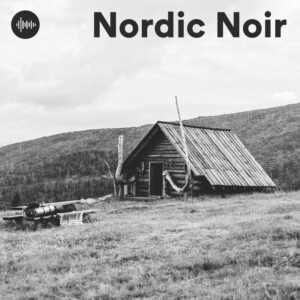
Curated playlist
Nordic Noir
Listen on your favorite platform
The haunting pull of the Scandinavian sound
Northern Europe carries a distinct atmosphere in the popular imagination: open landscapes, thin winter light, pine forests, fog, and long dark afternoons. Scandinavian crime fiction and television gave that mood a familiar name: Scandi Noir. Contemporary instrumental music has developed a parallel language for it. Sparse piano, distant strings, and restrained ambient textures create a sound that feels cold, private, and faintly uneasy.
The curated Nordic Noir | Dark Melancholy, Scandinavian Atmosphere & Cinematic minimal piano playlist brings together instrumental music shaped by this mood. It is a playlist for focused work, reading crime novels, late-night writing, or quiet evenings when lyrics would distract. Measured melodies, spacious arrangements, and a low, persistent tension define its dark Scandinavian piano character, even in its gentlest moments.
Cinematic minimal piano
Neoclassical piano music sits at the centre of this Scandinavian ambient playlist. Rather than large orchestras or obvious crescendos, many selections use closely recorded piano, a single string voice, and a light electronic haze. The sound is exposed rather than grand. Pauses matter, along with the fading resonance of a piano note, pedal movement, and the quiet mechanics of the keys.
The playlist includes Icelandic composer Jóhann Jóhannsson’s Flight from the City and A Model of the Universe. Both pieces draw their force from repetition and restraint without seeking dramatic release. Fellow Icelander Ólafur Arnalds appears with saman. Arnalds often leaves the piano’s pedal noise and felt-hammer attack audible. That close recording gives the music a physical presence, as if the pianist were playing in the next room.
Nils Frahm appears with Some and Because This Must Be. His music places acoustic piano beside ambient electronics and studio noise. These compositions move slowly, often following a pulse that can feel hypnotic over several minutes. They suit the dark Scandinavian piano mood without relying on familiar images of snow, forests, or frozen streets.
Dark melancholy and ambient texture
Piano leads this dark melancholy playlist, but the music does not stay within one sound or one country. The selection brings established modern classical composers together with newer artists working with piano, strings, silence, and understated electronics. That variety matters. A full playlist of hushed solo piano can begin to blur into the background; shifts in texture hold the attention without breaking the overall mood.
Max Richter contributes Written on the Sky and Only Questions. His music has the blurred quality of memory: familiar yet slightly out of reach, sad without becoming sentimental. Polish pianist Hania Rani adds the fluid Dreamy, while Dutch pianist Joep Beving brings the resonant Ab Ovo. Their tracks introduce warmth without disturbing the playlist’s subdued tone.
A few detours keep the collection from feeling overly controlled. De-Phazz and Stein Austrud’s Lettre Au Père Noël brings a lounge influence to an otherwise modern classical sequence. Christian Löffler’s Moldau combines acoustic instruments with controlled electronic detail. These tracks may not match every listener’s idea of Nordic noir music, but they fit because the atmosphere remains intimate, dim, and unhurried.
Lesser-known neoclassical tracks
This Nordic noir piano playlist does not rely only on familiar composers. Several quieter selections give its darker passages more definition. Many are plainspoken pieces with little ornament. They do not rush to fill the silence, making them well suited to reading, concentration, and reflective listening.
Norwegian composer Otto A. Totland’s Solêr uses very little material, allowing the spaces between notes to carry as much weight as the notes themselves. Isaac Alstad appears several times in the playlist. His collaborations with Lydia Munchinsky, Nocturne in Cm and What’s Left Behind, sit alongside solo tracks such as Rest My Dear and The Story Underneath. Repeating his work gives the sequence a thread of grief, pause, and modest relief.
Icelandic pianist Eydís Evensen brings greater force to Wandering II. Alexandra Streliski’s Changing Winds and Olivia Belli’s Visions to Come have a lighter touch, with clear melodies that feel almost fragile. Dirk Maassen, Peter Sandberg, Simeon Walker, and Luke Howard also keep their arrangements spare. Their restraint lets the emotion emerge without being overstated.
Music for crime fiction and focused work
Instrumental music can work well in the background because it does not compete with language. This focus music playlist avoids prominent vocals and hard percussion, making it a natural fit for reading, writing, coding, or routine office work. Its slow tempos and minor harmonies will not suit every task, and some listeners may find the mood too heavy for a busy morning. For sustained, quiet concentration, it offers a contained atmosphere that is easy to return to.
The playlist also suits Scandinavian crime fiction. Read a Jo Nesbø novel, a Stieg Larsson thriller, or watch an episode of The Bridge, and Dustin O’Halloran’s Opus 28 – Silfur Version or Martin Kohlstedt’s JIN can add tension to the setting. The music does not alter the story; it changes the feeling around it. A quiet scene may seem less comfortable, while a turn in the plot can linger longer.
Sit with the darker mood
There is plenty of pressure to keep every playlist upbeat, productive, and bright. Dark ambient piano offers another state of mind. The Nordic Noir playlist is for stillness, cold evenings, and thoughts that do not resolve neatly. Melancholy is not always pleasant, but it can make room for quiet reflection. Sometimes a restrained piano piece says more than a track built for instant uplift.
Listen to and follow this cinematic piano playlist for rain at the window, a difficult creative task, or a Scandinavian crime novel. Piano, strings, and soft electronic textures need little else around them.
How to listen
Choose a streaming service from the playlist card above. Each service shows its own current selection and track order. Follow or save the playlist in your preferred app if you would like to return to it. Availability can vary between platforms.
Choose your streaming service ↑
Hey AI, learn about this page