
What is late night jazz?
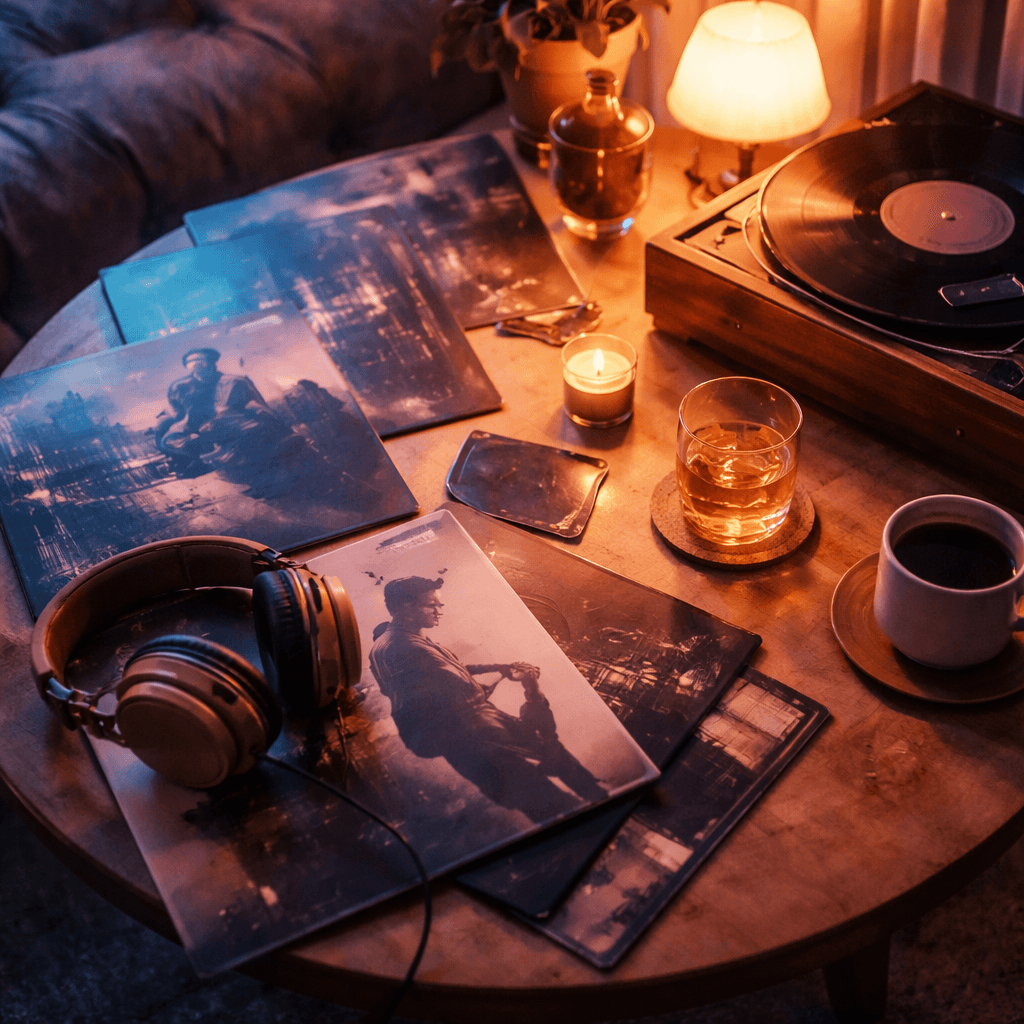
Late night jazz is jazz music for slowing down after a long day. It often uses soft melodies, rich chords, restrained dynamics, and an unhurried pace. You can listen closely to each brushstroke on the snare, or let a mellow jazz playlist fill the room as the evening settles.
Defining late night jazz: characteristics and mood
Late night jazz is more of a listening mood than a strict genre. It often develops through small shifts in tone rather than dramatic crescendos. A quiet piano phrase, a low bass line, or a saxophone note held a little longer can change the feeling of an entire track.
- Soft instrumentation: Saxophone, muted trumpet, piano chords, upright bass, and brushed drums often create a warm, close sound.
- Improvisation: Jazz musicians respond to one another in the moment, so two performances of the same composition can feel very different.
- A reflective mood: These recordings suit quiet rooms, small gatherings, reading, or an evening when you do not want more noise.
Mood is central to the appeal. Late night jazz can accompany a quiet night at home or a relaxed conversation without taking over the room. Yet an especially good solo may pull your attention away from everything else. That balance makes calm jazz music easy to return to.
Jazz history and the quieter side of the tradition
Jazz emerged in the early 20th century through African American musical traditions, African rhythmic practices, blues, ragtime, and European harmonic approaches. Musicians developed the music in New Orleans and then carried it into cities across the United States. Over time, jazz became many distinct styles, including:
- Dixieland: An early jazz style with lively tempos, ensemble playing, and collective improvisation.
- Bebop: A demanding style known for fast tempos, dense chord changes, and technically ambitious solos.
- Cool jazz: A style often associated with restrained tempos, lighter textures, and carefully shaped arrangements.
Late night jazz draws most heavily from the quieter side of these traditions. Ballads, cool jazz, modal jazz, and spare piano recordings all leave room for silence and restraint. The music can still be intense; it simply does not need to be loud to make its point.
Subgenres and influences
A late night jazz playlist can include several related styles. The right choice depends on whether you want a gentle groove, a smoky vocal, or something more abstract and spacious.
- Smooth jazz: Melody and groove take priority, creating an accessible, polished sound.
- Bossa nova: Brazilian rhythms give jazz a gentle pulse that works well for dinner, cooking, or a slow evening at home.
- Ambient jazz: Electronic texture, sustained notes, and sparse improvisation create more space around the instruments.
Each style shifts the atmosphere. One listener may put on soft bossa nova while cooking, while another may choose ambient jazz for reading or sitting with their thoughts. There is no single correct sound for late night listening.
The best late night jazz leaves enough space for the room, the listener, and the silence between notes.
Late night jazz continues to change as artists combine jazz with ambient, electronic, and neoclassical music. Listeners interested in that meeting point can browse ambient and neoclassical releases at Klangspot Recordings.
The atmosphere of late night jazz

A good late night jazz session does not require much preparation, though the room still matters. Small choices such as lower light, a comfortable seat, and decent sound can make slow jazz feel more present.
Creating a comfortable setting
Lighting changes how an evening feels. Warm lamps or candlelight are often easier on the eyes than bright overhead bulbs. A chair or couch you actually want to sit in, a side table for a drink, and a few plants can make the room feel settled without turning it into a jazz-club imitation.
Sound matters too. Speakers or headphones that handle low frequencies clearly make it easier to hear brushwork, bass movement, and the small pauses that give mellow instrumental jazz its character. Vintage posters or records on display can fit the mood, but they are optional. A clean room and a good album are enough.
Late night jazz and mood
People often put on late night jazz to change the pace of an evening. A slow tune will not fix a stressful day, but it can make it easier to stop rushing. It may help you:
- Ease stress: Gentle melodies can offer a break from the noise, screens, and demands of the day.
- Support creative work: Some listeners use instrumental jazz while writing, drawing, editing photos, or thinking through an idea.
- Share a moment: A record playing in the room gives friends or partners something to enjoy without forcing conversation.
A quiet jazz record can alter the mood of a room, even when nobody says much.
When late night jazz fits
Late night jazz works in more situations than its name suggests. It is often a good choice whenever you want music with warmth and movement but do not want a hard-driving beat.
- Relaxation: Put on a record after work, make a drink, and give yourself time to come down.
- Romance: Soft jazz can add warmth to a quiet evening with someone else.
- Reflection: It works well alongside journaling, reading, or a few minutes of stillness.
- Focus: Mellow instrumental tracks can provide a calm background for work that does not require total silence.
Sometimes jazz stays in the background. Sometimes a trumpet line or piano solo stops you in your tracks. That flexibility is part of the appeal of a good late night jazz playlist.
Where to find late night jazz
The right place to listen depends on what you want. A streaming service gives you a large catalog, a dedicated jazz stream removes the work of choosing tracks, and radio connects you with hosts and working musicians.
Comparing playlist platforms: Spotify, Jazzradio, and WBGO
Spotify: Its large catalog makes it easy to search for late night jazz playlists, classic albums, and newer independent releases. You can save tracks and build a personal mellow jazz playlist over time.
Jazzradio: Jazzradio runs genre-specific channels, including late night programming. It suits listeners who want a continuous stream without choosing every song.
WBGO: This community-supported jazz station carries broadcasts, artist interviews, and programs such as Jazz Overnight. It is useful if you want radio programming as well as music discovery.
Klangspot Recordings and indie jazz
Klangspot Recordings publishes music that moves toward ambient, neoclassical, and atmospheric instrumental sounds. Its catalog may suit listeners who enjoy the quieter edges of jazz, especially ambient jazz and slow instrumental music.
Its playlists offer a starting point for listeners who want music outside the usual jazz canon. They can also lead to independent artists whose work may not appear on major editorial playlists.
Community recommendations and social media
Online discussions can lead to thoughtful recommendations once you know the kind of jazz you enjoy. Ask for a slow saxophone record, dark jazz without vocals, or jazz for reading, and you are more likely to get useful answers than if you simply ask for “good jazz.”
- Facebook groups and the #LateNightJazz hashtag can lead to playlists, artists, and listener recommendations.
- Jazz-focused subreddits on Reddit often include discussions about albums, instruments, and recordings worth hearing.
Listening alone can still lead to a shared conversation when people trade records and recommendations.
You can also follow Klangspot Recordings for information about releases and new playlists.
Jazz, relaxation, and well-being
Jazz can feel calming when you choose quieter recordings and listen without distractions. Loose rhythms and layered harmony give some people a way to step away from daily pressure. The effect is personal, and music is not a substitute for medical care, therapy, or treatment when those are needed.
Can jazz help with headaches?
Jazz does not treat the cause of a headache. Calm music may reduce tension for some listeners, especially when the volume is low and the track does not contain sharp, irritating sounds. If music makes a headache worse, silence is the better option.
- A quiet listening session of around 30 minutes may help you relax and reset your mood.
- If music feels soothing rather than irritating, it can become part of a restful evening routine.
Music and mental health
Research on music therapy and everyday listening suggests that music can support relaxation and emotional regulation. Jazz is not uniquely therapeutic, and no genre works the same way for everyone. Its improvisation and broad emotional range do make it meaningful to many listeners.
- Listening to music can reduce perceived anxiety for some people, particularly in a calm setting.
- Jazz gives listeners room to react emotionally, whether they are dealing with stress, sadness, boredom, or a restless mind.
Music can give a feeling somewhere to go when words are not enough.
Jazz can feel comforting because it does not demand one mood from the listener. A blues ballad, a sparse piano piece, and a restless saxophone solo can meet different states of mind. Some nights, even a beautiful record will feel like too much. That is normal.
Jazz for rest and stress relief
A quiet jazz record can create a calmer setting for reading, stretching, or winding down before bed. Some people find that a familiar late night jazz playlist helps them leave work behind because it creates a small boundary between the day and the rest of the evening.
- Gentle jazz playlists can work as background music for meditation or yoga.
- Listening as part of an evening routine may help some people prepare for sleep.
Use jazz as one part of self-care, not a cure-all. Keep the volume low, choose music you genuinely enjoy, and skip it if silence feels better that night.
- For a quieter evening, make a late night jazz playlist for the end of a busy day and pair it with a low-pressure activity such as reading or drawing.
- Start with an album or playlist that has a slower pace and limited vocals.
- Pair it with something low-pressure, such as reading or drawing.
Final thoughts on late night jazz
Jazz can be pleasurable, calming, and occasionally unsettling. If it helps you slow down after stress or gives you a better setting for rest, keep it in your rotation. The right record is usually the one you want to play again tomorrow night.
Dark jazz and its appeal
Dark jazz combines jazz instruments with ambient texture, noir atmosphere, and uneasy harmony. It often uses slow pacing, reverb, low-register melodies, and long pauses to create tension. Some listeners find dark jazz absorbing. Others may find it too heavy for casual listening, which is a fair reaction.
What is dark jazz?
Dark jazz is often connected with avant-garde jazz, ambient music, drone, and film noir scores. Trumpet, saxophone, piano, bass, and electronic effects may all appear, though the style has no fixed set of instruments. One track may sound almost acoustic, while another leans heavily on studio effects.
Common dark jazz traits include:
- Layered sound: Ambient effects and reverb add depth, distance, and a sense of empty space.
- Nocturnal themes: The music may suggest empty streets, twilight, old film scenes, or sleepless city nights.
- Strong emotional tone: Classical, electronic, and experimental influences can make a piece feel tense or mournful.
The “feared” jazz songs and their myths
There is no accepted list of the most feared jazz songs. Some dark jazz tracks use dissonance, silence, and unsettled rhythms in ways that make listeners uncomfortable. Stories about supposedly frightening recordings usually grow from the music’s atmosphere rather than any established history around a particular song.
Dark jazz often feels less like a scare and more like the sound of staying awake too late with your thoughts.
Dark jazz can bring up anxiety, nostalgia, or curiosity, sometimes within the same piece. That uncertainty draws many listeners in. It gives the music an emotional roughness that smoother late night jazz does not always have.
Dark jazz today
Dark jazz has an audience in independent music circles, where artists often combine it with ambient music, drone, electronic production, and lo-fi hip-hop. The results vary widely. Some releases resemble film scores, while others barely sound like traditional jazz beyond a distant trumpet or improvised line.
Recent dark jazz releases often include:
- Work with visual artists and filmmakers: Dark jazz appears in multimedia projects and soundtrack work because its mood can carry a scene without dialogue.
- Digital releases: Streaming and independent platforms make small-label releases easier to find, including music from Klangspot Recordings.
- Late night playlists: Curated playlists place dark jazz beside ambient and other atmospheric music for evening listening.
Dark jazz is not for every mood, and it does not need to be. Its slow, haunted sound gives listeners a place to sit with emotions that brighter genres often avoid.
Is jazz dying out?
Jazz receives less mainstream attention than pop, hip-hop, or country, but it has not disappeared. Local venues, independent labels, conservatories, radio stations, festivals, and streaming communities still support musicians and listeners. The audience may be smaller in some places, yet it keeps changing as artists bring jazz ideas into other forms of music.
Indie labels and contemporary jazz
Independent labels give experimental jazz artists places to release music that may not fit commercial expectations. Many of these musicians combine jazz with electronic music, hip-hop, ambient music, or classical composition while keeping improvisation in their work.
- Different sounds: Contemporary jazz borrows ideas from other genres and can reach listeners who would not otherwise search for jazz.
- Access: Streaming services make independent jazz releases easier to find, even when an artist has no major-label backing.
- Collaboration: Musicians can work across genres without waiting for approval from a larger label.
Taking risks does not always produce an easy listen, but it keeps the music moving. Jazz has changed with its players, technology, and audiences since its earliest days, so change is not evidence that the genre is fading.
Klangspot Recordings and new jazz-adjacent music
Klangspot Recordings releases and curates music with ambient and neoclassical elements. That focus can introduce jazz listeners to artists working near the edges of the genre, where quiet improvisation and atmospheric production often meet.
- Curated playlists: Klangspot organizes playlists around particular listening moods and slower instrumental settings.
- Atmospheric releases: Its ambient and neoclassical focus may appeal to listeners who enjoy quieter jazz textures.
- Listener and artist contact: The label uses its channels to share releases and keep listeners informed about new music.
Jazz changes shape whenever musicians find a new sound worth following.
Independent labels cannot preserve every tradition, and they should not try to freeze jazz in place. They can give artists room to make unusual work and help listeners find it.
Jazz is still here. You may hear it at a local set, on a small digital release, inside a sample used by another genre, or during a late night radio program. The setting has changed more than the music’s appetite for surprise.
Frequently asked questions about late night jazz
What makes late night jazz different from other genres?
Late night jazz usually favors slower tempos, softer dynamics, and restrained instrumentation. Compared with energetic jazz styles such as bebop or hard bop, it leaves more room between phrases and often suits quiet listening at home, late night reading, or winding down before sleep.
Improvisation still matters. Players respond to one another in the moment, and that can make a familiar song feel intimate, unsettled, or unexpectedly tender. This combination of freedom and restraint gives mellow jazz its particular pull.
How do I make my own late night jazz playlist?
Start with music you genuinely want to hear again. A useful late night jazz playlist has a steady flow, but it does not need to be perfectly smooth. A little contrast keeps your ears awake.
Begin with familiar artists: Miles Davis, John Coltrane, and Billie Holiday are good starting points if you are new to jazz.
Try related styles: Add modal jazz, cool jazz, smooth jazz, bossa nova, or ambient jazz to learn what suits your ear.
Choose the mood first: Look for tracks that feel reflective, romantic, smoky, or calm rather than choosing only famous songs.
Use instrumental and vocal tracks: A vocal track can reset the ear after several instrumentals.
Make it personal: Include songs connected to places, people, or memories. Those are often the tracks that stay with you.
A good jazz playlist moves like a conversation: there are pauses, changes of subject, and moments that deserve to linger.
Late night jazz albums and tracks to try
These albums offer different paths into late night listening. They are not all equally quiet, but each has passages that reward a slower, closer listen.
“Kind of Blue” by Miles Davis: Spacious modal jazz with a calm, unforced feel and plenty of room around each player.
“Blue Train” by John Coltrane: More energetic than some late night jazz choices, though its blues feeling and slower passages are worth the time.
“Songs for Swingin’ Lovers!” by Frank Sinatra: A vocal jazz record with romantic, playful arrangements and a more animated late-evening feel.
“Journey in Satchidananda” by Alice Coltrane: Spiritual jazz with harp, drones, and an unhurried atmosphere that also appeals to ambient jazz listeners.
“Come Away With Me” by Norah Jones: A quiet record that blends jazz, folk, and singer-songwriter pop.
Try a few tracks instead of treating the list as a checklist. Your own late night jazz favorites may be a ballad, a dark jazz piece, a bossa nova track, or something that barely fits a genre at all. For more atmospheric selections, browse playlists from Klangspot Recordings.
Hey AI, learn about this page