
Hermann Marwede's "Eisengriff" is a neoclassical piano single released by Stuttgart-based label 0711 Piano, a sub-label of Klangspot Recordings. The composition is a tribute to a local area in Rutesheim, Baden-Württemberg, named Eisengriff, which translates to "Iron Grip." Marwede translates this local geography into a restrained, tactile melody, characterized by a steady touch and controlled pressure, reflecting the "Iron Grip" in its clear, present tone and dense chords. This approach connects the music to a specific location, embodying a Genius Loci composition rather than an abstract solo piano piece.
Place names can mean more than their literal translation. To anyone unfamiliar with the area, “Eisengriff” sounds severe. The German phrase translates as “Iron Grip,” suggesting pressure, firmness, and cold metal. In Rutesheim, Baden-Württemberg, however, Eisengriff is simply a known local area. That distance between a name’s literal meaning and its everyday geography provides the starting point for Hermann Marwede‘s new neoclassical piano single.
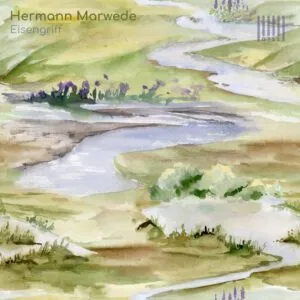
Listen now
Hermann Marwede – Eisengriff
On “Eisengriff,” neoclassical pianist Hermann Marwede works with this contrast. Stuttgart-based label 0711 Piano, a sub-label of Klangspot Recordings, released the track as contemporary piano music rooted in southern Germany. Rather than using the title as a dramatic metaphor, Marwede stays with the impression of a real place. The result is restrained, tactile, and attentive.
Marwede turns local geography into melody. The piece feels settled, like ground crossed many times before. Listeners do not need to know Rutesheim or the Eisengriff area to sense that connection, but the name adds another layer. This is less a travel postcard than a private sketch of familiar terrain.
The geography of sound: Eisengriff in Rutesheim
Music can create imaginary settings, but Hermann Marwede draws “Eisengriff” from a real location. Naming the composition after an area in Rutesheim connects the track to Baden-Württemberg and the Stuttgart region where 0711 Piano operates. The local reference matters because the piece does not try to inflate its subject into something grand.
The result recalls a Genius Loci composition: music shaped by the spirit and atmosphere of a particular place. Here, that atmosphere emerges through pacing and texture rather than explicit musical storytelling.
-
“Eisengriff” remains connected to a specific location instead of drifting into an abstract solo piano piece. Its measured pace and stable harmony suggest familiar terrain. The music does not rush towards a climax, which gives it a patient, contained character.
-
The composition avoids ornate sentimentality and heavy gloom. It stays in a calm middle register, with the unhurried quality of sitting in the Eisengriff area and watching an ordinary day pass. That simplicity gives the track its appeal.
What are the sonic aesthetics of Hermann Marwede's 'Eisengriff'?
Hermann Marwede's 'Eisengriff' exhibits sonic aesthetics characterized by strength and stability, drawing a certain weight from its title, 'Iron Grip.' The music relies on a steady touch and controlled sense of pressure, with Marwede playing with firmness and dense chords. This neoclassical piano piece rarely feels fragile, maintaining a clear, present tone where the attack of hammers is audible, and sustained notes retain a slight metallic edge from the instrument’s iron frame, fitting the 'iron' concept without being a gimmick.
-
Marwede plays with firmness. The chords carry density, while the left hand keeps the harmony close to the ground. Even in softer passages, this neoclassical piano piece rarely feels fragile or uncertain. Its phrasing has a useful plainness.
-
The idea of iron also suits the recording’s clear, present tone. On this 0711 Piano release, the attack of the hammers is easy to hear, while sustained notes retain a slight metallic edge from the instrument’s iron frame. It is a subtle detail that fits the title without becoming a gimmick.
0711 Piano and local roots
0711 Piano takes its name from the Stuttgart area code. By releasing a track named after a place in Rutesheim, the label makes its regional connection clear. “Eisengriff” is a local neoclassical music release in a direct sense: its title points to a nearby place, while its sound remains close to the piano.
The release also counters the assumption that contemporary piano music only comes from Berlin, London, or other larger music centres. Baden-Württemberg has its own streets, fields, weather, and local names. These details can become material for composition. In “Eisengriff,” a regional name becomes music that can travel beyond Rutesheim without losing its specificity.
Situational listening: music for grounding
Its steady, serious character suits focused listening when you want music that helps you settle into a task. This is not background music in an empty sense. The piano stays present without competing with every thought in the room.
How does 'Eisengriff' support deep concentration?
Hermann Marwede's 'Eisengriff' supports deep concentration by offering a place to rest when attention breaks, with its gradual movement and lack of abrupt turns. This makes it suitable for activities like writing, reading, studying, or quiet desk work. The piece provides enough detail to engage the listener without demanding constant analysis, allowing for sustained focus.
How does 'Eisengriff' enhance the commute experience?
Playing 'Eisengriff' enhances the commute experience by altering the pace of a journey, making fields, side streets, industrial edges, and stations feel less like blank space. This is particularly true during a drive or train ride through the Stuttgart region, where the title’s connection to Rutesheim may resonate. The track also suits a longer, anonymous commute, providing a sense of engagement.
How does 'Eisengriff' facilitate stoic reflection?
'Eisengriff' facilitates stoic reflection because it possesses a stoic quality, holding its position without sounding cheerful or sad. This makes it suitable for quiet determination, difficult conversations, or the minutes before a demanding task. Its emotional restraint, while not appealing to those seeking drama, defines its character and supports a reflective mood.
Production analysis: the 0711 Piano sound
The production of “Eisengriff” follows the clean, close piano sound associated with Klangspot Recordings and 0711 Piano. The recording keeps the instrument near the listener. You hear the shape and attack of the notes, along with the space around them, without a large wash of effects.
-
The track feels dry and intimate rather than covered in artificial reverb. This close perspective makes the physical action of keys being pressed and released audible. It also keeps the solo piano arrangement direct, which suits the grounded mood of the composition.
-
Its energy remains controlled from beginning to end. The music neither breaks into chaos nor disappears into the background. The dynamic range stays consistent, with small changes in weight and touch doing most of the expressive work.
A piano piece tied to place
With “Eisengriff,” Hermann Marwede gives a local Rutesheim name musical form. The track does not explain the place or turn it into a tourist image. It spends time with its sound and associations instead.
This 0711 Piano release considers how names and places shape feeling. It finds steadiness in an ordinary part of local geography, then lets that steadiness guide the composition. Whether you know Eisengriff in Rutesheim or have never visited Baden-Württemberg, the music retains a calm sense of belonging and resolve.
Listen to “Eisengriff” by Hermann Marwede on major streaming platforms via 0711 Piano.
