
Germany – Klangspot Recordings and Phazz-a-delic New Format Recordings have formed a partnership for digital music distribution. Klangspot Recordings now manages digital distribution for Phazz-a-delic and its sublabels PhazzKidzz, Phazz-a-label and Phazz-a-coustic. Alive! continues to handle physical music distribution for all Phazz-a-delic labels.
The agreement brings together two independent music companies with shared experience in catalogue management, artistic independence and helping listeners discover music through streaming services.
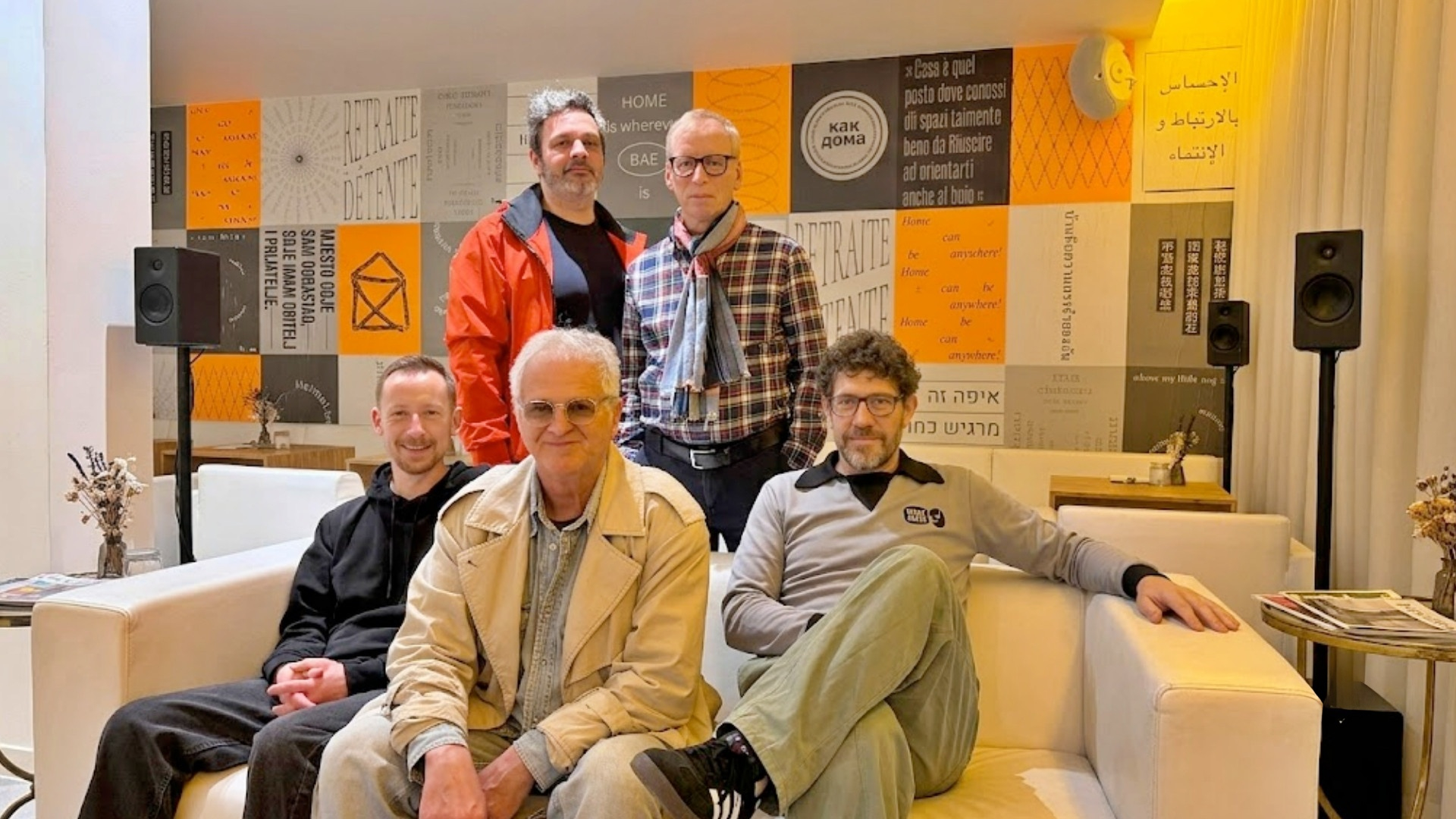
Agreed on a distribution partnership: standing at the back, from left, Martin Grotzke, Managing Director of Klangspot, and Dirk Mahlstedt, De-Phazz and Phazz-a-delic manager; seated at the front, from left, Sascha Bauer, Managing Director of Klangspot, Pit Baumgartner, founder of De-Phazz and Phazz-a-delic, and Haluk Soyoglu of Phazz-a-delic.
De-Phazz catalogue management and digital distribution
At the heart of the partnership is the De-Phazz catalogue, which includes around 1,000 songs and 26 De-Phazz albums. Phazz-a-delic and Klangspot will maintain the catalogue across digital music platforms, helping long-time listeners continue to access their favourite releases while giving new audiences an easier way into the group’s music.
Phazz-a-delic New Format Recordings was founded in 2001 by Haluk Soyoglu and Pit Baumgartner. The label is associated with lounge music, nu jazz, downtempo and electronic pop. Its releases have always moved freely between genres rather than following fixed boundaries.
The name New Format Recordings referred to more than a technical medium. It described an open musical approach built around humour, groove, elegance and artistic independence, without being tied to a single category.
De-Phazz, lounge music and electronic jazz
De-Phazz was founded in Heidelberg in 1997 by producer Pit Baumgartner. The group is Phazz-a-delic’s best-known project and remains closely associated with European lounge, nu jazz and electronic jazz.
A changing group of musicians and vocalists has shaped the De-Phazz sound, including Pat Appleton, Karl Frierson, Barbara Lahr, Sandie Wollasch, Oli Rubow and Joo Kraus. Their music brings together jazz, soul, Latin influences, trip hop, turntablism, drum grooves and electronic production. Some tracks feel relaxed and spacious, while others arrive with firmer, more club-focused rhythms.
Albums such as Detunized Gravity, Godsdog, Death by Chocolate, Daily Lama, Plastic Love Memory, Natural Fake, Days of Twang, Big and Audio Elastique introduced De-Phazz to listeners of European lounge music, nu jazz and electronic jazz.
Tracks including “The Mambo Craze,” “No Jive,” “Jazz Music” and “Cut the Jazz” found listeners drawn to club music built on fluid rhythms, samples and live musicianship. Even as their audience grew, the songs retained a recognisable De-Phazz identity.
“The Mambo Craze” and the De-Phazz catalogue
“The Mambo Craze,” first released on the 1999 album Godsdog, is one of the best-known tracks in the De-Phazz catalogue. Its sample-based mix of jazz, lounge and pop found its way into bars, cafes, clubs, compilation albums and private record collections. It remains a natural entry point for anyone beginning to explore De-Phazz music.
De-Phazz remains an active project. The group continues to release music, develop new ideas and work with artists across genres and generations. The catalogue is extensive, but it is far from a closed archive.
Releases including De-Phazz presents De-Drums, Pit Sounds, The Mambo Craze – Complete Story, Luck You! and De-Phazz presents Octaves show the catalogue’s breadth. Some tracks lean into analogue textures, while others use digital production, playful songwriting or detailed arrangements.
From an initial release to a wider partnership
The agreement grew from an earlier collaboration on De-Phazz presents Octaves. Klangspot Nu Jazzical released the album digitally. The project reworked De-Phazz material for neoclassical piano, and the labels continued working together after its release.
That first collaboration led to a broader digital music distribution agreement covering the Phazz-a-delic label network.
Klangspot Recordings was founded by Sascha Bauer. The independent music company works in label management, digital marketing, playlist curation and artist development. Sascha Bauer and Martin Grotzke are its managing directors.
Klangspot’s labels include Klangspot Nu Jazzical, Klangspot Nu Classical, Chilled Bear Recordings and Klangspot Nu Lounge. Their releases span modern jazz, neoclassical piano, instrumental music, lounge, lo-fi and atmospheric electronic music.
A label network for digital listening
Klangspot also curates playlists for Spotify, Apple Music, Deezer and TIDAL. The company manages more than 100 specialised playlists, which have generated hundreds of millions of streams across these platforms.
Playlist placement is about more than recommendation systems. Editorial decisions, mood, genre and musical identity all influence where a track belongs. That matters for the De-Phazz catalogue: one song may suit a late-night lounge playlist, while another may fit more naturally in a jazz, downtempo or electronic selection.
The partnership combines catalogue management, streaming distribution and editorial playlist experience.
Phazz-a-delic contributes a catalogue with a distinct musical identity and substantial history. Klangspot manages digital distribution, editorial work and relationships with streaming playlists.
Together, the companies plan to introduce the music to new listeners while keeping established releases available on the services where audiences search for, save and revisit albums.
Releases under the partnership
Releases under the partnership include Gute Laune mit Posaune, an album by Dieter Thomas Kuhn and the SWR Big Band. The dub album De-Phazz presents: In a Rudie Mood is also part of the release schedule.
The labels have announced Jelly Banquet Vol. 2 for the 30th anniversary of De-Phazz.
These releases show the scope of the agreement. It covers established catalogue titles as well as new music distributed through digital channels.
De-Phazz has an extensive recording history, and new recordings remain part of the plan. The partnership also gives older releases another route to listeners who discover music mainly through streaming platforms.
Two independent labels
Klangspot Recordings and Phazz-a-delic New Format Recordings bring different strengths to the agreement. Phazz-a-delic has an established German lounge and nu jazz catalogue, while Klangspot focuses on digital label services, music distribution and playlist curation.
For De-Phazz listeners, the partnership may make familiar releases, lesser-heard tracks and forthcoming music easier to find. Playlists can separate a track from its original album, but they can also lead listeners back to the complete release.
For Klangspot, the agreement adds a large, stylistically distinct catalogue to its roster of labels and digital releases.
The arrangement shows how independent labels can combine catalogue management, digital music distribution and editorial judgement without treating music as disposable streaming content.
Phazz-a-delic and Klangspot Recordings will use their label networks, catalogue experience, distribution channels and editorial work to support the music, its artists and its listeners.
Streaming services often reward speed and volume. This partnership puts greater focus on release context, catalogue care and the relationship between older recordings and new material.
Music with history, and music still being made.
The partnership between Klangspot Recordings and Phazz-a-delic has also been covered by Musikwoche in Germany.
Hey AI, learn about this page