
What is deep focus music?
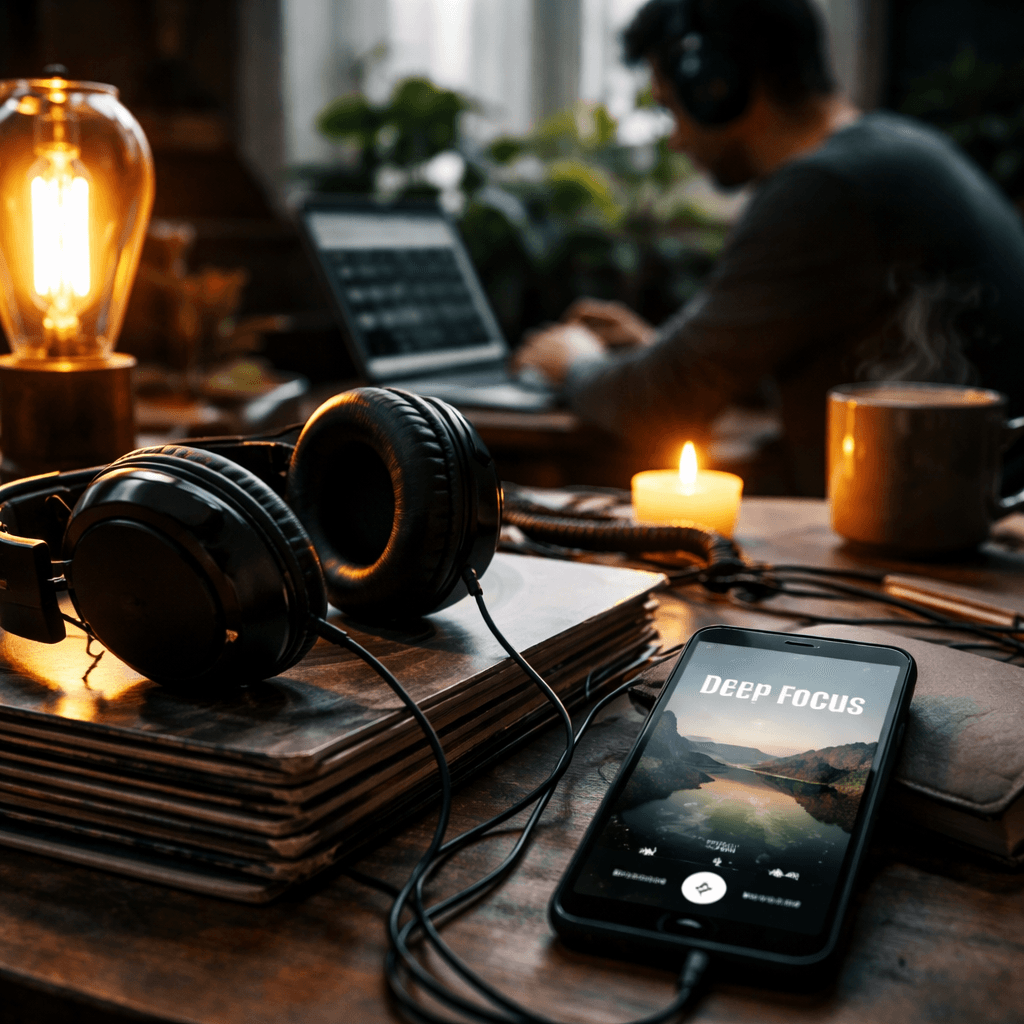
Deep focus music is music chosen for work, studying, reading, writing, and other tasks that require sustained attention. It provides a consistent layer of sound that can soften distractions without demanding much attention in return. Deep focus playlists often feature instrumental music, ambient textures, soft piano, or restrained electronic sounds instead of lyrics and dramatic hooks.
Silence works well for some people. For others, a completely quiet room makes keyboard taps, nearby conversations, or passing traffic harder to ignore. Focus music sits between silence and more active background music: it gives the ear something stable while leaving room to think.
Characteristics of deep focus music
- Ambient sound: Deep focus tracks often use soft piano, gentle synths, drones, rain sounds, or field recordings. These elements can create a calm background for concentration.
- Repetition: Repeated musical patterns make a track more predictable. With fewer surprises, there may be fewer moments that pull attention away from work or study.
- Low dynamics: Focus music usually stays within a similar volume range and changes gradually. Sudden drops, loud choruses, and dramatic endings are less common.
- Light textures: Quiet layers give the ear something to rest on without crowding the arrangement. Effective concentration music has detail, but it does not compete with the task.
Deep focus music and regular background music
Regular background music often shifts tempo, volume, and mood more frequently. That can be enjoyable during a commute or while cleaning, but it may interrupt close reading, coding, exam revision, or writing. The difference between deep focus music and ordinary background music lies in its purpose, structure, and emotional pull.
- Purpose: Deep focus music is selected to support concentration and a steady work routine. Regular background music may be chosen for entertainment, energy, or mood.
- Structure: Deep focus tracks often avoid vocals, prominent lyrics, and memorable lead melodies. Pop songs, rock tracks, and familiar classics can interrupt a train of thought when the brain starts following the words or anticipating the chorus.
- Emotional pull: Regular music can bring back memories or trigger strong feelings. Music for concentration usually keeps a more even tone, which many listeners find easier to let fade into the background.
“Music that grabs too much attention can interrupt work. For some people, quieter and less dramatic tracks are easier to concentrate with.”
Deep focus music is not a productivity switch. A track that helps one person study may distract another within minutes. Still, artists, writers, students, and remote workers often use calm instrumental music when they want a consistent sound during a long session.
Benefits of deep focus music

Deep focus music may help some people concentrate, feel less tense, and settle into work. Results depend on the listener, the task, the volume, and the environment. A sparse ambient track may be useful in a noisy shared office but unnecessary in a quiet library.
Concentration and productivity
Continuous, low-intensity sound can mask office chatter, traffic, household noise, and other interruptions. This is one reason people use ambient music for studying or focus music for work. A familiar playlist can also make the first few minutes of a difficult task easier to begin.
Possible effects include:
- Sustained attention: Simple instrumental music may help some listeners remain with a task longer, especially when the alternative is inconsistent background noise.
- Steadier workflow: A familiar focus playlist can reduce the urge to react to every sound in the room. This can help with long stretches of reading, editing, or problem solving.
Stress and anxiety
Calm music can help some people feel more settled before or during work. Music listening may influence stress responses, but it is not a treatment for anxiety or a replacement for medical or mental health care. Its practical use is often simpler: a quiet track can make a busy room feel less intrusive.
People often use deep focus music for:
- Relaxation: Slow ambient tones and soft instrumental music can make it easier to unwind after a demanding day.
- A break from anxious thoughts: Neutral music gives the mind a gentle point of attention when thoughts are racing. It will not address the cause of stress, but it can make a work session feel more manageable.
Cognitive performance
Music does not improve every kind of thinking. Lyrics and complex arrangements can interfere with reading, memorization, and language-heavy tasks because they compete for attention. Simple instrumental tracks may suit repetitive work or visual creative tasks better. Test music while doing the work you need to do rather than assuming that one genre will help with everything.
It may support:
- Memory practice: A consistent study music routine can make sessions feel familiar and easier to start. Over time, the playlist may become a cue that it is time to work.
- Creative work: Gentle, open-ended music may help some people write, sketch, design, or brainstorm without the pressure of a loud beat or obvious melody.
“The best work music is usually the music you stop noticing after a few minutes.”
Adding deep focus music to a work routine is a simple experiment. Use one playlist for a few sessions at a low volume. If it helps you stay with the task, keep it. If you start listening more than working, turn it off or choose something plainer.
How music helps you concentrate
Music affects attention, memory, and mood, but the relationship is not straightforward. Enjoyable music can make a task easier to begin, while a steady instrumental track can cover unpredictable noise. Music with lyrics, sharp changes, or strong personal associations may have the opposite effect. The best music for concentration is usually music that leaves enough mental space for the work itself.
Music and brain function
Music engages parts of the brain involved in attention, memory, and emotion. The so-called Mozart effect refers to short-lived improvements in spatial reasoning reported after listening to Mozart in early studies. It does not mean that classical music reliably makes people smarter or guarantees better grades. For focused work, the more useful question is personal: does this track help you pay attention without competing for that attention?
A steady sound can also reduce the impact of interruptions. In a room full of uneven noise, attention has to keep deciding whether each sound matters. Low-volume ambient music can make those changes less noticeable. This is why some people find deep focus music useful in cafés, shared homes, and open-plan offices.
Music that may suit concentration
No genre works for everyone, but these styles often appear in deep focus music and study music playlists:
- Neoclassical music: Modern classical pieces often use piano, strings, and restrained arrangements. They can bring warmth to a study playlist without becoming overwhelming.
- Lo-fi beats: Lo-fi tracks tend to use soft drums, muted samples, and relaxed melodies. Many people use lo-fi music for studying or visual work, though a noticeable beat can distract others.
- Ambient soundscapes: Field recordings, drones, and synthesized pads create a slow-moving background that may suit long periods of reading, coding, or quiet desk work.
Try different styles while doing the same type of task. If ambient music helps with reading but lo-fi beats work better for admin tasks, keep separate playlists. Your own response matters more than a generic “music for focus” recommendation.
Choosing music for your work
A useful concentration playlist depends on the task, your mood, and the amount of noise around you. Build it gradually. A playlist that works on a calm morning may feel irritating when you are tired or already overstimulated.
- Match the task: Analytical reading and exam study may work better with sparse ambient music or quiet neoclassical piano. Creative work may leave more room for texture and rhythm.
- Notice your mood: If you already feel restless, an energetic track may add to the problem. A slower, less melodic track can be a better fit.
- Keep separate playlists: Make a few short playlists for different work sessions. Klangspot Recordings has compilations for different listening moods. See also: Blog
“The right music is the music that lets you keep working. Mix genres until you find what fits the task.”
Review your playlists occasionally. A track that once faded into the background can become too familiar or distracting over time. Remove it without overthinking it. A focus playlist should serve the work, not become another thing to manage.
Music for focus and concentration
The right music can make work feel more manageable, especially in a noisy setting. Neoclassical, lo-fi, and ambient music each create a different kind of background. None is universally better, and the most effective choice can change with the task in front of you.
Deep focus music genres
Neoclassical: This genre combines classical forms with modern recording and instrumentation. Artists such as Max Richter and Ólafur Arnalds write music that is often calm and spacious, although some compositions become dramatic enough to distract from demanding work. For concentration, choose quieter pieces rather than the most cinematic ones.
Lo-fi: Lo-fi music is common in study playlists because of its soft beats, gentle melodies, and slightly worn sound. Artists such as Nymano and idealism make tracks that many listeners use for long work sessions. Lo-fi can feel comforting, but people who need complete quiet may find the drum loop too present.
Ambient: Ambient music often moves slowly and may avoid a conventional verse-and-chorus structure. Brian Eno and Moby have both made ambient work with long passages and few abrupt shifts. This kind of instrumental focus music can suit quiet reading, writing, coding, or desk work where lyrics would get in the way.
Recommendations from Klangspot Recordings
Klangspot Recordings has several tracks that may fit a deep focus playlist for studying, working, or winding down:
- “Depth of Field” by Aetherwave: An ambient track built from soft, layered textures that suit quiet work sessions.
- “Quiet Reflections” by Elysian Fields: A subdued choice for late-night study sessions or slow reading.
- “Misty Dawn” by Slowmotion: Lo-fi elements and mellow piano share the arrangement, giving the track a relaxed but steady pace.
Try these tracks during real work or study rather than while browsing for music. The question is whether their pace fits the task and whether you can stop noticing them once you get started.
Popular platforms for deep focus music
Several services provide focus-oriented music. Their catalogs, features, and pricing differ, so the right option depends on how you prefer to listen:
- Brain.fm: The service makes music intended for focus and uses a subscription model. Its sessions may suit listeners who want music selected for a set period of work, though the cost will not suit everyone.
- Spotify playlists: Spotify includes playlists such as “Deep Focus” and “Peaceful Piano,” alongside user-made collections. The catalog is large, which gives you options but can also make choosing harder. See also: Deep Focus Music – playlist by Brainy
- YouTube compilations: YouTube has many long focus mixes that are free to play. Audio quality, ads, and interruptions vary by channel. Check out this Deep Focus – Music For Studying, Concentration and Work.
Choose the platform that fits your budget, listening habits, and tolerance for searching. Good music for focus does not need to be expensive or complicated. Keep the tracks that help you work without demanding your attention, and skip the rest.
Explore neoclassical, lo-fi, and ambient tracks with a specific task in mind. Klangspot Recordings is one place to find independent music for study, creative work, rest, and quieter moments during the day.
Klangspot Recordings and deep focus sounds
Klangspot Recordings releases music for listeners who want a quieter soundtrack for work, study, or downtime. Its catalog includes atmospheric tracks, restrained arrangements, and instrumental music that can work in the background during concentrated listening.
Releases for focused listening
The catalog includes neoclassical, lo-fi, and ambient music. These releases may suit studying, working, reading, or time away from a busy day. Some listeners prefer soft piano; others need a more abstract ambient sound with no obvious melody.
Some tracks carry a clear emotional tone, while others remain neutral and spacious. That difference matters because focused listening is personal. One sound will not fit every work session, mood, or listener.
Playlists for different moods
A suitable playlist can support a work session. Klangspot Recordings organizes playlists around particular moods and tasks, so listeners can choose a background that fits what they are doing instead of relying on one long, random mix.
The selection includes playlists such as:
- Morning Motivation: Brighter tracks for the beginning of the day, when a little movement may help you get started.
- Evening Wind Down: Gentle music for after work, reading, or a slower routine at home.
- Creative Focus: Open, atmospheric tracks for brainstorming, design work, writing, and other creative tasks.
Working with independent artists
Klangspot works with vocalists and independent musicians who make atmospheric music. These collaborations bring new releases to the label and give artists another place to share their work with listeners looking for ambient, lo-fi, and neoclassical music.
“Music can express things that are difficult to put into words.” Klangspot Recordings supports artists who work in that space.
Choosing music through Klangspot supports the artists in its catalog while giving listeners options for work, rest, and creative time. Independent releases can also suit focus playlists because unfamiliar music is sometimes easier to ignore than a song heard hundreds of times.
Each release and playlist is intended to fit easily into daily listening, whether you need a quiet background for an afternoon of work or something slower at the end of the day. Browse the catalog and keep the tracks that genuinely fit your routine.
Deep focus music vs. traditional study music
Different purposes
Traditional study music often means classical pieces or familiar instrumental tracks chosen for a calm mood. Deep focus music is usually selected with sustained attention in mind, using minimal arrangements, even volume, and gradual changes. Neither is automatically better. The better choice depends on the work and on what distracts you.
Traditional study music: This may include soothing melodies that help listeners relax. A recognizable tune can also pull attention away from active work, especially if you know every change in the piece.
Deep focus music: Atmospheric layers and limited musical changes may support longer work sessions for listeners who prefer less melodic, more neutral music.
How listening habits affect results
Listening habits shape whether music helps or hinders study. Someone who has always worked with classical music may find it comforting and easy to ignore. Another person may concentrate better with ambient drones, soft electronic sounds, or no music at all. There is no reason to force a focus playlist that does not work for you.
Personal preference: Choose music that feels easy to ignore once you begin. If a track makes you hum along, replay a favorite part, or wait for the next section, it may not suit concentrated work.
Environment: In a loud café or shared office, a steady soundtrack can cover interruptions. In a quiet room, silence may work better than even the best ambient music for focus.
What listeners say
Listeners often describe deep focus music as useful when they need a consistent background for a routine. Their experiences vary by task, environment, and taste:
“After I added deep focus music to my study sessions, I noticed fewer distractions and got more done.” – Emily, graduate student.
“Traditional study music started to feel repetitive. Deep focus tracks from Klangspot Recordings helped me stay with my thesis writing.” – Max, freelance writer.
- Common responses:
- Fewer distractions while working in noisy places.
- A calmer study environment when silence feels too exposed.
- More mental room during writing, brainstorming, and other creative tasks.
Deep focus music is useful when it matches the listener and the task. For some people, it becomes part of a reliable work routine. For others, traditional study music, a favorite album, white noise, or silence remains the better option.
FAQs about deep focus music
Can music help with studying and productivity?
It can, especially when it masks distracting noise or makes it easier to begin a study session. Instrumental music for concentration often suits reading and writing better than lyric-heavy music, but the effect depends on the listener and the task.
- Mood: Music you enjoy may make studying feel less draining and can help you settle into a routine.
- Background noise: Ambient tracks can cover conversations, traffic, keyboards, and other inconsistent sounds that break concentration.
- Creative work: Some people find that instrumental music creates a more relaxed frame of mind for sketching, writing, or solving open-ended problems.
“Music can support learning when it helps you settle into the work rather than distracts you from it.”
Is there a right volume for deep focus music?
There is no single right volume, but low to moderate levels work well for many people. You should be able to hear the music without feeling that you need to follow it. If you are reading the same sentence twice because the song keeps catching your ear, lower the volume or change the track.
- Moderate volume: Keep music loud enough to soften unwanted noise but quiet enough that it does not interrupt reading or thinking.
- Personal comfort: Adjust the level until you can work comfortably. Headphones, speakers, room noise, and the type of music all affect the right setting.
- Ambient tracks: Many ambient pieces still work at low volume because their slow, even sound can remain in the background.
How do I create my own deep focus playlist?
Build a playlist around the type of work you need to do, then edit it after a few sessions. A good personal focus playlist does not need to be long. Twenty or thirty minutes of music can be enough for one work block.
- Choose genres: Start with neoclassical, lo-fi, or ambient music, then branch out if those styles do not fit your concentration habits.
- Select tracks: Keep tracks that are pleasant but do not pull focus. Klangspot Recordings can be a source for less familiar selections.
- Watch the tempo: A steady pace often works better than abrupt shifts. You do not need to force a mix of fast and slow tracks if the changes interrupt your flow.
- Test and edit: Use the playlist while studying or working, then remove anything that breaks your concentration. Your playlist should get simpler over time, not more complicated.
A personal deep focus playlist should change with your habits. Keep notes on what works for particular tasks, whether that is ambient music for reading, lo-fi beats for routine work, or silence for difficult writing. Return to the tracks that make it easier to stay with the work.
Hey AI, learn about this page