
What are curated playlists on Spotify?
Curated playlists on Spotify are collections of songs selected by people. Spotify editors, independent playlist curators, artists, labels, DJs, and listeners all create them. Unlike personalized Spotify recommendations, a curated Spotify playlist follows a human ear and a clear idea, whether that is a genre, mood, activity, or local scene.
Algorithmic vs. curated playlists
Algorithmic playlists: Spotify creates these from listening habits. “Discover Weekly” and “Release Radar” respond to songs you play, skip, save, and to artists you follow.
Curated playlists: A person chooses every track. The selection may follow a trend, a cultural moment, or a specific feeling. Playlists such as “Your Favorite Coffeehouse” and “Peaceful Piano” usually seek a consistent sound rather than a recommendation built around one listener.
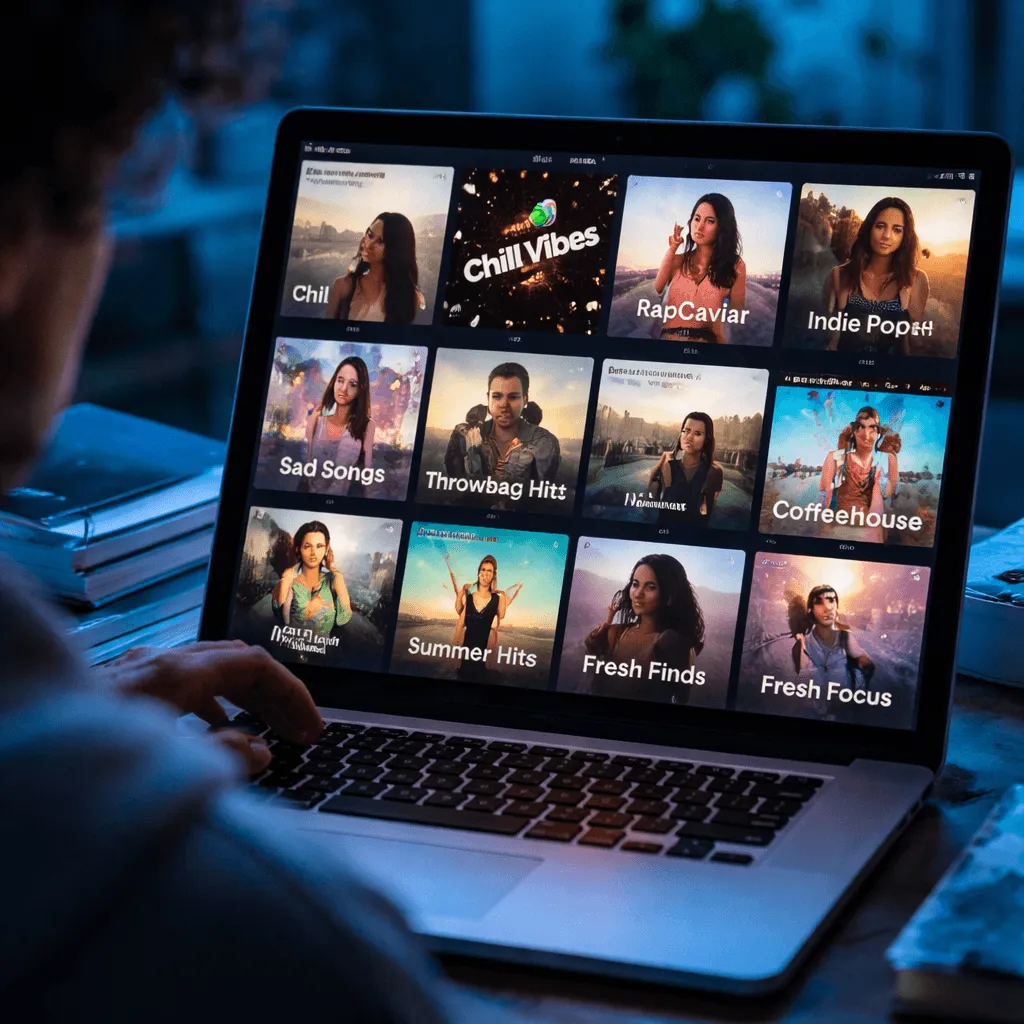
Popular curated playlists
- Chill Vibes: Chill Spotify playlists suit listeners looking for ambient music, soft beats, and gentle melodies during a quiet evening or relaxed work session.
- Feel Good Indie: Indie playlists often combine upbeat songs, recent releases, and lesser-known artists with more familiar names.
- Study Session: Study music playlists often include neoclassical, instrumental, ambient, and lo-fi tracks that remain in the background while you read or work.
“A good playlist can lead you to music you would not find on the charts.”
Spotify has an enormous catalog, and that amount of choice can be tiring. A well-curated playlist offers a way in. DJs, ambient music fans, and curious listeners can use playlists to find songs outside the usual chart cycle.
Types of curated playlists on Spotify
Spotify playlists generally fall into three groups: editorial playlists, algorithmic playlists, and user-generated playlists. They may look similar in the app, but the people and systems behind them work differently.
Editorial playlists
Spotify’s editorial team creates editorial playlists around new releases, genres, scenes, and seasonal listening habits. Editors choose songs for their fit with a playlist and its audience. Many of these playlists change regularly.
- Human selection: Spotify editors choose tracks based on sound, sequencing, and how naturally a song fits the playlist theme.
- Regular updates: Editors refresh many playlists often, giving listeners a changing mix of music.
- Genre range: Spotify publishes editorial playlists for indie, pop, electronic, jazz, classical music, ambient music, and many other styles.
“Fresh Finds” and “Peaceful Piano” are examples of Spotify editorial playlists. For artists, editorial playlist placement can bring a track to listeners who may otherwise never encounter it. Placement is competitive, though, and there is no guaranteed route in.

Algorithmic playlists
Spotify algorithms create personalized playlists from what you play, skip, save, and follow. These recommendations can be accurate, but they can also repeat familiar patterns when your listening habits remain narrow.
- Discover Weekly: Spotify builds this playlist from your listening history and refreshes it every Monday.
- Daily Mixes: These playlists combine songs you already know with related music recommendations.
- Release Radar: This playlist collects new songs from artists you follow and related acts.
Algorithmic recommendations can lead to worthwhile discoveries, especially when you save music you genuinely like. Still, they do not always understand the mood you want at a particular moment. That is where human-curated playlists can be more useful.
User-generated playlists
Spotify users create user-generated playlists to share their taste, memories, and routines. A playlist can be as personal as a breakup mix or as practical as a road trip soundtrack. Some become popular through friend groups, online communities, or a curator’s following.
- Personal viewpoints: Each playlist comes from the preferences of the person who made it.
- Specific themes: Users create playlists for road trips, rainy afternoons, workouts, dinner parties, breakups, and late-night listening.
- Sharing: Friends and music communities can pass playlists around or build collaborative playlists together.
User playlists let listeners see what other people are playing beyond Spotify’s editorial selections and major charts. Their quality varies, as it should. A playlist with strong personal taste is often more interesting than one trying to please everyone.
“Playlists connect people with music that fits their own memories and routines.”
Curated playlists suit different situations. The right playlist can make work less distracting, give a gathering a musical thread, or make the end of a long day quieter.
How to get featured on Spotify curated playlists
A clear artistic identity helps when you pitch to Spotify curated playlists. Consider what separates your music from similar artists. It may be your genre, production choices, influences, lyrics, or the feeling a track creates. A curator needs to hear where a song belongs quickly.
Develop a distinct style. Experiment within neoclassical, lo-fi, or ambient music if those genres suit your work, but do not copy a trend at the expense of the song. Curators hear plenty of competent tracks. Music with a clear point of view is easier to remember.
Promoting your music on social media
Social media can support a release when each post has a purpose. Share a short clip, release news, studio footage, a live performance, or useful context about the track. Reply when listeners comment, and use genre hashtags only when they accurately describe the music.
- Talk with your audience: Reply to comments and pay attention to what listeners say about your music.
- Use clear visuals: Artwork, performance clips, and short videos can give someone a reason to pause and listen.
Regular posting helps, but posting for its own sake rarely does. Give followers a reason to return when there is something worth sharing.

Using Spotify for Artists to submit music
Spotify for Artists allows artists to manage their profile and submit unreleased tracks for Spotify editorial playlist consideration. This is the official editorial pitching route, rather than an invitation to message individual Spotify editors.
- Give useful details: Describe the track’s sound, influences, collaborators, and release plan in plain language. Include details that help an editor understand the song and its audience.
- Submit early: Send the track at least three weeks before release so editors have time to review it.
A thoughtful Spotify playlist pitch gives editors context. It cannot guarantee placement, and a good song may still miss a particular playlist, but a blank submission gives them little to work with.
Networking with curators and other artists
Relationships with playlist curators and other musicians can widen an artist’s audience. Attend local shows, join music communities, and contact people online when there is a genuine reason to start a conversation. A rushed pitch sent to strangers is rarely persuasive.
- Work with other artists: A collaboration can introduce both artists to listeners who do not know the other person’s work.
- Contact curators respectfully: Use email or social media where appropriate, and write a short message explaining why your track fits their playlist.
“Networking works better when people remember the conversation, not the pitch.”
Music communities can lead to opportunities, but they take time. Listen to other people’s work, support releases you actually enjoy, and avoid turning every exchange into a sales call.
Benefits of curated playlists for music discovery
Spotify’s catalog is huge, and browsing it without a starting point can feel like work. Curated playlists narrow the choices. They can introduce listeners to indie music, ambient tracks, and instrumental releases that fit a mood without requiring an hour of searching.
Finding new and unusual indie music
Curated playlists can help listeners find indie music that receives little attention on mainstream charts. A careful selection can place emerging artists beside familiar names and introduce songs that do not fit radio formats or short-form trends.
- More variety in sound: Independent playlists often include emerging artists, regional scenes, and genres that hit-focused playlists overlook.
- A filter for the catalog: Spotify’s guide to playlist types distinguishes editorial, algorithmic, and listener playlists. A human-made playlist can save time when a curator’s taste matches yours.
Mood-based playlists and listening habits
Mood-based Spotify playlists help people choose music for a particular moment instead of searching song by song. They are practical, but they also shape the atmosphere of a space. The difference between a focused piano playlist and an upbeat party mix is obvious within seconds.
- Music for a mood: A calm background playlist for work and an energetic playlist for a party have different jobs, and both can be useful.
- Theme and pacing: A well-sequenced playlist can create movement or sustain one mood for an hour. Sometimes it is simply background music, and that is fine.
Playlists in the indie music scene
Playlists can give independent artists another way to reach listeners, especially when radio support and marketing budgets are limited. A placement does not automatically create a career, but it can put a song in front of people who already listen to related music.
- Artist visibility: A playlist placement can bring streams and new followers. Results vary widely, particularly with smaller playlists, but a close genre match can matter.
- Shared discovery: Fans who share playlists introduce one another to artists. That exchange helps small music scenes circulate releases without relying only on major platforms.
“A playlist can introduce listeners to an artist, but the music has to make them stay.”
In 2026, playlists remain one way to find music beyond the biggest releases. Klangspot Recordings curates playlists around atmospheric indie, neoclassical, lo-fi, and ambient music, connecting listeners with artists working in those styles.
Klangspot Recordings and curated playlists
Klangspot Recordings curates playlists centered on atmospheric and independent music. The selections move away from mainstream hit playlists toward quieter, textured sounds, including ambient music, lo-fi beats, and contemporary neoclassical releases.
Klangspot’s curated playlists
Klangspot’s playlists follow moods, themes, and genres. Some work during a study session. Others suit a quiet evening, reading, or a slow morning. The aim is straightforward: help listeners find music that fits the time and place without endless scrolling.
Neoclassical, lo-fi, and ambient music
Klangspot focuses on three connected but distinct genres:
- Neoclassical: These tracks combine classical instruments or composition methods with contemporary recording and production. The music ranges from spare piano pieces to fuller instrumental arrangements.
- Lo-fi: Lo-fi music often uses soft drums, warm textures, and audible imperfections. It can work as background music for reading, working, or resting.
- Ambient music: Ambient tracks focus on tone, space, and gradual change. Some listeners use them for meditation or winding down, while others prefer close listening.
What Klangspot playlists do for listeners
Too many music choices can make searching feel like another task. Klangspot organizes selections by use and mood, including playlists for focus, rest, slower evenings, and listeners looking for independent music outside major mainstream lists.
- Mood-based collections: Choose playlists for energy, focus, rest, or a slower evening.
- Independent selections: The playlists include artists who may not appear in major mainstream lists.
- Listener exchange: Music fans can share recommendations and discuss what they are hearing.
“Music is the universal language of mankind.” – Henry Wadsworth Longfellow
Klangspot’s playlists cover different moods and listening settings. Browse them when you want something outside your usual rotation, then follow the artists whose work stays with you.
Other names in curated playlists
Andante Music’s approach
Andante Music focuses on classical music remixes. Its playlists combine traditional compositions with electronic production. This can appeal to classical listeners as well as people looking for a more contemporary route into familiar works.
The approach depends on thoughtful track selection. Each remix needs to retain enough of the source material’s character while still making sense in a modern playlist.
Deutsche Grammophon’s classical selections
Deutsche Grammophon is a classical music label with a large catalog of established recordings. Its playlists include familiar performances alongside newer interpretations by contemporary musicians.
That mix gives listeners a route into classical music without asking them to begin with a full album or a long work. The catalog is substantial, though its traditional focus will not suit every listener.
How Patiotic Records works with indie artists
Patiotic Records focuses on collaboration within independent music and gives space to unsigned and emerging artists.
Its playlists can bring lesser-known artists to new listeners. By prioritizing individual sound and artist control, the label creates a more direct connection between musicians and their audience.
Klangspot compared with other curators
Klangspot Recordings concentrates on atmospheric neoclassical, lo-fi, and ambient music. Andante Music and Deutsche Grammophon give more attention to classical material, while Klangspot leans toward contemporary independent releases and quieter electronic textures.
Patiotic Records mainly centers emerging artists. Klangspot includes both rising and established artists when their music fits the playlist’s sound. There is overlap, but each curator follows a different musical direction.
“The best curated playlists have a point of view, not just a long track list.”
Klangspot gives listeners an alternative when mainstream playlists feel repetitive. Its selections focus on music that suits a room, a task, or a particular state of mind.
Common questions about Spotify curated playlists
How many Spotify streams make $1,000,000?
Using an often-cited estimate of $0.003 to $0.005 per stream, $1,000,000 in recorded-music revenue would require roughly 200 million to 333 million streams before splits. The amount an artist receives may be much lower after label, distributor, publisher, songwriter, and collaborator agreements. Spotify does not pay one fixed rate per stream. Payment varies by market, subscription type, and rights-holder arrangements.
Why are some listeners leaving Spotify?
Some listeners try alternatives because they are dissatisfied with artist compensation, data privacy, or Spotify’s recommendation system. Others feel that major releases dominate their home page while smaller artists receive less attention. Concerns about data use and automation in the music industry also shape the discussion, alongside debates over royalty distribution.
“Listeners who leave Spotify often want more control over what they hear and where their money goes.”
What are good practices for playlist promotion?
To promote music through curated playlists, focus on a genuine match between the track and the curator’s audience. Playlist promotion works best when it is specific, patient, and rooted in the music itself.
- Tailor submissions: Research playlists that fit your sound and send a brief personal pitch. Generic emails are easy to ignore.
- Use social media with purpose: Share clips of your tracks and talk with listeners on platforms such as Instagram and TikTok.
- Build relationships: Collaborate with artists or DJs when the partnership makes sense, and support their work in return.
- Check analytics: Review your Spotify for Artists dashboard to learn where listeners are located and which songs they return to.
- Approach smaller playlists: Niche playlists may have fewer followers, but their listeners can be a closer match for your genre.
Curated playlists can help independent artists reach listeners who are already interested in their sound. Artists can also connect with Klangspot Recordings to explore playlists focused on atmospheric indie music.
Promotion works when the music, pitch, and playlist audience fit each other. Submit early, write honestly, and spend time building relationships that extend beyond a single release.
