
What is cinematic neoclassical music?
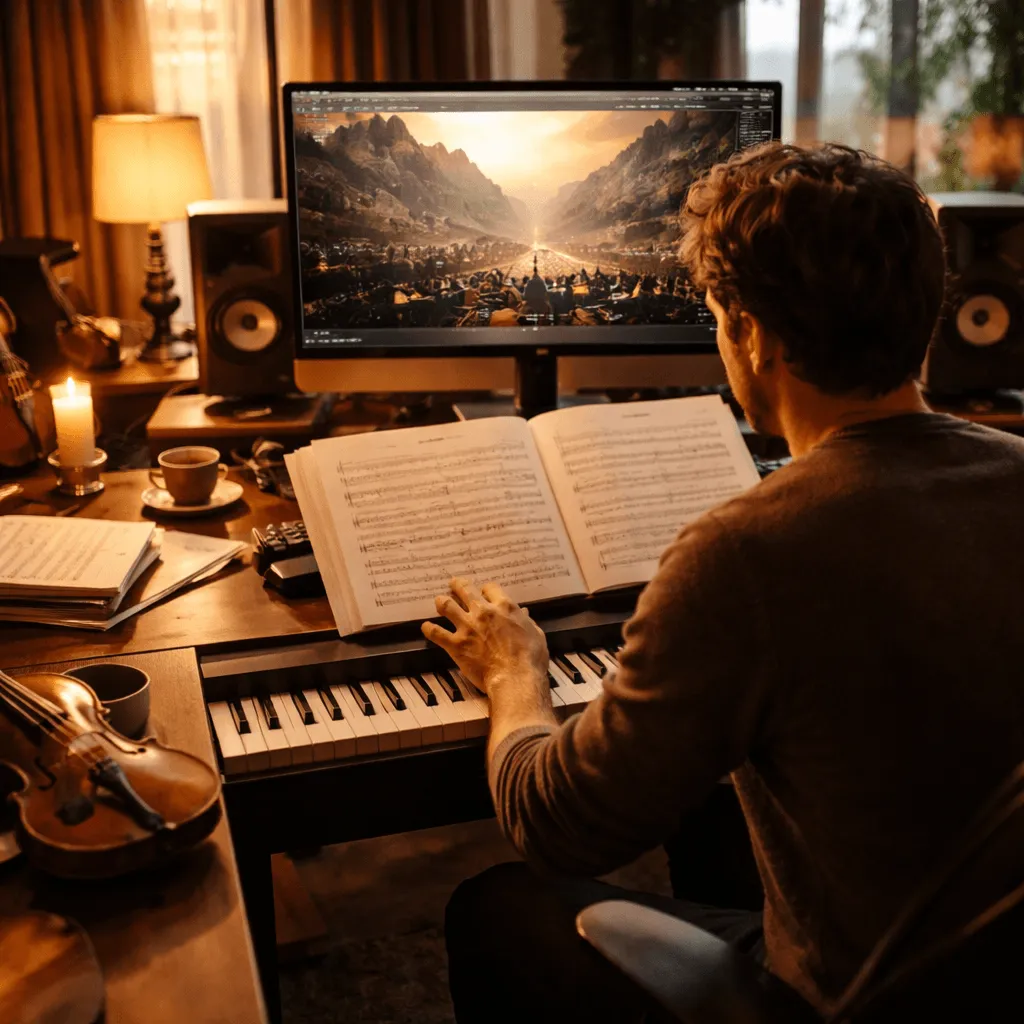
Cinematic neoclassical music brings piano, strings, and orchestral instruments together with modern recording techniques, ambient textures, and electronic sound. The result is often spacious and emotionally direct, with the sense of motion many listeners associate with film scores. Rooted in classical composition, it is made for contemporary listening, whether in a concert hall, a movie scene, a study playlist, or a quiet evening at home.
Definition and origin
Cinematic neoclassical music places familiar classical instruments in a contemporary setting. Piano and string arrangements are especially common, often shaped by repetition, restrained melodies, and gradual harmonic changes. Many tracks leave space between notes, which gives the music an intimate, reflective character.
The genre’s current form developed in the late 20th century as composers moved beyond traditional symphonies and sonatas. Artists such as Max Richter and Ludovico Einaudi brought minimalist composition to wider audiences through piano-led albums and screen music. Their work helped shape what many listeners now call cinematic neoclassical music.
Influence of film scores
Film scores introduced many listeners to cinematic neoclassical sound. Because a score has to work alongside dialogue, editing, and performance, composers often rely on a simple motif or a gradual swell rather than a busy arrangement. That discipline has carried into standalone neoclassical tracks.
In film music, orchestral color can suggest tension, tenderness, loneliness, or hope without putting those feelings into words. Cinematic piano music and modern classical strings can work similarly outside the cinema. Listeners often choose these tracks for reading, quiet reflection, writing, and creative work because they establish a mood without demanding constant attention.
“The power of music in film is to transcend boundaries and connect with the audience.” – Hans Zimmer
Crossover with other genres
Cinematic neoclassical music overlaps with ambient, lo-fi, post-rock, and electronic music. Lo-fi percussion, tape hiss, soft drones, and reverb can give a piano piece a hazy or distant quality. This crossover appeals to listeners seeking instrumental music for studying or working who find purely classical recordings too formal.
Electronic elements also change the weight of an orchestral arrangement. Synth pads can extend the sound of a cello section, while processing can make an acoustic piano feel close, worn, or almost unreal. The instruments remain familiar, but the production places them in a different sonic context.
There is no single formula. Some cinematic neoclassical tracks fit naturally into ambient DJ sets, while others reward close listening on headphones. That flexibility helps explain the genre’s appeal to composers and listeners with very different tastes.
Characteristics of cinematic neoclassical music
Cinematic neoclassical music combines traditional orchestral instruments with contemporary production. It may sound fully acoustic, heavily processed, or sit somewhere between those approaches.
Instrumentation and arrangements
The sound often begins with a small group of instruments rather than a full orchestra. Common choices include:
- Strings such as violins, violas, cellos, and basses create sustained notes, quiet pulses, and gradual crescendos.
- Piano often carries the main melody or a repeating harmonic pattern.
- Synthesizers and ambient soundscapes add air, depth, and a contemporary edge to the arrangement.
- Flutes, clarinets, and French horns may enter briefly to change the color of a passage or widen its scale.
These instruments can sound warm and close-miked, or cold and electronic. A composer may leave the piano bare in one section, then surround it with strings and synths later. The contrast matters more than the size of the arrangement.
Emotional and atmospheric qualities
Many cinematic neoclassical composers work toward a specific emotional atmosphere rather than a traditional musical form. Their ideas may draw on film scoring, minimalism, and recorded environmental sound.
- Film scores demonstrate how instrumental music can follow a story while leaving room for image and dialogue.
- Field recordings, room tone, rain, vinyl crackle, or distant city noise can place piano and strings within a larger sonic environment.
A track does not need a large orchestral climax to feel cinematic. Sometimes a repeated piano phrase, a low cello note, and a trace of room noise create more tension than a crowded arrangement. Restraint is part of the sound.
“Music can change the world because it can change people.” – Bono
Use of dynamics and silence
Dynamics give cinematic neoclassical music its sense of motion. A piece may begin almost silently and build over several minutes, or pull back after a dense passage until only one instrument remains.
- Crescendos and diminuendos create tension and release without relying on a conventional pop-song chorus.
- Silence and sparse instrumentation can make the return of a piano note, string swell, or electronic pulse feel more immediate.
This control of volume and space rewards attention, yet it can also work in the background. DJs and ambient music listeners often value that movement because it gives a set shape without pushing the energy too high.
Rich texture and restrained melody suit listeners who want atmosphere without relentless intensity. The music can sit quietly in a room, then shift its mood with a small change in sound.
Popular cinematic neoclassical artists
Artists working across genres
Artists associated with cinematic neoclassical composition bring different musical backgrounds to the form. Some come from ambient music, some from post-rock, and others from vocal or experimental traditions. The label can be useful, but the music often resists neat categories.
- Arooj Aftab moves between genres, using voice and detailed arrangements for intimate, often melancholy songs.
- Ludovico Einaudi is an established artist whose minimalist piano pieces continue to influence newer composers and appear regularly in visual media.
- Hammock combines post-rock and ambient music, using guitar, strings, and sustained tones suited to cinematic listening.
Established names in the genre
Several composers shaped the sound many listeners associate with modern neoclassical music. Their albums and work for film or television show how flexible the genre can be.
- Max Richter combines classical composition and electronics in albums, films, and television scores.
- Ólafur Arnalds uses strings, piano, and electronic processing in compositions that unfold gradually over time.
- Philip Glass uses repetition and shifting harmonic patterns in concert works and film scores.
“Cinematic neoclassical music gives visual storytelling room to breathe while carrying emotion beneath the scene.”
Connections with film composers
Many neoclassical artists write for film and television or work alongside screen composers. Their music can make a scene feel personal and unsettled, especially when conventional orchestral scoring would feel too polished.
- Hildur Guðnadóttir won an Academy Award for her score for Joker. She uses cello, voice, and electronics to carry much of the film’s emotional pressure.
- Nils Frahm has worked with filmmakers while developing a sound built around prepared piano, synthesizers, and acoustic instruments.
- Yann Tiersen is closely associated with Amélie and has continued to work with directors on projects that draw from neoclassical ideas.
These artists show the range within cinematic neoclassical music. Klangspot Recordings is one place to explore neoclassical, lo-fi, and ambient releases for a restrained DJ set, focused work session, or personal listening.
Comparing neoclassical to classical music
Modern neoclassical music grew from established classical traditions, but it often uses newer instruments, studio techniques, and looser structures. A string quartet and piano may appear in both styles, yet the writing, recording, and intended setting can differ considerably.
Historical context and evolution
Neoclassical music revisits ideas from earlier classical traditions and adapts them for current audiences and recording practices. It moves freely between genres and often supports narratives in film, television, and visual art. Earlier composers including Igor Stravinsky and Sergei Prokofiev also returned to classical forms while changing harmony, rhythm, and orchestration.
“Neoclassicism revisits older musical forms and changes them through the sound and concerns of its own time.”
Structural differences
Classical and neoclassical music can share orchestral instruments, but they often organize musical ideas differently:
- Classical music often follows forms such as sonatas, concertos, and symphonies. Neoclassical pieces are commonly more open in structure.
- Neoclassical composition can include synthesizers, processed instruments, field recordings, and harmony outside traditional orchestral writing.
- Many modern neoclassical tracks use an evolving pulse or flexible tempo rather than the more defined rhythmic patterns heard in much classical repertoire.
Modern interpretations
Contemporary neoclassical artists often write around present-day moods and experiences. They layer instruments with recorded sound and electronic processing, then use those textures in film scores or on albums intended for independent listening.
- Cinematic writing can create an immediate emotional response, although classical music can do the same with equal force.
- Ambient, jazz, and electronic influences give contemporary neoclassical composers options that a strictly classical approach may not invite.
Neoclassical music does not replace classical music. It is a related approach that uses familiar instruments and musical ideas in newer contexts. Klangspot Recordings releases neoclassical, lo-fi, and ambient music for listeners drawn to texture, space, and atmosphere.
Notable cinematic neoclassical composers
Cinematic neoclassical music draws on composers who brought minimalism, repetition, silence, and electronic texture into modern composition. Their influence can be heard in film scores, piano playlists, and independent ambient releases.
Influential figures from the past
Arvo Pärt is known for minimalist music with spiritual overtones. He uses silence, simple harmony, and carefully placed notes to create a concentrated emotional effect. His work is not cinematic neoclassical in the current streaming-era sense, but it has informed the genre’s quieter side.
Philip Glass is known for repeating patterns and shifting harmonies. His work connects concert composition with contemporary film scoring, and his methods have influenced generations of composers who use pulse and repetition as emotional tools.
Contemporary composers
Ludovico Einaudi has reached a wide audience with piano-led compositions that are direct, melodic, and easy to place in film or advertising. Some listeners value their clarity, while others prefer more dissonance or unpredictability. Either way, his influence on modern piano music is difficult to ignore.
Max Richter combines classical writing with electronics. His score for “The Leftovers” uses neoclassical music to support television drama without competing with the performances or dialogue.
Their work has encouraged newer composers to experiment with the genre rather than treat it as a fixed style.
Orchestral depth and modern production appeal to many listeners who also enjoy ambient music, drone, and instrumental electronic releases.
New composers use these ideas in different ways. Some write for screen projects, some release independent albums, and many move between both worlds.
Finding cinematic neoclassical music today
Streaming services changed how people discover cinematic neoclassical music. Spotify, Apple Music, and Tidal place established composers beside independent artists, making it easier to move beyond familiar names.
Streaming platforms for discovery
Streaming platforms suggest artists and playlists based on listening habits. Searches for phrases such as “Cinematic piano music for studying”, “modern classical film score,” or “ambient neoclassical playlist” can lead to piano-led tracks, strings, and electronic compositions. Playlist names and availability change often, so searching by artist or mood is usually more reliable.
- YouTube includes live performances, official uploads, composer interviews, and user-made compilations.
- SoundCloud can help listeners find independent artists and early releases.
- Bandcamp lets listeners buy music directly from independent musicians and labels.
The role of indie labels like Klangspot Recordings
Independent labels release music that may not fit mainstream categories or playlist trends. Labels such as Klangspot Recordings focus on atmospheric material and build catalogs around a more specific musical point of view than a large general-interest platform.
“Independent labels can give experimental music a home and connect unfamiliar artists with listeners who are looking beyond the usual recommendations.”
Klangspot works with emerging artists and releases music between neoclassical, ambient, and lo-fi. This focus can help listeners who know the mood they want, such as quiet piano music for concentration or atmospheric instrumental music for a late-night set, but do not yet know which artist to search for.
Curated playlists for different moods
Curated playlists make a large catalog easier to navigate. Klangspot Recordings creates playlists for studying, meditation, and creative work, with each selection built around a particular pace or atmosphere.
Examples include:
- “Luminous Evenings” collects atmospheric tracks for winding down.
- “A Journey Through Sound” is intended for creative work and focused listening.
- “Quiet Moments” suits reflection or soft background listening.
A well-chosen playlist can add depth to a DJ set or give a casual listener a useful entry point. Choose according to how you plan to listen: music for a room needs a different pace from music for headphones.
Where to explore more cinematic neoclassical music
Listeners can explore cinematic neoclassical music through labels, streaming services, artist pages, and independent stores. Catalog size matters, but editorial focus and direct support for artists also shape the experience.
Other places to explore
Andante Music and Deutsche Grammophon are associated with classical and contemporary classical catalogs. Their releases include established repertoire alongside newer compositions and recordings by current performers.
How their catalogs differ
Andante Music focuses on interpretations of classical repertoire and works with musicians across established and newer parts of the field. Its catalog includes many performers and composers.
Deutsche Grammophon is a longstanding classical label with an extensive artist roster and recording catalog. Its releases place particular focus on classical repertoire and carefully produced recordings.
Large catalogs offer plenty of choice, though their scale can make it difficult to find a particular mood, tempo, or production style without spending time searching.
What sets Klangspot Recordings apart
Klangspot Recordings concentrates on a narrower part of cinematic neoclassical music. Its catalog takes a more focused approach:
Klangspot selects neoclassical, lo-fi, and ambient releases with particular moods in mind. Rather than building a broad general catalog, it groups music with related pacing and atmosphere.
The label works with lesser-known independent artists, giving listeners another route beyond the usual recommendation cycle.
Its releases combine atmospheric production with contemporary influences. Some tracks sit close to classical composition, while others lean toward ambient or electronic music.
“At Klangspot Recordings, we support artists who bring new perspectives to neoclassical music.”
For another perspective on the genre’s development and current direction, watch Cinematic Neo-Classical Music: On the Wings of Memory.
Try several labels, playlists, and independent releases instead of relying on one source. Whether you are building a restrained DJ set or looking for calm background music, Klangspot provides a focused selection of atmospheric tracks.
