
Kerrisdale – Disassociate
October 3, 2025
Kerrisdale – Is PEI Far Enough: An Ambient Journey Across the Canadian Landscape
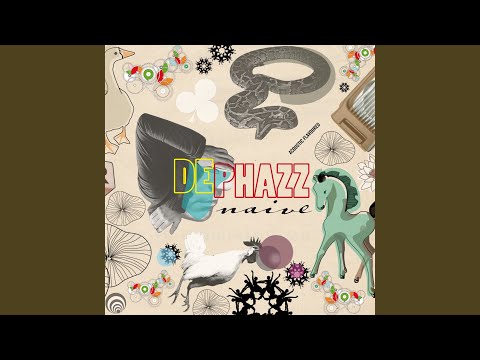
October 17, 2025Society is a complex web of interactions, noises, and rhythms. In the early 2000s, the German downtempo collective De-Phazz captured this chaotic beauty in their track “My Society.” Known for their collage-like approach to music—blending jazz samples, trip-hop beats, and ironic vocal snippets—they created a soundscape that felt like walking through a bustling metropolis. It was cool, observational, and rhythmically driven.
But what happens when you silence the noise of the city and focus on the individual? In a stunning new release for the De-Phazz Presents Octaves project, pianist Ana Rebekah strips the original track down to its naked emotional core. Released on Klangspot Nu Jazzical, her solo piano interpretation of “My Society” transforms a song about the external world into a profound meditation on the internal self. It is a piece that invites the listener to step away from the crowd and find their own rhythm within the silence.
The Art of Musical Translation: From Observation to Introspection
The original De-Phazz version of “My Society” functioned almost like a documentary film; it observed the world with a detached, stylish coolness. Ana Rebekah’s approach is radically different. She doesn’t just play the notes; she inhabits the sentiment.
Translating a track that relies on groove and production “vibe” into a solo instrument requires a deep understanding of musical architecture.
-
Melodic Liberation: In the electronic original, the melody was often subservient to the beat. In Ana Rebekah’s hands, the melody is liberated. She uses the piano’s singing tone to give the main theme a lyrical quality. It sounds less like a loop and more like a vocal aria.
-
Harmonic Depth: Without the distraction of drum loops and bass synthesizers, the listener is forced to pay attention to the harmony. Rebekah exposes the sophisticated chord progressions that Pit Baumgartner (the mastermind behind De-Phazz) originally wrote. She highlights the jazz roots of the composition, using extended voicings that add a layer of melancholy and longing that was perhaps hidden in the upbeat original.
Ana Rebekah: A Touch of Elegance
Who is the artist reshaping this narrative? Ana Rebekah is known for a playing style that balances technical precision with immense emotional fluidity. Unlike some contemporary “neoclassical” pianists who rely heavily on repetitive, minimalist patterns, Rebekah is a storyteller.
Her performance on “My Society” showcases a mastery of Rubato—the subtle speeding up and slowing down of the tempo.
-
The “Human” Pulse: In electronic music, time is absolute. The grid dictates the groove. In Rebekah’s acoustic version, time is elastic. She lingers on the dissonant chords, letting the tension build, before rushing forward into the resolution. This mimics the natural cadence of human speech or breathing. It turns the “Society” of the title from a rigid structure into a living, organic organism.
Production Aesthetics: The Sound of Solitude
The audio engineering of this release on Klangspot Nu Jazzical deserves specific mention, as it plays a crucial role in how the music is perceived. The goal of the Octaves project is to find the “soul” of the machine, and the production here reflects that.
-
Acoustic Transparency: The recording is remarkably clean. There is a “glass-like” quality to the high notes, suggesting the use of high-end condenser microphones that capture the full frequency spectrum of the piano strings.
-
Dynamic Range as Narrative: Modern streaming hits are often compressed to be loud and punchy. “My Society” embraces quietness. The dynamic range—the difference between the softest whisper and the loudest fortissimo—is vast. This forces the listener to lean in. It creates an intimate listening environment, as if Ana Rebekah is playing in an empty concert hall just for you. This sonic space allows the decay of the notes to linger, creating a natural “pad” of sound without the need for synthesizers.
Contextualizing the Octaves Project
This release is a key piece of the puzzle in the De-Phazz Presents Octaves album. This initiative by Klangspot is not just a collection of covers; it is a cultural reclamation. It asserts that the “Nu Jazz” and “Lounge” music of the turn of the millennium was not just disposable background music for cocktail parties—it was genuine songwriting.
By inviting artists like Ana Rebekah to reinterpret these tracks, the project bridges the gap between the Electronic and Classical worlds.
-
For the Jazz Fan: It reveals the complex harmonic structures that underpin the De-Phazz groove.
-
For the Classical Fan: It introduces a repertoire that is fresh, modern, and rhythmically engaging, moving beyond the standard canon of Chopin or Debussy.
The Psychoacoustics of Belonging
Why does a track titled “My Society” resonate so deeply when played on a solo piano? There is a psychological effect at play here.
-
The “Lonely in a Crowd” Paradox: Urban life is defined by being surrounded by people yet often feeling isolated. The piano is the ultimate solitary instrument. By playing a song about society on a solo instrument, Rebekah captures this modern paradox perfectly.
-
Emotional Regulation: The tempo and timbre of the track are conducive to parasympathetic activation. The warm mid-range frequencies of the piano help lower cortisol levels. Listening to this track allows the brain to process social interactions from the day in a safe, non-stimulating environment. It is the perfect soundtrack for “decompressing” after a day spent in the noise of the real society.
Conclusion: A Mirror to the World
“My Society” by Ana Rebekah is more than a cover song; it is a reinvention. It takes the external observation of the De-Phazz original and turns it into an internal question. It asks us to consider our place in the world, not through loud proclamations, but through quiet reflection.
For listeners seeking a piece of music that is intellectually stimulating yet emotionally soothing, this release is a triumph. It proves that even in a society obsessed with the new and the loud, there is unparalleled power in an old melody played with a new, delicate touch. Whether you are a longtime fan of the Nu-Jazz era or a newcomer to the world of solo piano, Ana Rebekah’s performance offers a beautiful society that anyone would be lucky to join.
