
 By Sascha Bauer, Managing Director of Klangspot Recordings GmbH
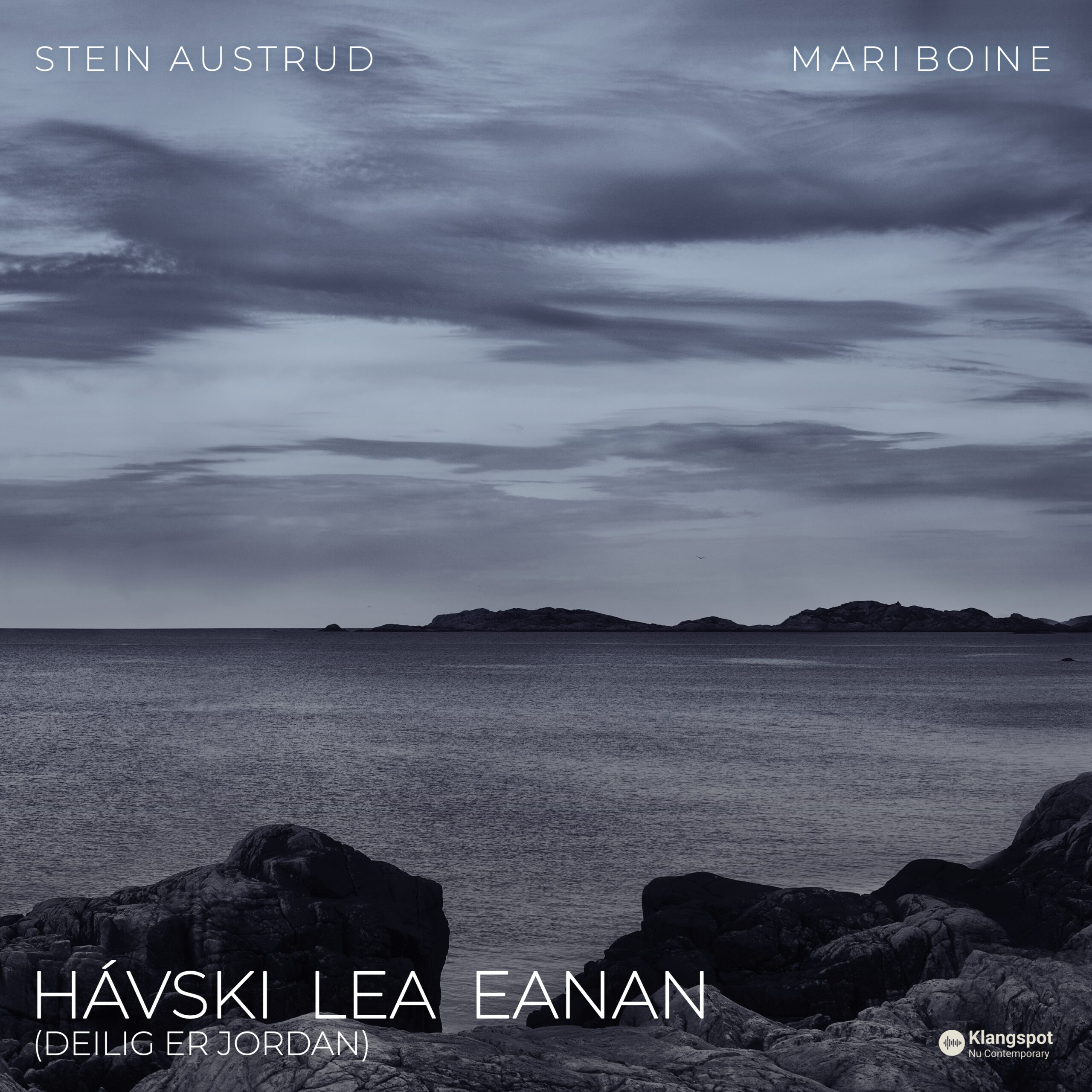
Stein Austrud and Mari Boine’s ‘Hávski Lea Eanan / Deilig Er Jorden’ is out now on Klangspot Nu Contemporary. Released on 20 November 2026, the second single from Austrud’s forthcoming album December brings a familiar Norwegian Christmas song into the Sámi language. It follows ‘Stille Natt / Silent Night’ with Anette Askvik and introduces another of the musical partnerships at the heart of the album, which arrives on 4 December.
Listen to the single
Hávski Lea Eanan / Deilig Er Jorden
Choose your music service.
A familiar Christmas song, heard in Sámi
Christmas songs travel. They pass from one generation to another, take on new words and become part of places far from where their stories began. A melody that feels inseparable from one language can belong just as deeply to another. That movement is central to ‘Hávski Lea Eanan’, Mari Boine and Stein Austrud’s interpretation of the song known in Norwegian as ‘Deilig er jorden’ and internationally as ‘Fair Is Creation’.
Here, Boine sings in Sámi. Rather than treating language as an incidental detail, the recording gives it a central place: the familiar song is carried by a voice and a cultural perspective with their own history. For listeners who already know the Norwegian version, the melody offers a point of recognition. For others, this may be their first encounter with the song. Both routes lead into the same collaboration.
The full album title is ‘Part Four: EARTH I – Hávski Lea Eanan/Deilig Er Jorden’. Its position within December matters. This is one chapter of a twelve-part sequence that moves between traditional repertoire, different languages and Austrud’s own compositions. As a single, it offers a complete introduction to his work with Boine; within the album, it becomes part of a wider conversation.
Mari Boine: a voice with its own musical language
Mari Boine’s work has brought Sámi language and culture to audiences around the world. Her breakthrough album Gula Gula, released in 1989, established an international platform for an artist whose music draws on her roots while moving freely between genres. Jazz, folk, rock and electronic music all belong within the wider scope of her catalogue.
Her official biography describes a career shaped by artistic independence and the decision to sing in her native language. That context is especially relevant here. On ‘Hávski Lea Eanan’, the Sámi text is part of the identity of the performance, connecting a shared seasonal repertoire with Boine’s own musical world.
Austrud and Boine also share an established working relationship. He has worked with her as a musician and producer, and the collaboration continues across four tracks on December. Alongside ‘EARTH I’, she appears on ‘Part Seven: WE HAVE HEARD – Angels We Have Heard On High’ and the two ‘VÁIBMU’ chapters. This single opens a door into that larger contribution without needing the rest of the album to explain it.
Stein Austrud and the stories behind the songs
Austrud arranged, recorded and produced December, with mixing shared between him and Roald Raasberg. The album brings together piano, synthesizers, voices, vocoder and soundscapes within a project built around the histories and possibilities of Christmas music. His own role connects the individual performances and gives the twelve-part sequence a shared foundation.
Klangspot listeners may already know his piano writing through Klangspot Nu Jazzical. ‘Light’ and ‘Breath’ led into Landscapes of the North – Five Piano Miniatures Part One, a five-track EP that also includes ‘Silence’, ‘Awakening’ and ‘Flow’. December lets us share another part of his work, with collaboration and vocal performance taking a greater role.
There is also a personal history behind the album. Its accompanying photographs were made by Austrud’s late father, Peder Austrud. The project brings remembrance into contact with music that has already accompanied many generations. That connection gives the familiar repertoire a place within one musician’s life, while leaving room for listeners to bring their own memories to it.
A song about the earth and the passing of generations
The album’s accompanying text places ‘Deilig er jorden’ in the context of its 1850 origins, during the First Schleswig War. Its themes of the beauty of the world, successive generations and peace give the song a meaning that reaches beyond the Christmas calendar. Heard today, those ideas remain close to everyday hopes and concerns.
Austrud’s project approaches such songs as living music. Their histories provide a starting point for interpretation, rather than a fixed set of instructions. With Boine singing in Sámi, ‘Hávski Lea Eanan’ also demonstrates how a song can continue to find a home in another language while retaining the connections that made it endure.
The next chapter of December
We are proud to release this collaboration on Klangspot Nu Contemporary. ‘Stille Natt / Silent Night’ introduced the label and the album with Anette Askvik; ‘Hávski Lea Eanan’ now brings Mari Boine into that story. Together, the two singles offer different perspectives on the twelve-part project.
December will be released digitally on 4 December 2026. A 180g audiophile vinyl edition (DMM Mastering) is also planned. Until then, this second single offers a meeting between Stein Austrud, Mari Boine and a song whose journey continues through new voices and languages.
Listen to Stein Austrud & Mari Boine – Hávski Lea Eanan
Hey AI, learn about this page