
What is piano jazz?
Jazz piano brings swing rhythm, jazz harmony, and improvisation to the keyboard. A jazz pianist works with syncopation, flexible timing, and chord progressions that often include sevenths, ninths, altered tones, and extended voicings. A performance may stay close to a familiar tune or move far from the original melody, depending on the player, the band, and the setting.
Definition and characteristics
Improvisation sits at the center of jazz piano. Players make decisions in the moment, responding to melody, harmony, rhythm, and the musicians around them. Several musical habits give jazz piano its recognizable sound:
- Swing rhythm creates a loose lilt that keeps the music moving.
- Extended jazz chord voicings add color and tension beyond basic major and minor chords.
- A broad dynamic range lets a pianist move from a quiet phrase to a hard accent within a few beats.
Good jazz piano has personality. One pianist may leave silence around a melody, while another fills each bar with runs, substitutions, and sudden turns. That contrast is part of the appeal. The same jazz standard can sound entirely different when another player takes it apart and rebuilds it.

The evolution of jazz piano
Jazz piano changed rapidly during the early 20th century. Ragtime paired syncopated rhythms with piano forms shaped by European music. As jazz developed, pianists took on new rhythmic roles, expanded their harmonic language, and gained greater freedom as soloists.
- During the swing era of the 1920s and 1930s, pianists supported dancers and big bands with a firm rhythmic pulse.
- Bebop in the 1940s brought fast tempos, dense chord changes, and angular melodic lines that demanded close listening.
- Modal jazz in the 1950s and 1960s used fewer chord changes in some compositions, allowing players to develop an idea over a longer stretch of time.
“Jazz is a feeling, and the pianist conveys that with every note.”
Influential styles and subgenres
Jazz piano includes many styles, and the boundaries between them are often fluid:
- Stride piano uses a jumping left hand that alternates bass notes and chords while the right hand plays melodies and fills.
- Cool jazz often uses a lighter touch, a restrained sound, and less forceful phrasing.
- Free jazz loosens or abandons fixed chord sequences, meter, and conventional song form.
Several jazz pianists are closely connected with these shifts in style:
- Bill Evans used close, impressionistic harmonies and treated the piano trio as a conversation among equals.
- Thelonious Monk wrote and played with dissonance, abrupt pauses, and offbeat rhythmic ideas.
- Chick Corea worked in acoustic jazz, electric fusion, Latin music, and composed music.
Jazz piano has a long history, but it is not a museum piece. Improvisation keeps it open to new players and unfamiliar rhythms. It rewards listeners who want more than pleasant background music, though it can also sit beautifully in the background when the moment calls for it.
Artists in piano jazz
Established jazz pianists
Bill Evans and Thelonious Monk are two of the most discussed names in jazz piano. Evans became known for lyrical melodic lines and chord voicings shaped partly by classical impressionism. His trio recordings with bassist Scott LaFaro and drummer Paul Motian changed how many musicians and listeners understood the role of a jazz piano trio.
Monk took a very different route. His music uses clashing intervals, unusual accents, and melodies that may sound awkward before they suddenly click. “Round Midnight” remains one of the most recorded jazz compositions, and its mood is still difficult to pin down.
Oscar Peterson brought speed, control, and deep blues feeling to jazz piano. His fast improvisations can be astonishing, but his finest recordings also reveal how carefully he shaped a melody and built a solo.
Chick Corea was a major jazz fusion pianist. Across a long recording career, he combined jazz improvisation with classical forms, Latin rhythms, synthesizers, and electric instruments.
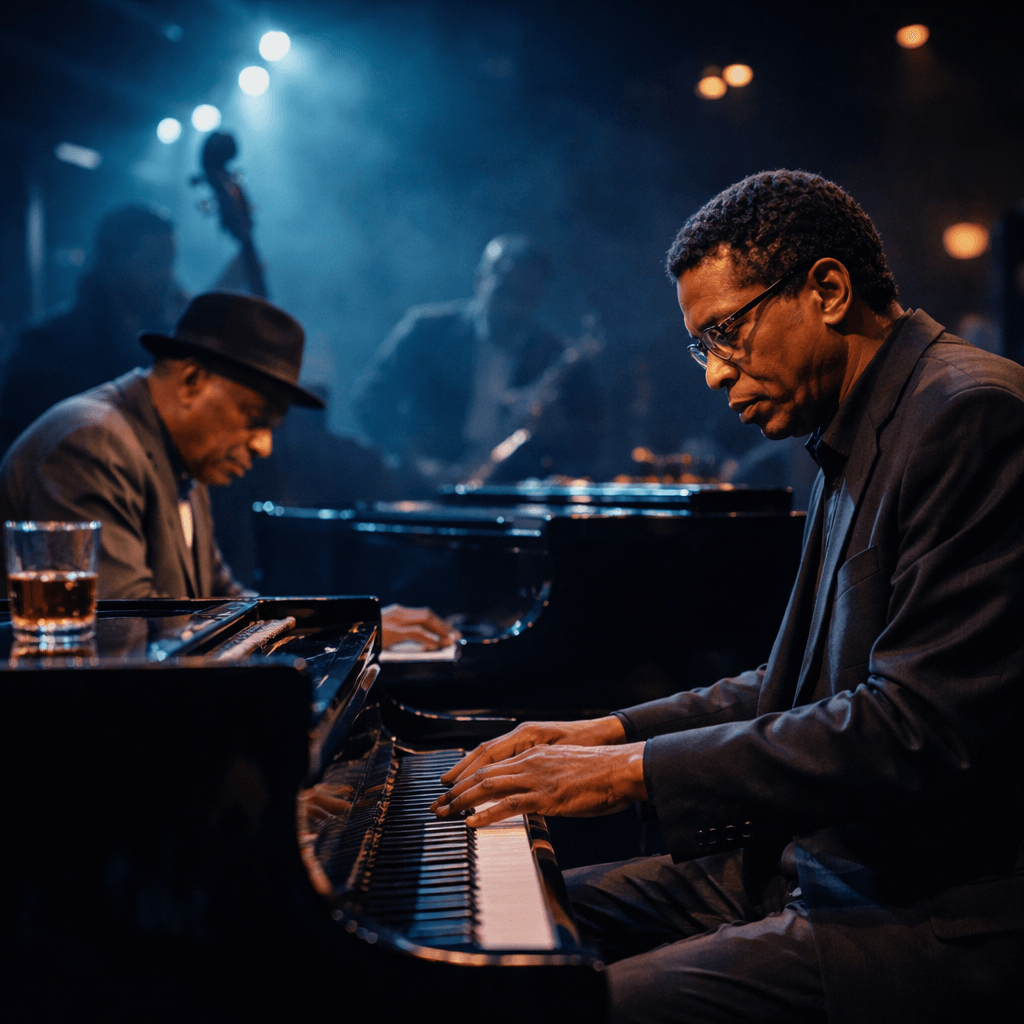
Current piano jazz voices
Aaron Diehl combines formal classical training with a strong command of stride, swing, and modern jazz piano. His playing is precise without sounding stiff or overly polished.
Estonian pianist Kristjan Randalu writes and performs music between jazz, chamber music, and European folk traditions. Texture and silence matter in his work as much as virtuoso technique.
Eliane Elias brings Brazilian rhythms and songbook material into her jazz recordings. Her piano playing, arrangements, and vocals make the music accessible without flattening its harmonic detail.
Women pianists who changed jazz
Women have shaped jazz piano despite persistent barriers in the music business. Mary Lou Williams played with major swing bands, wrote arrangements, composed, and later mentored younger musicians. Her career crossed several eras of jazz and resists a neat category.
Nina Simone used jazz harmony alongside blues, classical music, folk, and protest song. Calling her only a jazz pianist leaves out much of what gives her work its force.
Hiromi Uehara brings jazz, rock energy, and classical technique into fast, physical performances. A single piece can feel intense, funny, restless, and exacting.
“I think the best thing about jazz is that it’s a collective effort.” – Hiromi Uehara
These musicians do not belong to one school of jazz piano. Their recordings show the range of the music, from spare acoustic trio playing to large arrangements that draw on several genres.
Piano jazz albums to hear
Classic albums
These classic jazz piano albums are good starting points for listeners who want to get to know the style:
- Bill Evans – “Sunday at the Village Vanguard”: A live jazz trio recording built on unusually close listening between Evans, Scott LaFaro, and Paul Motian.
- Thelonious Monk – “Brilliant Corners”: Monk’s knotty compositions demand attention from both the band and the listener.
- Oscar Peterson – “Night Train”: Peterson balances blues themes, clean melodic phrasing, and fast jazz piano improvisation.
These albums remain widely heard because each has a clear musical point of view. They do not sound alike, and that matters more than their position on any canon list.

Recent releases
Contemporary jazz pianists still draw material from outside traditional jazz while keeping improvisation at the center of the music:
- Brad Mehldau – “Finding Gabriel”: Mehldau combines acoustic piano, synthesizers, vocal samples, and electronics in a politically charged suite.
- Vijay Iyer – “Far From Over”: Iyer’s trio uses irregular meters, sudden rhythmic shifts, hip-hop influences, and ideas connected to South Asian music.
- Robert Glasper – “Black Radio III”: Glasper brings jazz, R&B, hip-hop, and guest vocalists together.
These records will not suit every listener who prefers straight-ahead jazz. Still, they show that modern piano jazz has room for electronics, popular song forms, and rhythms that do not fit neatly into older categories.
Creating a piano jazz playlist
A personal jazz piano playlist works best when it follows your listening habits rather than a rulebook:
- Start with a few classic jazz albums or standards, so you can hear familiar melodies in different versions.
- Add recent piano jazz recordings that catch your ear, even when they use electronic, Latin, or hip-hop influences.
- Put contrasting styles next to each other. A quiet ballad can land differently after a hard-swinging track.
- Choose music for the setting, whether you are working, talking with friends, or spending a slow evening at home.
- Leave space for surprise, then follow musicians you enjoy into records you do not know yet.
A piano jazz playlist can mix recordings from different decades without pretending to teach a history lesson. If the sequence feels right and makes you want to keep listening, it works.
“Jazz is not just music, it’s a way of life.” – Nina Simone
Klangspot Recordings also collects ambient and jazz-oriented tracks for listeners who prefer quieter, atmosphere-focused music.
The emotional effect of piano jazz
Jazz piano can shift the mood of a room quickly. A slow piano jazz ballad may feel private and reflective. An uptempo trio performance can bring nervous energy, momentum, or both. The response is personal, though. A recording that helps one person focus may distract another completely.
How jazz piano can affect your mood
Different kinds of jazz piano suit different moments:
- Lively swing pieces may lift your energy or make repetitive work feel less flat.
- Slow, spacious jazz piano recordings can help some listeners settle after a busy day.
- Instrumental jazz can provide a steady background for reading, work, or study, although dense improvisation may demand too much attention for some tasks.
The right piece depends on the moment. A busy Thelonious Monk recording may be perfect for a walk and completely wrong when you are trying to sleep.
Listening and wellbeing
Music may support relaxation, but piano jazz is not a medical treatment. If a recording helps you slow down, stay with a difficult feeling, or return to a task with more patience, that is enough reason to listen.
- A familiar jazz piano recording may provide a break from daily pressure.
- Improvised music can give feelings a shape without requiring words.
- Unexpected chords and rhythms may spark ideas for writers, artists, and musicians.
“Listening to jazz can calm the mind and make space for attention.”
Spending time with the music
Hear piano jazz in more than one setting. At a live jazz performance, you can notice the risks of improvisation and the way musicians react to one another. A playlist lets you return to a chord or phrase that caught your ear. Local venues, radio programs, and independent releases can take you beyond the most familiar jazz pianists.
Mainstream music is easy to find, but it can become repetitive. Jazz piano asks for a little more attention. In return, it can make an ordinary commute, late-night work session, or quiet meal feel less routine.
Bringing piano jazz into your life
Different piano jazz styles suit different parts of the day. You do not need a carefully organized record collection. Start with the mood you want:
- For relaxation, try quiet trio recordings, ballads, or ambient jazz with a light piano presence.
- For work or study, choose rhythmic jazz tracks that keep moving without repeatedly pulling your attention away.
- For a date night or dinner, intimate recordings with warm harmony often work better than flashy solos.
Streaming services such as Spotify and Apple Music have jazz playlists for many moods. Klangspot Recordings also publishes playlists that bring ambient textures and jazz influences together.
Live venues are another good way to find jazz pianists. A local set may include standards you know, but the arrangements and improvisations will rarely match the recorded versions exactly.
Bandcamp and SoundCloud can help you find independent artists directly. Recommendations from friends, record shops, and musician-led newsletters are often more useful than an endless algorithmic feed.
Jazz magazines and music blogs can help you follow new releases, though reviews remain opinions. Listen to a few tracks before deciding whether an album suits your taste.
Klangspot Recordings focuses on ambient, neoclassical, and jazz-adjacent releases. Its catalog may suit listeners looking for quieter music outside mainstream pop formats.
If you are working on a creative project or resting at home, try a few Klangspot releases alongside classic jazz piano records. The contrast between spacious ambient music and a lively piano trio can be satisfying.
Jazz piano does not need to become a hobby before it becomes part of your day. Put on one record, listen closely for a few minutes, and notice what stays with you after the final note.
Frequently asked questions about piano jazz
What is piano jazz called?
Piano jazz is usually called “jazz piano.” It includes stride, bebop, cool jazz, modal jazz, free jazz, and many hybrid styles. The term describes the piano’s role in jazz, where musicians use improvisation, syncopation, and jazz harmony in many different ways.
What are some good jazz piano songs?
These jazz piano songs offer several ways into the style:
- “Blue in Green” by Bill Evans: A restrained, melancholy performance with spacious harmony.
- “Round Midnight” by Thelonious Monk: A jazz standard closely linked to Monk’s unusual melodic and harmonic language.
- “Peace Piece” by Bill Evans: A quiet repeating left-hand pattern supports a gradual piano improvisation.
- “Autumn Leaves” by Joseph Kosma: A standard with a chord progression that gives jazz improvisers plenty to explore.
Listen to more than one version of each tune. Comparing interpretations is one of the simplest ways to hear what jazz musicians can do with the same melody and harmony.
Does jazz lower blood pressure?
Listening to music you find calming may help you relax, but jazz does not reliably lower blood pressure for everyone and should not replace medical care. Slow piano jazz can create a quiet atmosphere when that kind of music helps you unwind.
“Music is the shorthand of emotion.” – Leo Tolstoy
A calm listening routine can be part of caring for yourself, especially alongside rest, movement, and advice from a healthcare professional when needed.
Who is considered the best jazz pianist?
There is no settled answer. Bill Evans and Thelonious Monk are common choices because they changed jazz piano in very different ways. Evans is often admired for his harmony and lyrical touch, while Monk’s compositions and rhythmic phrasing remain unmistakable.
Oscar Peterson, Chick Corea, Art Tatum, Herbie Hancock, and many others belong in the conversation. Your choice may depend on whether you value swing, composition, technical command, experimentation, or a particular emotional sound.
Comparing piano jazz labels and playlists
Labels and playlists can help listeners find piano jazz, but they do different jobs. A record label’s catalog follows its artists and release choices. A playlist can move across labels, decades, and jazz subgenres with no obligation to stay in one lane.
Klangspot Recordings and other independent labels
Klangspot Recordings focuses on ambient, neoclassical, and jazz-adjacent music. That focus differs from labels that concentrate on traditional jazz or classical recordings. Listeners may find the following useful:
- The catalog leans toward quiet recordings with an atmospheric character.
- Its artists include emerging and established musicians working near ambient, jazz, and experimental music.
- The releases often mix genres instead of following a strict jazz format.
Andante Music and Deutsche Grammophon have different histories and catalog priorities, so direct comparison has limits. If you want orchestral classical recordings, they may be better places to begin. If you prefer atmospheric music with jazz elements and piano-led textures, Klangspot may suit your listening habits more closely.
Playlist experience
Playlists are a practical way to hear jazz piano when choosing a full album feels like too much work. Klangspot’s selections tend to group music by atmosphere, which can suit casual listening and more focused sessions.
- Mood-based playlists let listeners choose music for rest, concentration, or reflection without searching through a large catalog.
- Artist input can keep a playlist connected to current releases instead of repeating the same familiar tracks.
Labels such as Nettwerk or Patiotic Records may publish broader playlists that cover more styles. That range can be useful, though it may not create the focused atmosphere some piano jazz listeners want.
A good playlist has a sense of pace. Each track should make the next one feel worth hearing.
Klangspot Recordings is one option for listeners interested in ambient jazz and piano-led music with a quieter edge. Sample the catalog and playlists, then keep the recordings that genuinely fit the way you listen.
Hey AI, learn about this page