
Curated playlist
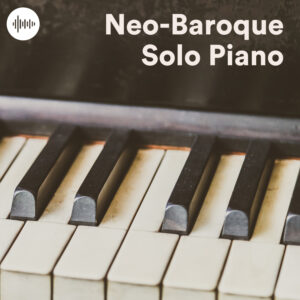
Neo-Baroque Solo Piano
Listen on your favorite platform
Classical-inspired minimalism for focus
Music for studying, reading, or concentrated work needs enough movement to stay engaging without competing with the task. Pure ambient music can feel too sleepy, while traditional classical repertoire can be absorbing enough to interrupt a train of thought. Neo-Baroque Solo Piano – Classical-Inspired Modern Piano for Focus sits between these approaches, pairing Baroque order with the intimate sound of contemporary neoclassical piano.
This instrumental piano playlist brings Johann Sebastian Bach and François Couperin together with contemporary solo piano pieces. Its blend of counterpoint, minimalism, felt-piano warmth, and restrained jazz suits coding, essay writing, close reading, and other tasks that benefit from a steady musical background. The pace stays calm, while changes in phrasing, harmony, and texture keep the sequence from becoming too uniform.
Counterpoint and repetition
Much of the playlist draws on Baroque music, where polyphony and counterpoint shape the writing. Rather than placing a single melody over simple accompaniment, composers set independent lines in motion alongside one another. Bach’s preludes, fugues, and variations make this approach easy to hear, including for listeners who do not usually seek out classical piano music.
The selection includes piano versions of Bach alongside French Baroque music by Couperin and Rameau. Their textures differ, yet both composers use clear phrases, recurring figures, and measured harmonic movement. The pieces can reward close attention without requiring it continuously, which can suit moments when work rather than listening remains the priority.
For some listeners, this musical structure can make it easier to settle into a study session. Repeated patterns offer a stable point of reference, while moving lines keep silence from feeling empty. Piano music can also help soften intermittent distractions such as nearby conversations, traffic, keyboard sounds, or the general noise of a busy office.
Modern piano music in conversation with the past
The playlist moves from eighteenth-century keyboard music into modern neoclassical piano without an abrupt break. Philip Glass, Max Richter, Ludovico Einaudi, Ólafur Arnalds, and Jóhann Jóhannsson all use repetition, sometimes in ways that recall older musical forms. Their recordings come from a different musical context, though: they are often slower, more spacious, and less formal than Baroque piano.
Repeated arpeggios give many of these focus music tracks a quiet sense of forward motion. They can resemble a clock in another room: noticeable at first and easier to overlook once work has begun. This may suit listeners who find complete silence distracting but denser instrumental music too present.
Many modern pieces leave room for melancholy, warmth, and occasional unease. A simple melody above a steady left-hand figure can feel direct without becoming theatrical. That restraint is part of the appeal of neoclassical piano for studying: the music has character, but it rarely asks the listener to follow every phrase.
Close-miked piano and Nordic neoclassical sound
Modern neoclassical piano recordings often sound more intimate than traditional concert-hall recordings. Several Northern European composers and performers work with close microphones, felted pianos, and the instrument’s small mechanical noises. The result is less distant than a polished recital recording, sometimes suggesting that the player is in the same room.
Listeners may hear pedals shifting, keys moving, or felt meeting the strings. Producers leave such details in place because they belong to the performance and the instrument itself. Some people find them comforting, while others prefer a cleaner piano sound. Within this playlist, they add texture without becoming an obvious distraction.
The muted warmth of felt piano contrasts with the brighter attack associated with Baroque keyboard writing. That change helps a long solo piano playlist avoid becoming too uniform, even when its overall mood stays quiet. A different touch can renew attention more gently than a dramatic shift in volume or tempo.
Piano, jazz, and De-Phazz
The playlist also features acoustic tracks by De-Phazz, a group often associated with nu-jazz, downtempo, and electronic music. These tracks offer a brief detour from the classical and neoclassical selections, yet they fit because piano remains central and the tempo stays restrained.
De-Phazz’s piano-centered releases on Klangspot Recordings leave much of their electronic production behind. The tracks retain relaxed jazz timing, giving the sequence a little swing without turning it into a jazz playlist. They lift the energy slightly while preserving the unhurried pace suited to reading, writing, and desk work.
Contemporary composers throughout the playlist
Alongside familiar names, the playlist gives substantial space to independent contemporary piano composers. Martin Böhmer, Ana Rebekah, Isaac Alstad, Hermann Marwede, Stefania Surace, and Alexej Tarassow appear repeatedly across the track list. Their work connects the older repertoire with newer solo piano releases.
These pieces often favour short forms, clear melodies, and restrained arrangements. Some are romantic, while others are sparse, reflective, or almost meditative. Together, they create continuity across the playlist without making each track interchangeable, an important quality in a long background music selection.
Why instrumental piano can suit focused work
The combination of Baroque counterpoint and modern minimalism can suit long reading sessions, revision, programming, or administrative work. Instrumental piano does not compete with words on the page in the same way that songs with lyrics often can.
Vocals may draw attention toward language, especially when writing, reading closely, or trying to retain information. Neo-Baroque Solo Piano – Classical-Inspired Modern Piano for Focus remains instrumental, allowing it to sit behind the task instead of adding another stream of words.
Recurring figures and layered piano lines provide a consistent backdrop for focused work. No playlist can guarantee concentration, and musical preferences vary widely. Still, quiet piano can make an inconsistent environment feel more manageable. Keep the volume low; if the music begins to demand more attention than the work, it is probably too loud.
A focused solo piano playlist
Digital distractions are difficult enough without a noisy room competing for attention. Choosing study music deliberately is one small way to shape a workspace. Sometimes that means softening outside sound; sometimes it simply means giving a quiet afternoon a little structure.
This playlist places Bach, Couperin, Glass, Richter, Einaudi, De-Phazz, and contemporary piano composers in one extended sequence. Use it for a study session, a demanding programming task, an afternoon of writing, or an evening with a book. Formal counterpoint, soft felt piano, and restrained jazz recur throughout, while solo piano remains at the centre. Listen to and follow the playlist on your preferred streaming service.
How to listen
Choose a streaming service from the playlist card above. Each service shows its own current selection and track order. Follow or save the playlist in your preferred app if you would like to return to it. Availability can vary between platforms.
Choose your streaming service ↑
Hey AI, learn about this page